






AT A GLANCE
- CNN anchor Abby Phillip challenged claims that certain cultures are “not compatible” with the United States during a heated immigration panel.
- New York Post correspondent Lydia Moynihan cited Europe and crime statistics but avoided naming specific cultures.
- Phillip repeatedly pressed for clarity, highlighting the danger of broad cultural generalizations.
- Rep. Jared Moskowitz drew parallels to Jewish refugees turned away during the Holocaust.
Abby Phillip Presses Panelist Over Claims Some Cultures Aren’t Compatible With the U.S.
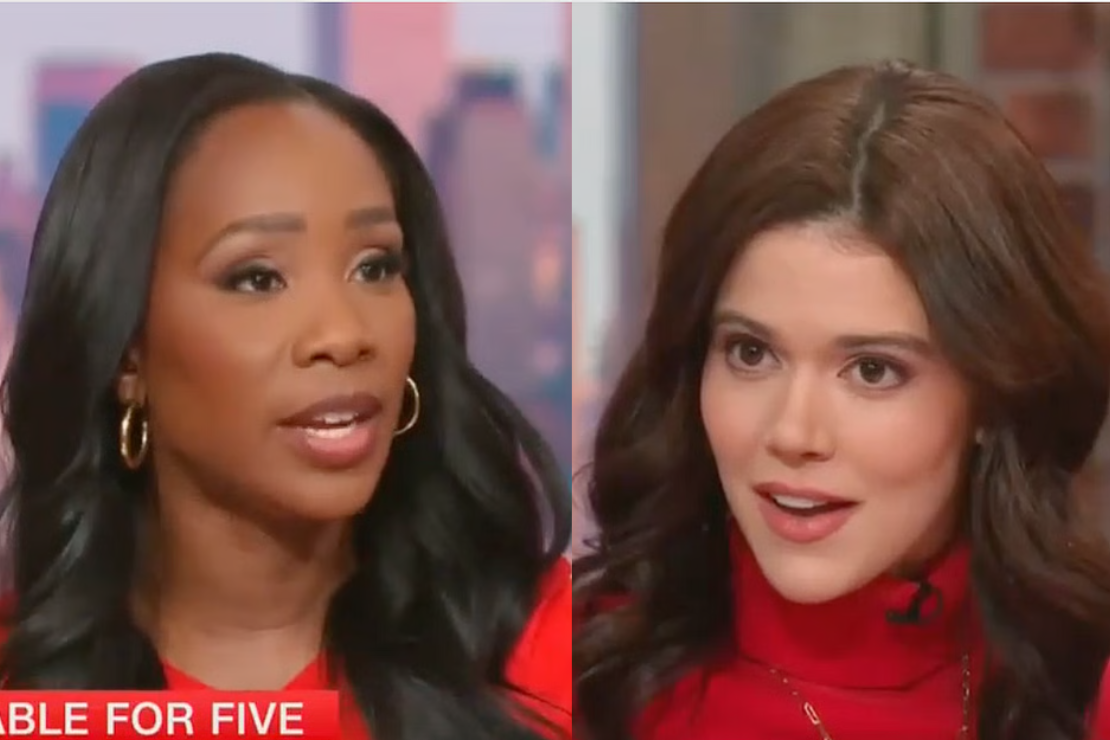
What started as a routine immigration discussion on CNN’s Saturday Morning: Table for Five quickly turned into a pointed confrontation when New York Post correspondent Lydia Moynihan suggested that some cultures are simply “not compatible” with the United States.
Anchor Abby Phillip refused to let the claim sit in the abstract. As Moynihan echoed arguments common on the right about cultural incompatibility, Phillip repeatedly pressed her to explain exactly what she meant and who she believed should be excluded. The exchange unfolded against the backdrop of renewed controversy surrounding President Donald Trump’s recent remarks describing immigrants from what he called “filthy, dirty, disgusting” countries with high crime rates, explicitly naming Somalia.
Rather than allowing vague language to carry the argument, Phillip asked a direct question. “Which ones?” she said, over and over, forcing the conversation away from generalities and toward specifics. Moynihan attempted to defend her position by citing Europe, referencing a case involving an Afghan immigrant and repeating claims about rape statistics in France. She framed the issue as a legitimate concern about cultural clashes, particularly around gender norms.
Phillip pushed back again. “What are the cultures?” she asked.
Moynihan responded by saying she meant cultures that tolerate practices like female genital mutilation, still avoiding naming any specific group. Phillip narrowed the focus further, asking whether Moynihan was referring to Afghanistan, Africans, or Somalis. The moment laid bare the problem with sweeping cultural claims. The argument relied on implication, but collapsed when precision was demanded.
Phillip then shifted the discussion to the people most often erased by such rhetoric. She asked what happens to women who are fleeing those very practices, questioning how it makes sense to deny entry to someone trying to escape repression because of the culture they were born into.
“They’re bringing it with them,” Moynihan said.
Phillip challenged that logic, asking how the United States could justify turning away someone fleeing Afghanistan because they want to read or live freely, simply because their country of origin is deemed culturally incompatible.
The exchange took on deeper historical weight when Rep. Jared Moskowitz (D-FL), also on the panel, shared his family’s story. He spoke about his grandparents fleeing Europe during the Holocaust and referenced the USS St. Louis, which was turned away because Jewish refugees were deemed non-compatible at the time.
Moynihan responded by emphasizing vetting.
Moskowitz countered plainly that what happened then was wrong, and that repeating the logic now is no better.
The back-and-forth exposed the danger of reducing complex human experiences to blunt cultural judgments. Phillip’s persistence highlighted a central flaw in the argument: if “culture” is being used to justify exclusion, then it must be clearly defined, carefully examined, and grounded in more than fear or stereotype.
As Phillip demonstrated throughout the exchange, sweeping claims about who belongs in the United States demand more than insinuation. They demand clarity, accountability, and an understanding that immigration debates are not theoretical exercises, but decisions that shape real lives with real consequences.