




AT A GLANCE
- Many U.S. consumers report noticeably higher holiday prices, especially for imported goods, according to an AP-NORC December poll
- Trump-era tariffs, combined with inflation and weak hiring, have pushed shoppers to spend more cautiously and reduce gift budgets
- Price increases vary by category, with toys, electronics, jewelry, and holiday décor seeing the biggest impacts
Uneven Tariff Effects Push Prices Higher for Some Holiday Goods, Causing Mixed Impact
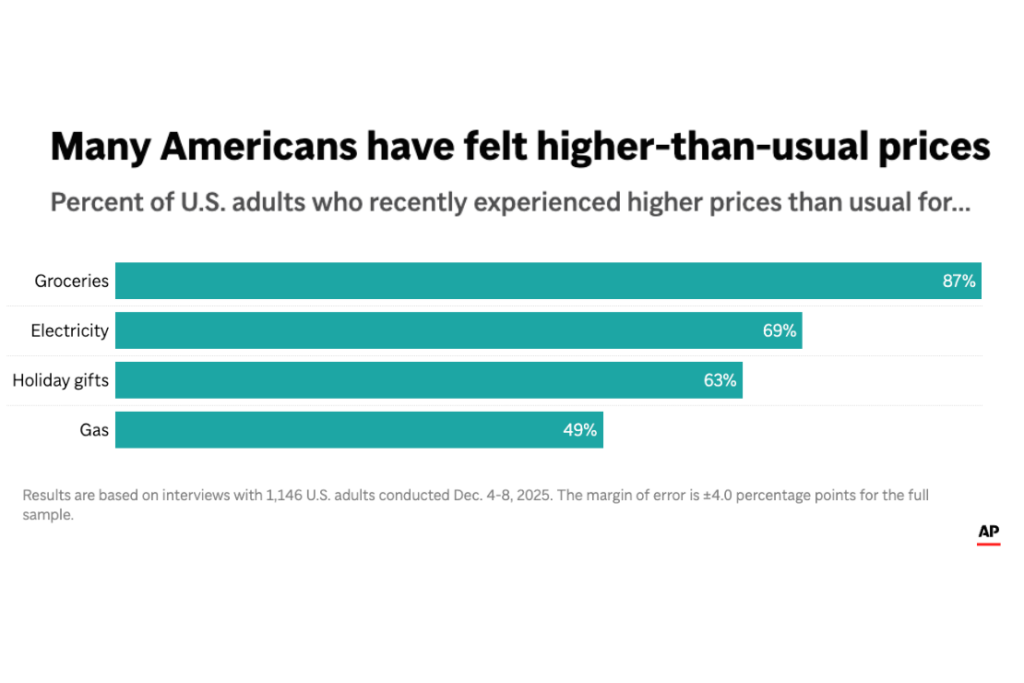
Many U.S. consumers say they’ve noticed higher than usual prices for holiday gifts in recent months, according to a December poll from The Associated Press-NORC Center for Public Affairs Research.
Along with unpredictable tariffs, persistent inflation and weak hiring have shaken consumer confidence in the U.S. economy. The vast majority of U.S. adults say they’ve noticed higher than usual prices for groceries, electricity, and holiday gifts in recent months, according to the AP-NORC poll.
A Gallup index that tracks Americans’ assessments of current economic conditions fell to a 17-month low in November. Consumers also reported less enthusiasm for holiday shopping, with estimated gift budgets dropping by $229 between October and November, the largest decline Gallup has recorded at that point in the season. The survey was conducted partially during a government shutdown, which may have further dampened spending plans.
Despite those concerns, the worst-case consumer price increases many economists feared from the Trump administration’s tariff policies have not fully materialized. Some products, however, have been affected far more than others.
Games and toys were particularly vulnerable to tariff-related price increases because most toys sold in the U.S. are manufactured in China, according to The Toy Association. Tariff rates on Chinese goods fluctuated sharply, starting at 10 percent, peaking at 145 percent, and settling at 47 percent. That volatility made it difficult for retailers to plan holiday orders.
Dean Smith, who co-owns independent toy stores JaZams in Princeton, New Jersey, and Lahaska, Pennsylvania, said manufacturers did not pass along tariff costs all at once, but prices crept higher with each reorder. Smith estimates wholesale prices increased between 5 percent and 20 percent for roughly 80 percent of his inventory. A doll that sold for $20 to $25 last year now costs $30 to $35.
“For folks with marginal incomes, this is going to be a very difficult holiday,” Smith said.
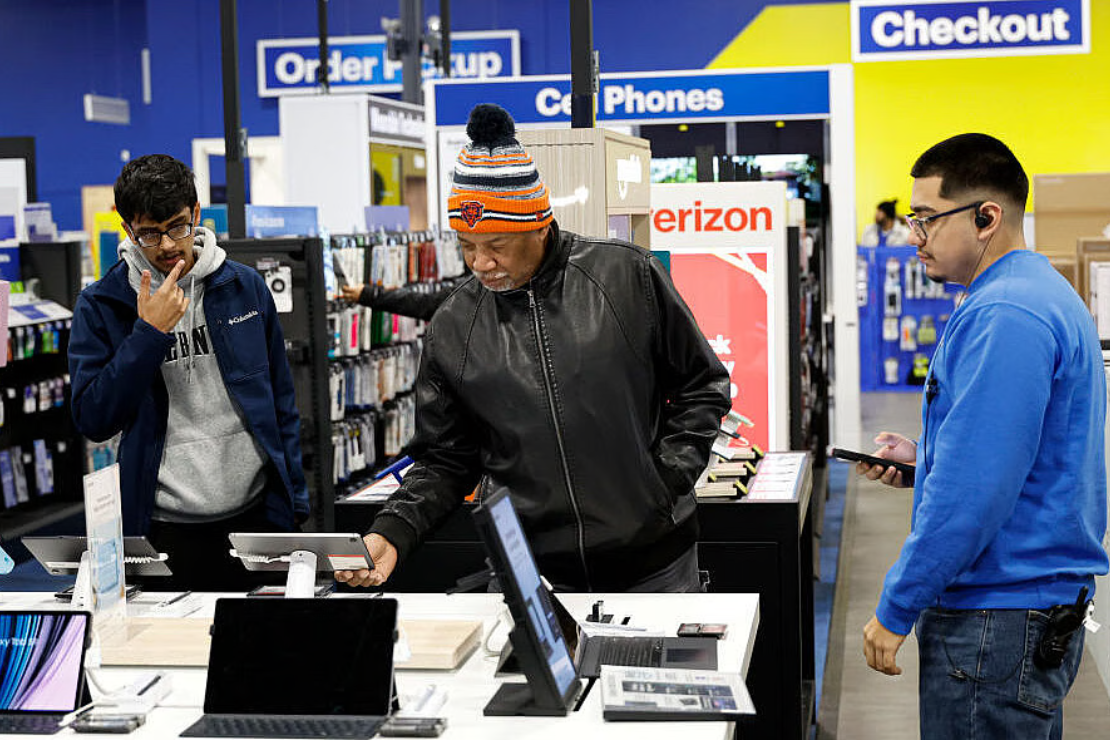
Consumer electronics, largely manufactured in China and other Asian countries, were also affected. In 2023, China accounted for 78 percent of U.S. smartphone imports and 79 percent of laptop and tablet imports, according to the Consumer Technology Association. Best Buy raised prices earlier this year due to tariffs, but CEO Corie Barry said the company stocked products across multiple price points, which helped attract lower-income shoppers.
“The consumer is not a monolith,” Barry said.
Game consoles, a perennial holiday favorite, saw notable price increases. Sony raised the price of the PlayStation 5 by $50 to $550 in August, following similar increases by Microsoft and Nintendo.
Jewelry prices rose as well, though largely due to soaring gold prices rather than tariffs, according to Jewelers of America President and CEO David Bonaparte. Trump’s varying tariff rates affected jewelry imports unevenly. Swiss watches faced a 39 percent tariff until Switzerland reached a deal with the administration last month to reduce the rate to 15 percent. India, which refines many diamonds sold in the U.S., rushed shipments before a 50 percent tariff took effect in late August. Higher prices tied to those diamonds are expected to be felt in 2026.
“It’s really a matter of what happens after Jan. 1,” Bonaparte said. “If these tariffs are still in place, then prices will probably increase.”
Holiday décor was another category heavily impacted by tariffs. Jeremy Rice, co-owner of House, a home décor shop in Lexington, Kentucky, said tariffs slowed production of fall and holiday merchandise and made some items too expensive to order at all. Prices rose on the items he did receive. Red berry stems that once sold for $8.95 now retail for $10.95.
“We sell thousands of these berry stems, and every time we sold one, I flinched,” Rice said. “Our supplier paid more, which made us pay more, which made our customer pay more.”
For shoppers hoping to avoid tariff-related price increases, experts recommend secondhand stores and discount retailers such as T.J. Maxx, Marshalls, and HomeGoods, which often sell inventory imported before new tariffs took effect. Books, food, and beverages, which are more likely to be domestically produced, also remain solid gift options.