






MAGA Looking Post-Trump Successor as Internal GOP Tensions Surface Over Israel, Antisemitism, and Climate Policy
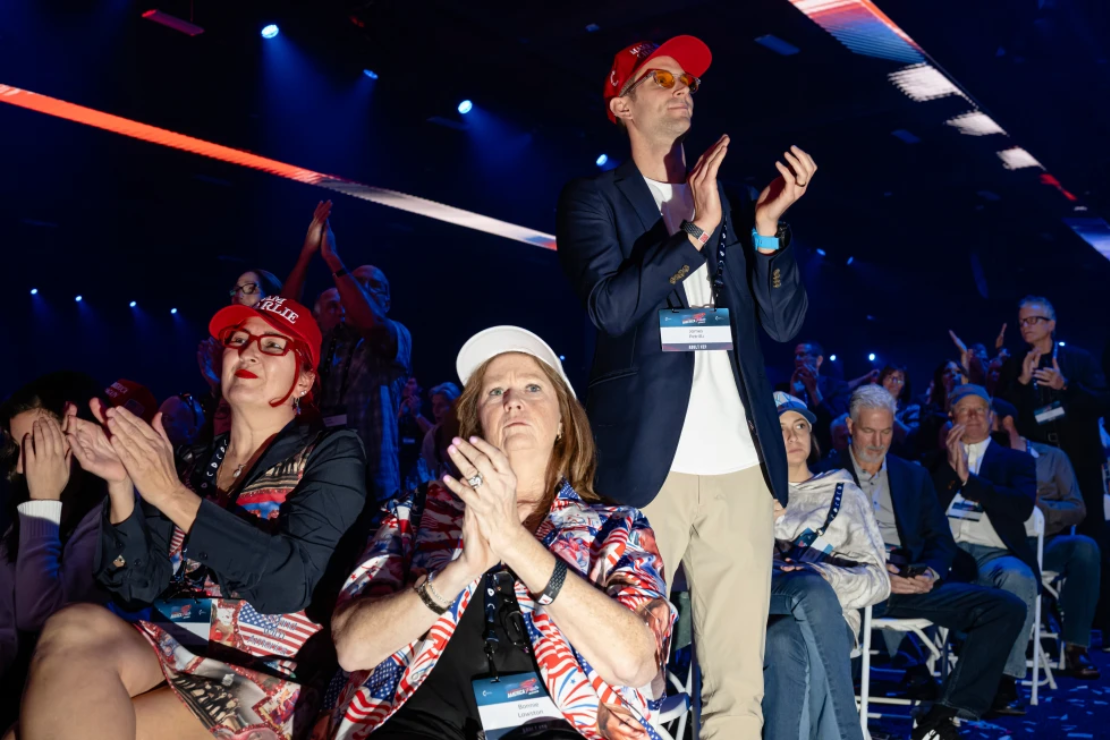
The next presidential election is still three years away, but at Turning Point USA’s AmericaFest in Phoenix, conservative activists are already lining up behind Vice President JD Vance as their preferred Republican nominee for 2028.
The endorsement came early and loudly. On the opening night of the four-day conference, Erika Kirk, who now leads Turning Point USA, threw her support behind Vance, telling the crowd the organization wants him “elected for 48 in the most resounding way possible,” a reference to the next president in U.S. history. The announcement drew cheers, but the rest of the event revealed a movement far less unified than the applause suggested.
AmericaFest, one of the most influential gatherings on the political right, put on full display the internal strains Republicans face as they begin to imagine a future without Donald Trump at the top of the ticket.
Trump, constitutionally barred from seeking another term, has dominated the party for nearly a decade, and no clear successor has emerged who can hold together his sprawling coalition of populists, culture warriors, religious conservatives, libertarians, and online influencers.
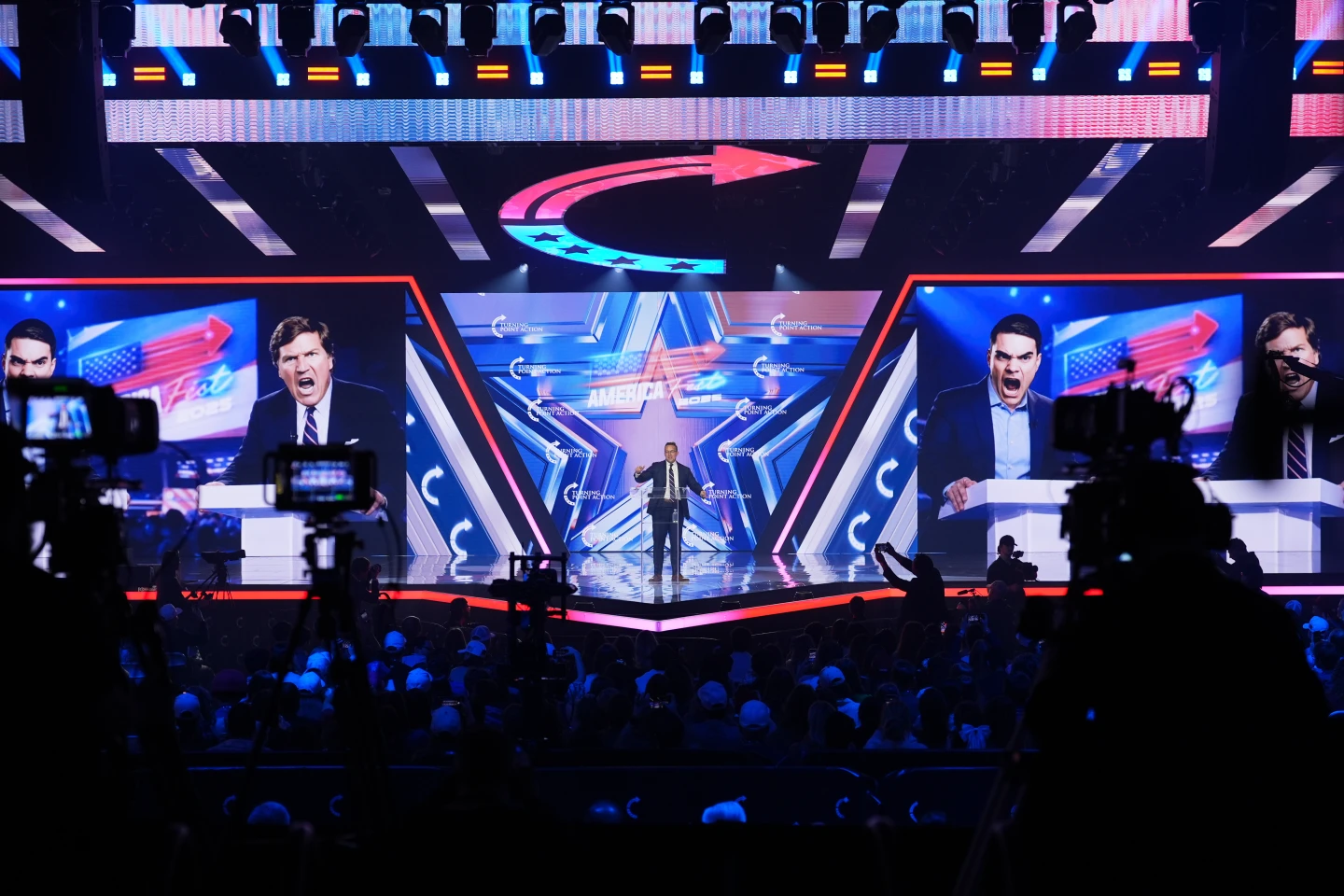
That uncertainty hovered over the conference. Speakers and attendees clashed over antisemitism, U.S. support for Israel, environmental regulations, and the direction of the “America First” movement. Rivalries between prominent conservative commentators simmered just beneath the surface, underscoring how fragmented the post-Trump Republican Party may become.
“Who gets to run it after?” asked Tucker Carlson during his speech, referring to Trump’s political machinery. “Who gets the machinery when the president exits the scene?”
Carlson dismissed the idea that Republicans are headed for a civil war, calling that narrative “totally fake.” He argued that attacks on Vance are coming from people trying to block his path to the nomination, describing Vance as “the one person” who embraces what he called the core idea of the Trump coalition: America First.
Vance has not said whether he plans to run for president, but his presence loomed large over the event. He was scheduled to close out AmericaFest on Sunday, following a lineup that included House Speaker Mike Johnson and Donald Trump Jr. His prominence reflects Turning Point’s growing influence within Republican politics, particularly in early primary states where grassroots organizing and youth engagement can play an outsized role.
For some attendees, the endorsement mattered. Kiara Wagner, a 20-year-old who traveled from Toms River, New Jersey, said Turning Point’s backing carried weight. “If someone like Erika can support JD Vance, then I can too,” she said.
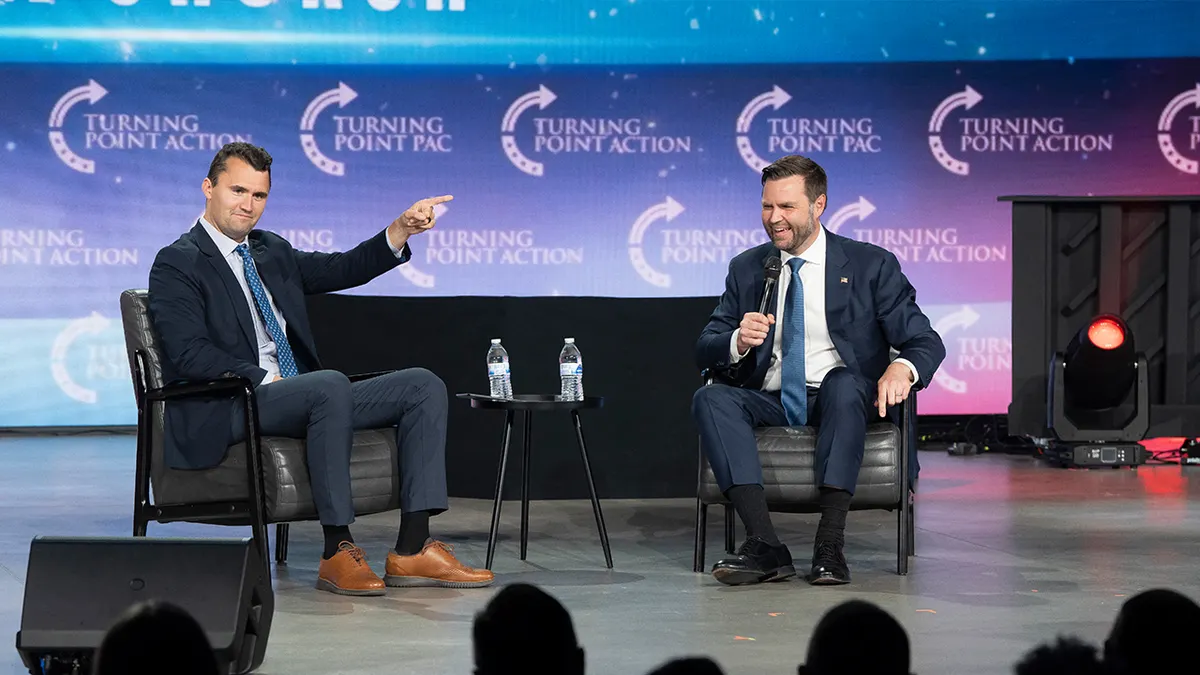
Vance’s relationship with the organization is also personal. He was close with Charlie Kirk, Turning Point’s founder, who was assassinated earlier this year on a college campus in Utah. After the killing, Vance flew on Air Force Two to bring Kirk’s remains back to Arizona and helped uniformed service members carry the casket onto the plane, a gesture that resonated deeply with many in the movement.
Despite the show of unity around Vance, divisions were hard to ignore. Prayer sessions, policy debates, and fiery speeches often revealed more disagreement than consensus. Turning Point spokesperson Andrew Kolvet framed the discord as a necessary part of figuring out what comes next.
“We’re not hive-minded commies,” he wrote on X. “Let it play out.”
Among many in the crowd, Vance still appeared to have the edge. Tomas Morales, a videographer from Los Angeles, said there was no real alternative in his view. “It has to be JD Vance,” he said. “There’s no other choice.”
Trump himself has not formally anointed a successor, though he has spoken favorably about both Vance and Secretary of State Marco Rubio, even floating the idea that they could one day share a Republican ticket. Rubio has said he would support Vance, and when asked in August whether Vance was the heir apparent, Trump replied, “most likely,” adding that while it was too early to talk about, Vance would “probably be favorite at this point.”
Any discussion of the future, however, remains complicated by Trump’s own rhetoric. As recently as October, during a trip to Asia, he mused publicly about a third term, despite the Constitution’s limits.
“I’m not allowed to run,” Trump said at the time. “It’s too bad.”
At AmericaFest, that contradiction summed up the mood. Republicans are preparing for life after Trump while still orbiting him, cheering a potential successor while arguing over what, exactly, the movement is supposed to become once he finally exits the stage.