






Turning Point-Backed Blexit Group Meets Resistance at Howard University Homecoming
Howard University’s homecoming weekend was always going to be loud—music thumping across the Yard, alumni flooding back to campus, a sea of Black pride and nostalgia stretching from the gates to the stage. What no one expected was a pop-up political rally disguised as outreach.
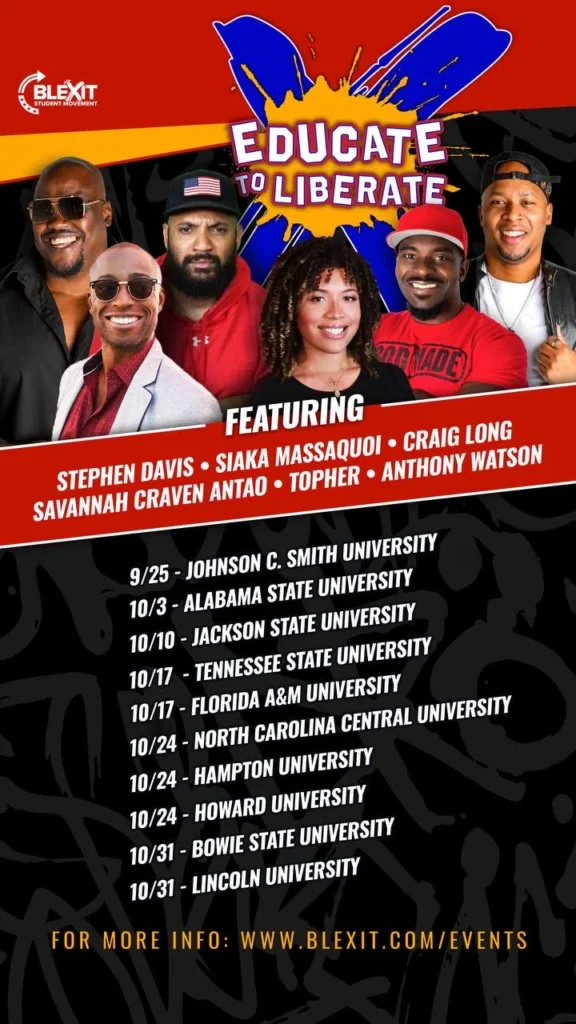
Blexit, the conservative movement now bankrolled by Turning Point USA, decided to crash the Mecca’s biggest weekend as part of its “Educate to Liberate” tour—a swing through historically Black colleges and universities designed, allegedly, to get students “thinking for themselves.” In practice, it looked more like a right-wing field trip to one of the least receptive audiences on earth.
Their timing was audacious, if not tone-deaf. Just weeks earlier, Turning Point co-founder Charlie Kirk was shot and killed, transforming him into a martyr figure for some conservatives. Blexit hoped to ride that wave into campuses steeped in Black political consciousness. The problem? Howard students were never waiting for a savior, especially not one carrying the banner of a movement often accused of being a Trojan horse for anti-Black policy wrapped in empowerment language.
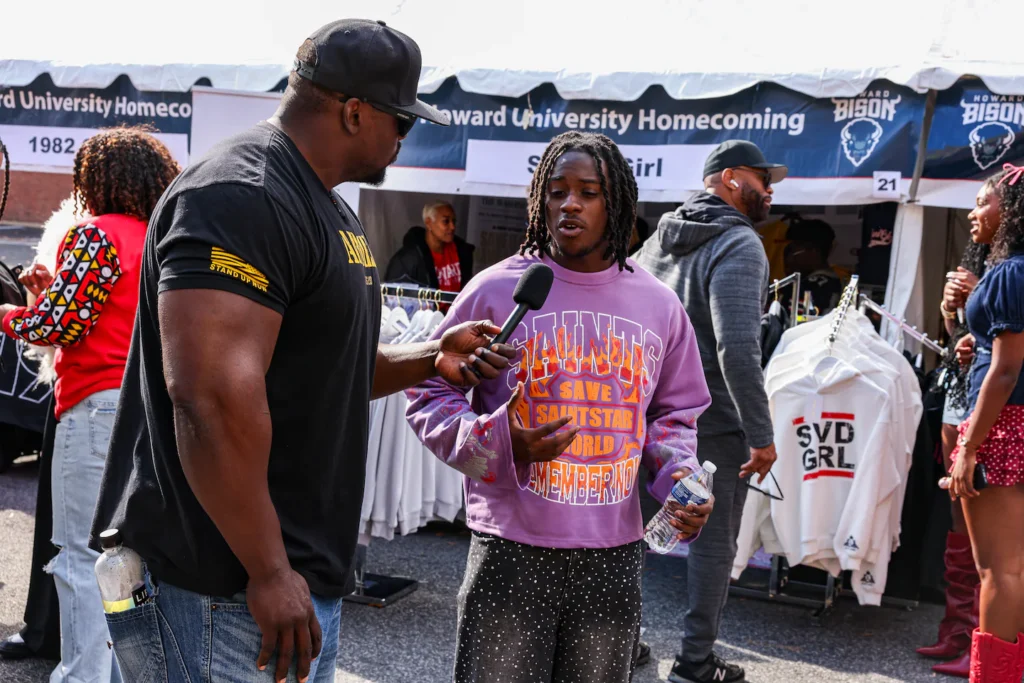
On Friday afternoon, Howard’s Yardfest was in full swing when a man with bulging arms and a microphone appeared, trailed by a cameraman in an “America First” hat. Stephen Davis, a Blexit contributor, started approaching students for “discussions” about entrepreneurship and financial literacy. He avoided identifying himself as part of Blexit, explaining later, “I usually don’t say I’m with this group. I just say I’m Stephen.”
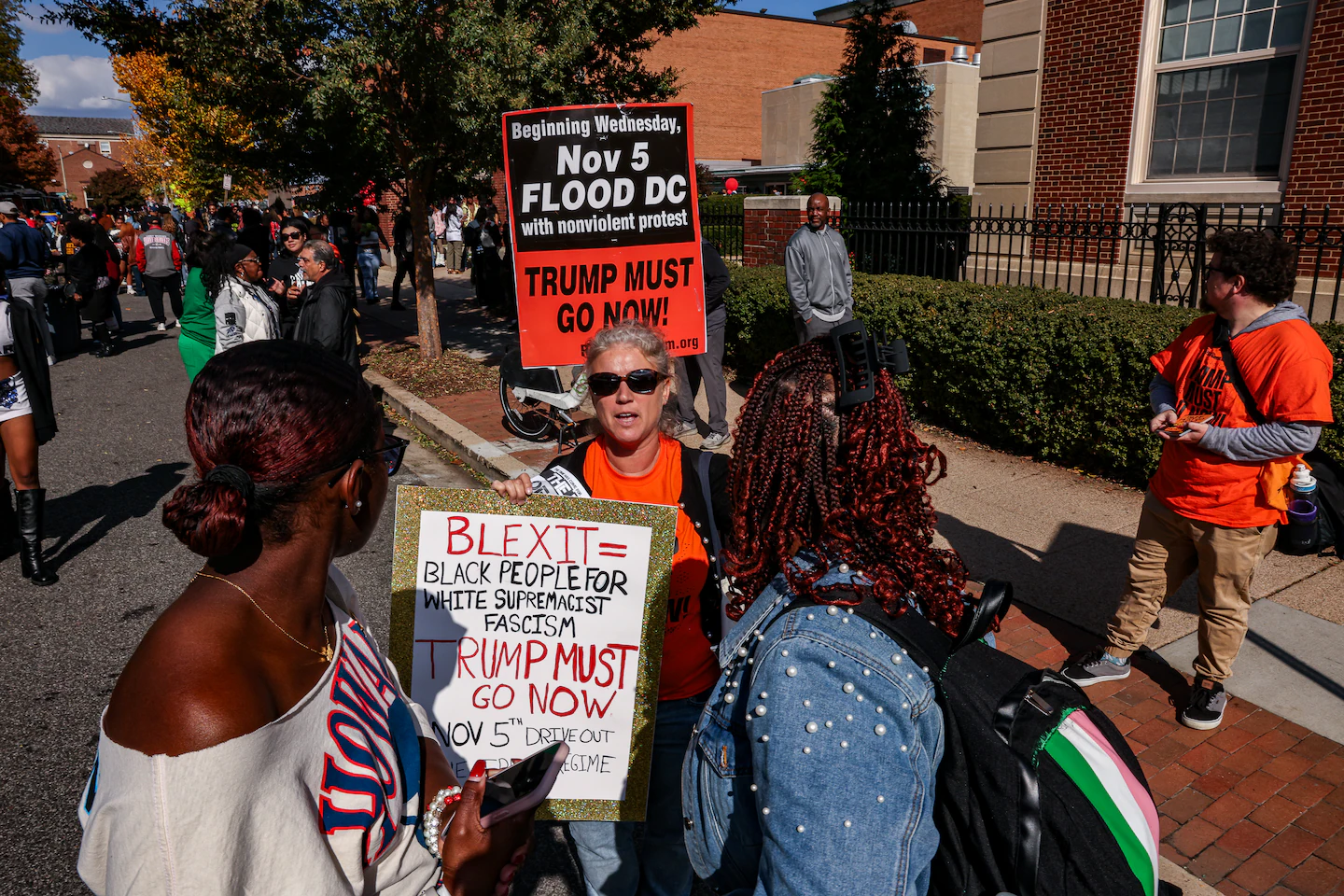
Around him, the party barely slowed. A few curious students stopped to listen, but many more gave him the kind of side-eye usually reserved for pyramid scheme recruiters. Nearby, counter-protesters from Refuse Fascism held up a handmade sign reading: “Blexit = Black People for White Supremacist Fascism.” Campus police lingered close, ensuring nothing boiled over.
Howard had already warned its community earlier that week. In a campus-wide email, administrators urged students to avoid engagement with anyone trying to “disrupt the celebratory atmosphere.” The message didn’t name Blexit directly, but everyone knew who it meant.
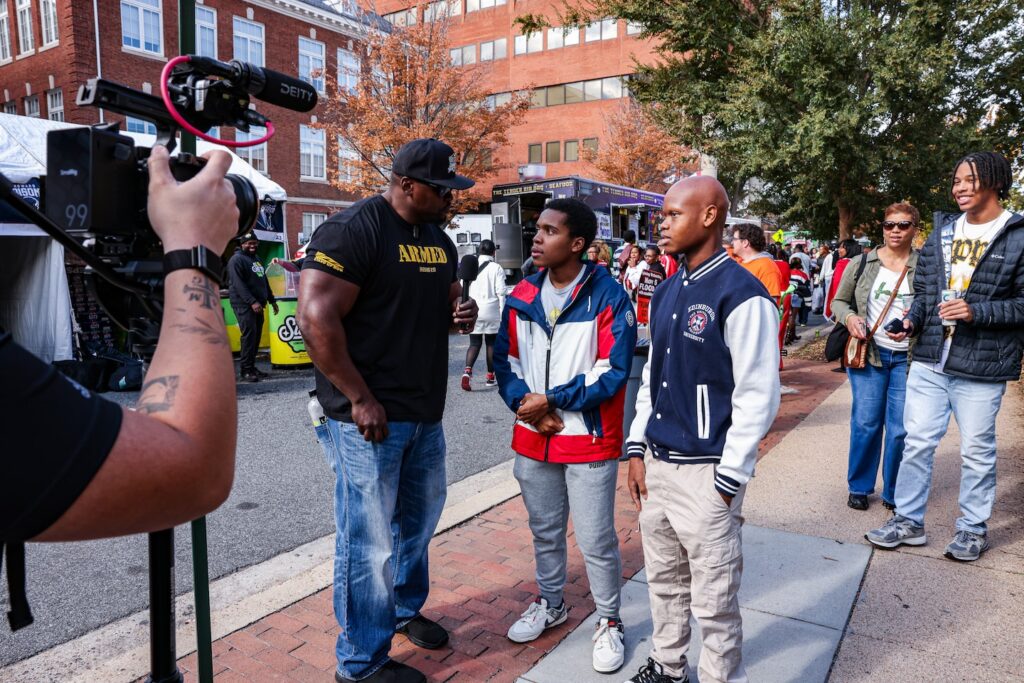
Freshman Summer Johnson summed up what many students felt: “I was unsettled by their presence. From their perspective, it’s very strategic—you come to one of the biggest events at Howard, where everyone’s liberal, just to provoke us.” Johnson’s mother works a federal job, and she said Blexit’s push for small government felt like a personal attack.
Still, not every student was hostile. One attendee, Sam Mahmood Al Hasan, said his conversation with Davis about entrepreneurship was “good awareness that should be spread more in the Black community.” It was a rare moment of calm exchange amid a mostly frosty reception.
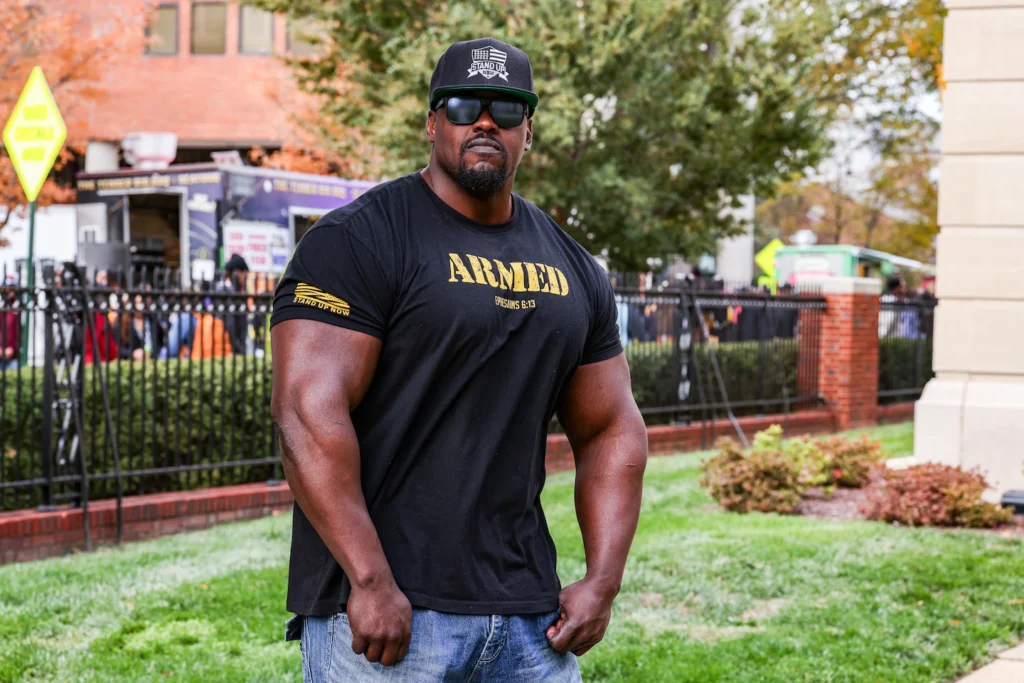
Pierre Wilson, Blexit’s senior director, says the point of visiting HBCUs isn’t to start fights but to spark dialogue. A former HBCU student himself, Wilson argues that young Black Americans deserve to hear perspectives beyond the liberal mainstream. “We’re not there to cause chaos,” he told reporters. “If they walk away and still lean left, that’s fine. What matters is that they’ve heard both sides.”
That sounds noble on paper. But when your “education tour” piggybacks off one of the most sacred celebrations of Black community life, the optics are less noble and more intrusive. Students viewed it not as an invitation to dialogue, but a deliberate attempt to hijack a cultural moment for political theater.
The data doesn’t lie either: despite Blexit’s social media claims of “expanding reach,” their HBCU stops have mostly fizzled. At Tennessee State, they were asked to leave campus. A Florida A&M visit was canceled outright. Even at Howard, turnout was so low that by the end of the afternoon, students were asking, “Who was that big guy with the camera?”
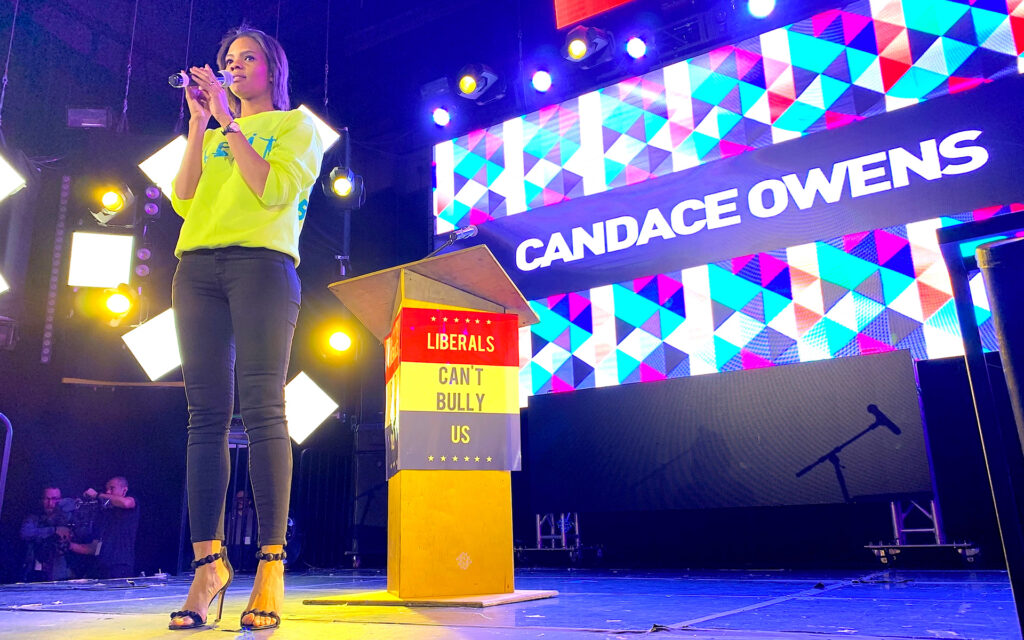
Adding to the confusion is the ghost of Candace Owens, who co-founded Blexit during Trump’s first term but has since broken ties. Owens’s recent conspiracy-laden rants about Kirk’s death have only muddied the group’s credibility. She didn’t attend any HBCU stops, yet her image still fronts the Blexit website.
The movement, like much of Turning Point USA’s spin-offs, now lives in the uneasy space between genuine ideological outreach and a branding exercise for white conservative donors who crave evidence of diversity.
By the time Davis and his cameraman packed up their gear to catch a flight back to Turning Point’s Phoenix headquarters, the spectacle was over. Howard’s Yard kept dancing, unbothered and unchanged. Davis declared the “vibes were great.” Most students barely noticed he was there.
What Blexit called “educational outreach,” Howard saw as an invasion of its safe space—a reminder that Black culture, no matter how public its celebration, is still policed, analyzed, and commodified by outsiders.
If Blexit’s goal was to shift the political consciousness of young Black Americans, it failed spectacularly. If the goal was to remind HBCU students why they distrust conservative outreach in the first place, mission accomplished.
Because on the Yard the heartbeat of Black thought, protest, and pride no amount of conservative rebranding can compete with history, culture, and a people who have been thinking for themselves since long before anyone called it a movement.