






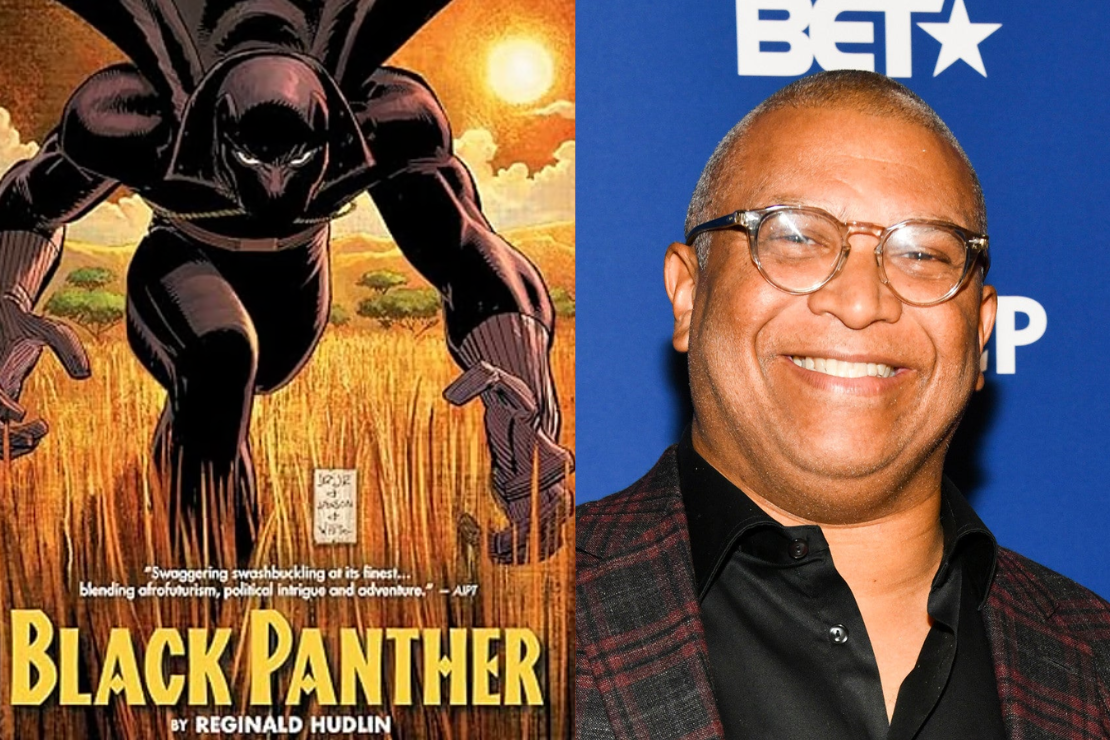
Wakanda’s Visionary: Reginald Hudlin and the Power of Representation
As Halloween approaches and kids don their Black Panther costumes, Reginald Hudlin smiles knowing his work helped inspire them. The writer, producer, and director—known for cultural touchstones like House Party, Boomerang, and Django Unchained—says his run on Marvel’s Black Panther comics was written with his own children in mind.
“That was one of my motivations when I started writing the book,” Hudlin told theGrio. “Because I have a son and a daughter, they could both dress as Black Panther for Halloween.”
Hudlin’s Black Panther series redefined the superhero genre and paved the way for the $1.3 billion global hit that transformed the character into a cultural icon. His introduction of Shuri, T’Challa’s brilliant sister and a STEM prodigy, gave readers—especially young Black girls—a role model who embodied intelligence and courage.
The Omnibus: Returning to the Heart of Wakanda
With the release of The Black Panther Omnibus, Hudlin revisits Wakanda’s intricate world. The new collection expands the nation’s history, explores T’Challa’s marriage to Storm, and imagines the U.S. amid civil unrest.
“They’re the global leaders—not only with technology but morally,” Hudlin said. “They were warriors that could never successfully be invaded. And to understand the man, you have to understand the land.”
Through Wakanda, Hudlin highlights what responsible leadership looks like, intertwining lessons of heritage, morality, and resilience that feel especially relevant today.
Defining Greatness: Black Men, Black Women, and the Dreaming Spirit
Hudlin’s career has always revolved around celebrating Black excellence—from his documentary The Black Godfather about Clarence Avant to Marshall, starring Chadwick Boseman as Thurgood Marshall.
“You can be great in a lot of different ways,” he said. “Here’s all this greatness to inspire Black men to inspire Black women, because you don’t get great Black men without great Black women raising them.”
For Hudlin, Black Panther wasn’t just a superhero story—it was an invitation. “It was another attempt to put another option on the wavelength of our culture,” he explained. “Here’s all the things we can be. Don’t be afraid to dream.”
Black Creativity Is Thriving: “We Are More in Style Than Ever”
As conversations about diversity waver in Hollywood, Hudlin rejects the idea that Black storytelling has lost momentum.
“Look at 2025,” he said. “Keke Palmer’s Just One of Them Days, Kendrick Lamar’s Super Bowl performance, Sinners, Mara Brock Akil’s Forever—we’re hitting hard. When you deliver the dope product, people are devouring it. So, the opposite of out of style—we are more in style than ever.”
Hudlin acknowledges the pushback against corporate diversity efforts but remains steadfast: “In terms of economic viability, making culture that is broadly popular—we’re as popular as we’ve ever been.”
Echoing jazz legend Miles Davis, he adds, “What does today call for? And that’s what we need to be playing.”