





AT A GLANCE
- Health Secretary Robert F. Kennedy Jr. repeated an unproven claim linking Tylenol use during pregnancy to autism.
- President Donald Trump backed the remarks, telling the Cabinet “Don’t take it.”
- Kennedy mischaracterized pregnancy anatomy and cited discredited circumcision data.
- Medical experts warn his statements could undermine evidence-based health policy.
“Don’t take it”: Kennedy Repeats Unproven Tylenol Claim at Cabinet Meeting
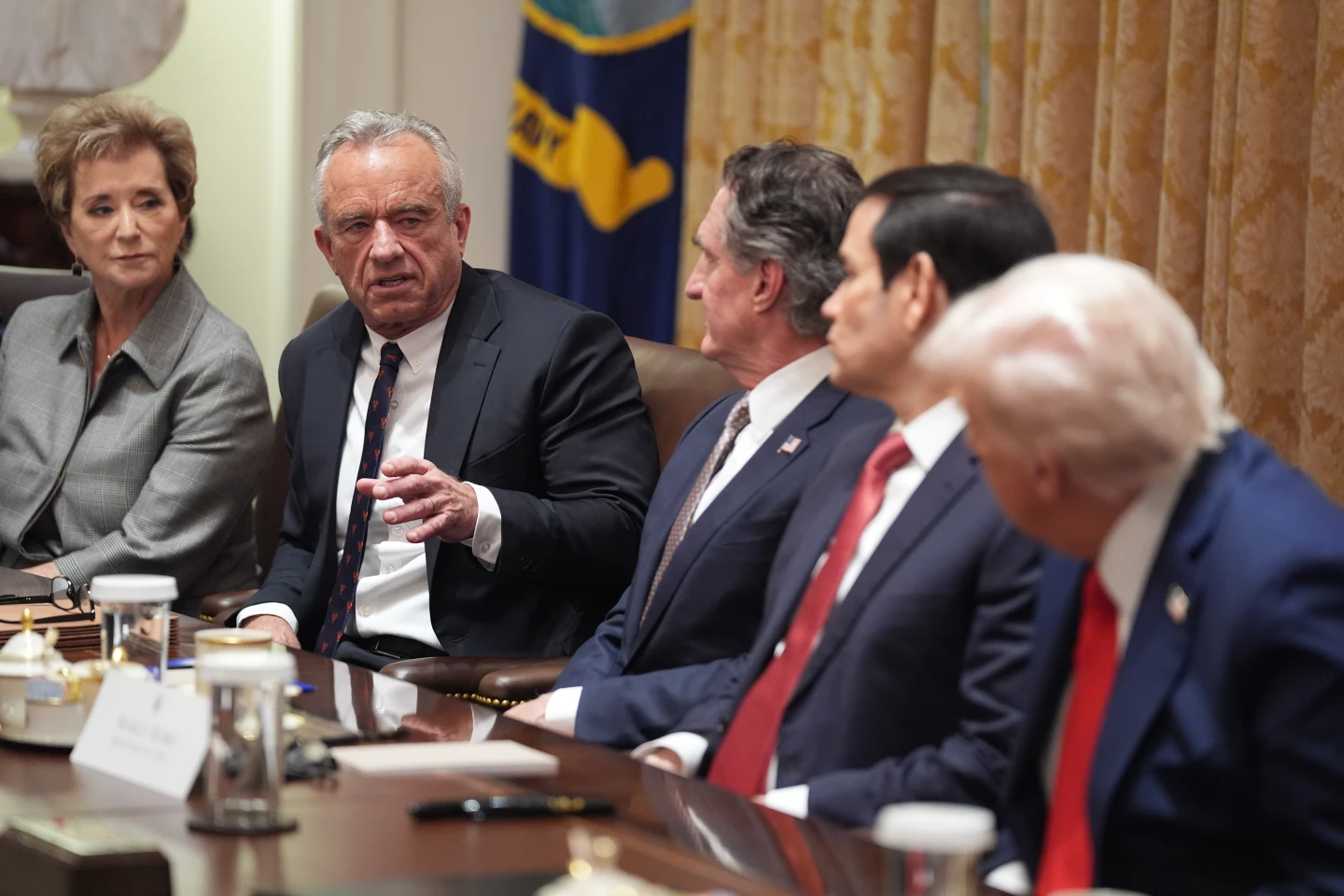
Health Secretary Robert F. Kennedy Jr. once again pushed a long-debunked claim connecting the common pain reliever Tylenol to autism—this time in front of President Donald Trump and his Cabinet.
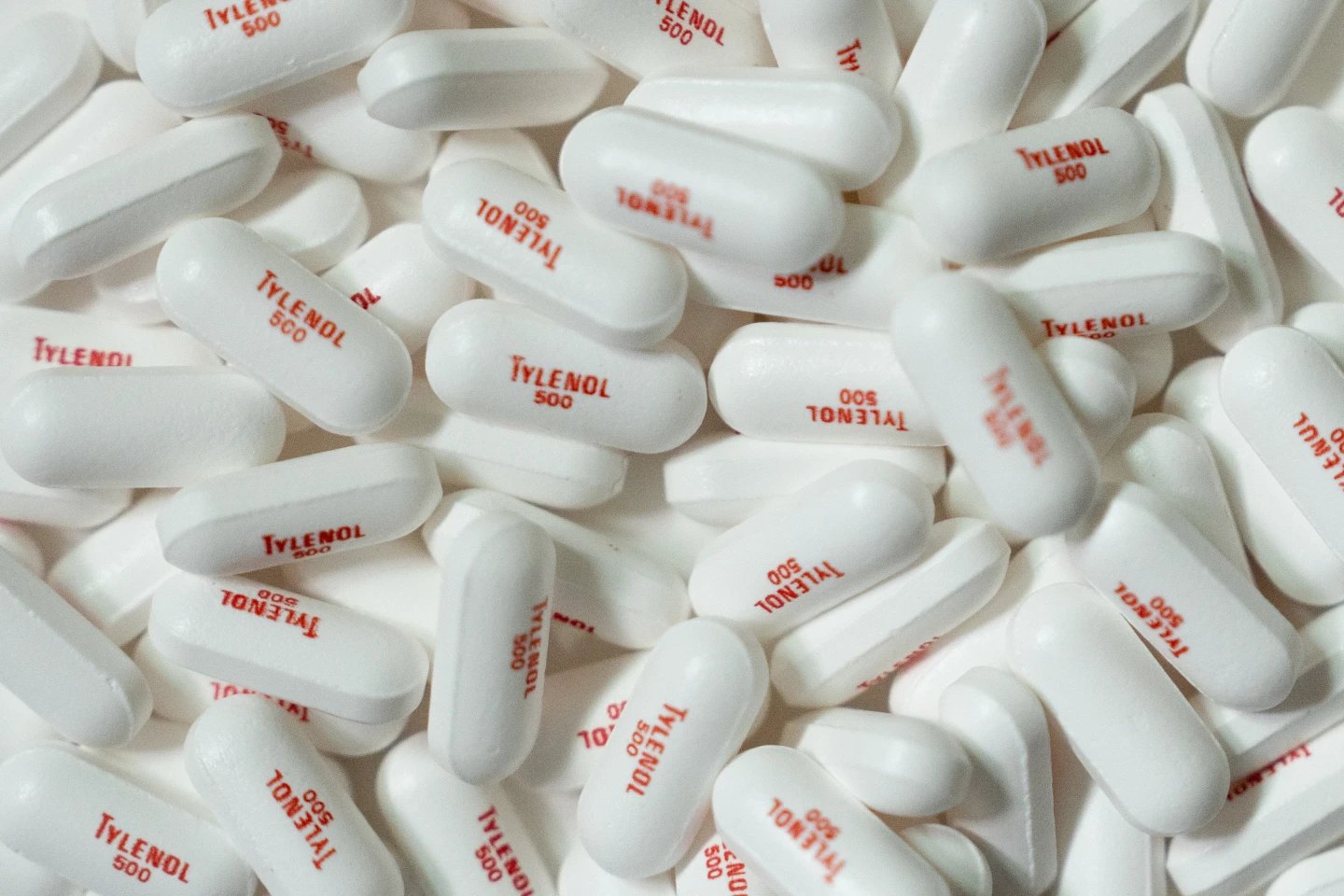
During Thursday’s meeting, Kennedy asserted that taking Tylenol during pregnancy increases the risk of autism in children, despite acknowledging that no proof exists. “Anybody who takes the stuff during pregnancy unless they have to is irresponsible,” he told the group. “It is not proof. We’re doing the studies to make the proof.”
The comment immediately reignited frustration among public health officials, who have spent years trying to correct misinformation promoted by Kennedy and others. Researchers and doctors maintain there is no credible evidence that acetaminophen, the active ingredient in Tylenol, causes autism spectrum disorder.
Trump Doubles Down on Anti-Science Messaging
Trump, who has long used public health issues to rally his base, reportedly nodded in agreement and followed Kennedy’s remarks by repeating, “Don’t take it.” The exchange underscored how misinformation around autism—once confined to online forums—has now found a home at the highest levels of government.
It was the second time in recent weeks that Kennedy and Trump publicly aligned on false or misleading health claims. Two weeks earlier, Kennedy joined Trump at the White House as the president amplified baseless theories tying both Tylenol and vaccines to autism. Those remarks drew swift condemnation from medical organizations, including the American Academy of Pediatrics, which called the claims “dangerously irresponsible.”
Trump has increasingly sought to portray himself as a truth-teller challenging what he calls “Big Pharma lies,” while simultaneously promoting unfounded or contradictory health advice—from vaccines to pain relievers.
Misstatements and Misinformation
Kennedy’s Cabinet remarks veered into bizarre territory when he cited a TikTok video that allegedly showed a pregnant woman “gobbling Tylenol” while “cursing Trump.” He used the video as evidence of what he called “Trump derangement syndrome,” claiming it had “entered the realm of pathology.”
He went on to say the woman was taking Tylenol “with a baby in her placenta,” a comment revealing a clear misunderstanding of human anatomy. In reality, a fetus develops in the uterus, while the placenta is a temporary organ that delivers oxygen and nutrients during pregnancy.
This isn’t the first time Kennedy’s medical assertions have alarmed experts. For years, he has promoted conspiracy theories linking vaccines to autism, questioned the safety of public health measures, and supported pseudoscientific claims about environmental toxins. His appointment as health secretary was met with widespread concern that the nation’s science-based policies could be undermined by misinformation from within the government itself.
The Circumcision Connection
Kennedy also brought up circumcision, claiming that infant boys who undergo the procedure have twice the rate of autism because they are given Tylenol for pain afterward. His comments appeared to reference a 2015 study published in the Journal of the Royal Society of Medicine, which examined the potential association between circumcision and autism in Danish boys under age 10.
The authors of that study found a statistical correlation—but not causation—and explicitly noted that they had no data about painkillers used during or after the procedure. Other researchers have since dismissed the findings as inconclusive, citing multiple follow-up studies showing no link between circumcision, Tylenol use, and autism.
Public health experts have emphasized that correlation does not equal causation—a point Kennedy continues to ignore. “There’s absolutely no biological mechanism that ties acetaminophen or circumcision to autism,” said Dr. Elise Morgan, a pediatric neurologist at Johns Hopkins University. “When senior officials repeat junk science, it confuses families and distracts from real research.”
Medical Community Pushes Back
Kennedy’s comments have once again triggered alarm in the medical community. The Centers for Disease Control and Prevention (CDC), World Health Organization (WHO), and National Institutes of Health (NIH) all maintain there is no evidence linking Tylenol or vaccines to autism.
“Every major study has debunked these claims,” said Dr. Sarah Kaplan, a clinical researcher with the CDC’s Developmental Disorders Division. “This kind of rhetoric creates unnecessary panic and discourages safe medical practices, especially among pregnant women who rely on Tylenol for pain and fever management.”
Despite overwhelming consensus, Kennedy has continued to frame his position as a fight against censorship, claiming that pharmaceutical companies and the media suppress data that could reveal “uncomfortable truths.” He has described himself as a “health freedom advocate,” a label critics say has become a cover for promoting fear and distrust in medicine.
Policy Concerns Mount
As head of the Department of Health and Human Services, Kennedy’s statements carry real-world consequences. Public health officials worry that his skepticism could shape funding priorities or derail ongoing studies into autism causes and treatments.
“There’s a difference between scientific curiosity and political opportunism,” said Dr. Angela Liu, a professor of public health policy at Columbia University. “When misinformation drives the conversation, evidence takes a backseat—and that’s dangerous for everyone.”
The Biden administration’s previous health team had spent years trying to rebuild trust in science following the pandemic. Critics argue that Kennedy’s tenure risks undoing that progress. Meanwhile, misinformation surrounding autism continues to circulate online, fueled by viral posts, political polarization, and platforms that profit from outrage.
The Broader Impact
For parents of children with autism, Kennedy’s latest remarks are more than just political theater—they’re personal. Advocacy groups say such statements deepen stigma and divert resources from meaningful research and support programs.
“The harm isn’t abstract,” said Maria Sanchez, executive director of the Autism Alliance Network. “When people in power repeat these falsehoods, families get bombarded with doubt, shame, and misinformation. It affects how they seek care, how they’re treated by doctors, even how schools respond to their kids’ needs.”
As Kennedy continues to blur the boundaries between science and speculation, the health community finds itself facing an unsettling question: what happens when the nation’s top health official spreads the very misinformation he was appointed to fight?