




AT A GLANCE
- Troops arrive near Chicago and Texas National Guard members were spotted Tuesday at an Army Reserve center southwest of the city.
- Illinois lawsuit filed: Gov. JB Pritzker and the city of Chicago sued to block the deployment, calling it “unlawful and dangerous.”
- Portland deployment halted because a federal judge temporarily blocked Trump’s order to send troops to Oregon, citing state sovereignty concerns.
- Protests intensify as federal agents have clashed with demonstrators outside ICE facilities in Illinois and Oregon, sparking civil rights lawsuits.
- Nationwide expansion: Trump has discussed or initiated similar deployments in up to 10 cities, including Los Angeles, Memphis, and New Orleans.
Trump Faces Legal Roadblocks Over Military Deployments
President Trump voiced frustration Sunday after U.S. District Court Judge Karin Immergut, a Trump appointee, temporarily blocked his attempt to send National Guard troops to Portland. The ruling highlights the growing legal battle over Trump’s controversial decision to deploy troops in cities led by Democratic governors.
National Guard Troops Arrive Near Chicago
The first troops sent by Trump arrived Tuesday at the U.S. Army Reserve Center in Elwood, Illinois, 55 miles southwest of Chicago. Reporters observed soldiers wearing Texas National Guard patches and vehicles marked Emergency Disaster Services delivering supplies.
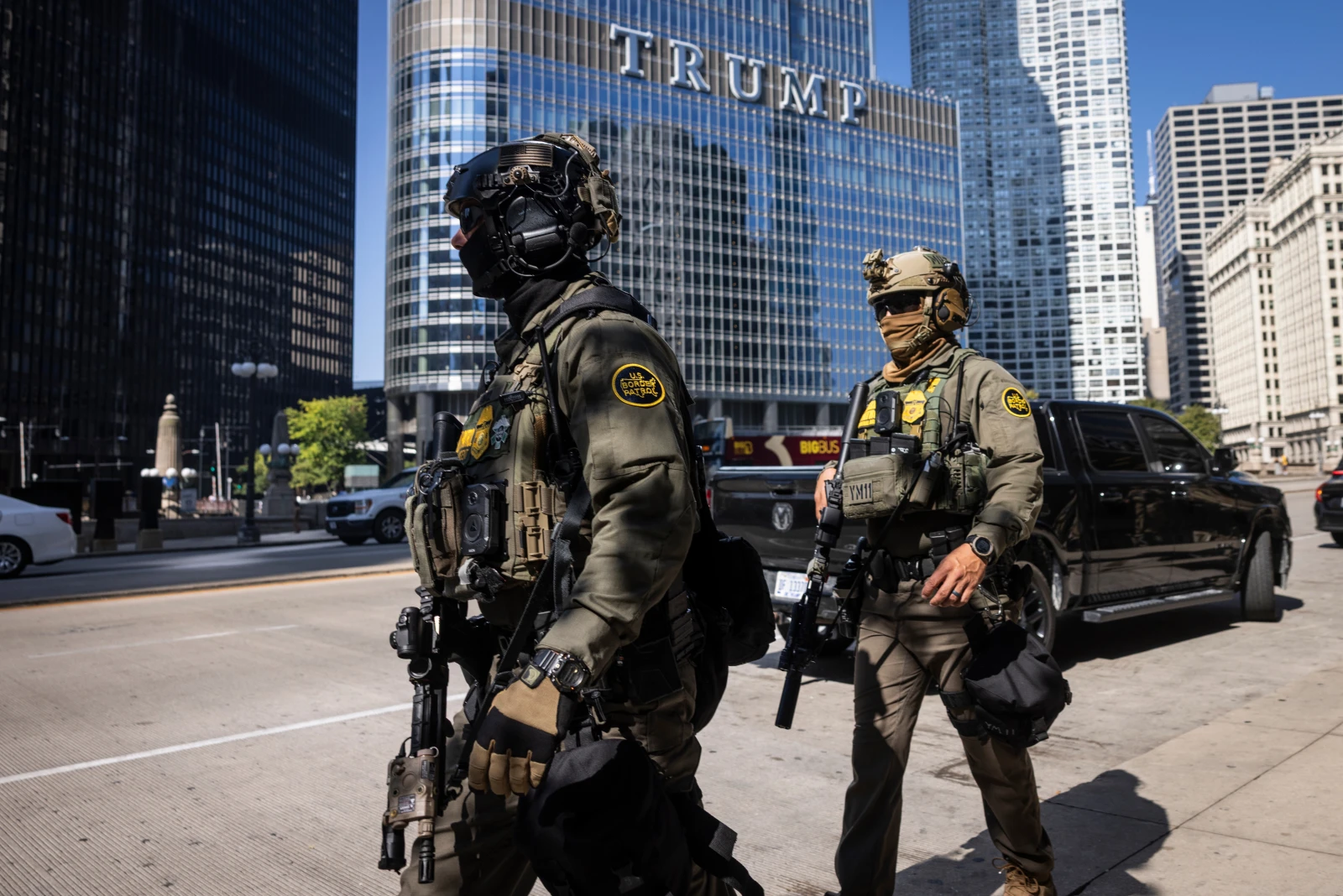
Illinois Gov. JB Pritzker said about 300 Illinois National Guard troops had been federalized, joined by 400 from Texas. He called the move “illegal and dangerous,” accusing Trump of using the military as “political props.” The state of Illinois and the city of Chicago filed a lawsuit Monday to block the deployment.
Tensions Mount in Broadview and Portland
At protests outside an ICE detention facility in Broadview, federal agents reportedly used tear gas and pepper balls against demonstrators. The ACLU of Illinois filed suit, citing violations of free speech and press rights.
In Portland, Judge Immergut issued a 14-day restraining order halting Trump’s plan to send National Guard troops from California and Texas, saying the protests were not sufficient to justify federal intervention.
Local Leaders Push Back Against Federal Troops
Chicago Mayor Brandon Johnson signed an executive order barring federal agents from using city-owned property as staging areas. The move followed rising concerns about racial profiling after Border Patrol agents were seen making arrests in immigrant-heavy neighborhoods.
A Department of Homeland Security spokesperson confirmed a woman was shot by federal agents Saturday during an encounter in southwest Chicago. DHS said the woman, a U.S. citizen, had attempted to ram officers with her vehicle while armed.
Legal Challenges Expand Nationwide
Trump’s deployments have triggered legal fights across several states.
- In California, Gov. Gavin Newsom continues to challenge the use of Guard troops and Marines.
- In Louisiana, Gov. Jeff Landry requested troop support to address crime.
- In Tennessee, Gov. Bill Lee welcomed the operation in Memphis as part of Trump’s federal task force.
Appellate judges in California signaled that Trump’s administration might ultimately prevail in its appeal over the legality of Guard deployments, suggesting an ongoing constitutional showdown between federal authority and state sovereignty.