






Need to Knows
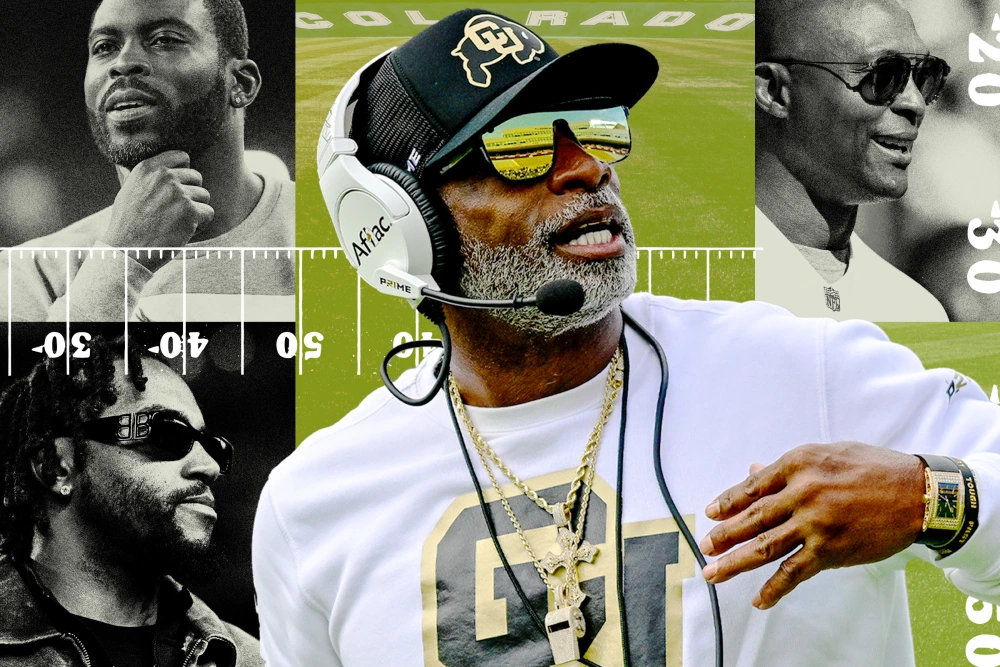
- Former NFL stars like DeSean Jackson, Eddie George, and Michael Vick are landing college head coaching jobs with no prior coaching experience.
- Deion Sanders’ high-profile success at Jackson State and Colorado set the stage for this trend.
- Colleges see celebrity hires as a way to attract recruits, donors, and national attention.
- Critics question whether star power alone can build sustainable football programs.
The Rise of the Deion Sanders Effect
Deion Sanders’ transformative run at Jackson State — and his blockbuster move to Colorado — has done more than sell tickets. It’s changed the hiring calculus for college football. Schools that once relied on seasoned assistants are now turning to former NFL stars with no coaching background, betting that name recognition and charisma will deliver results.
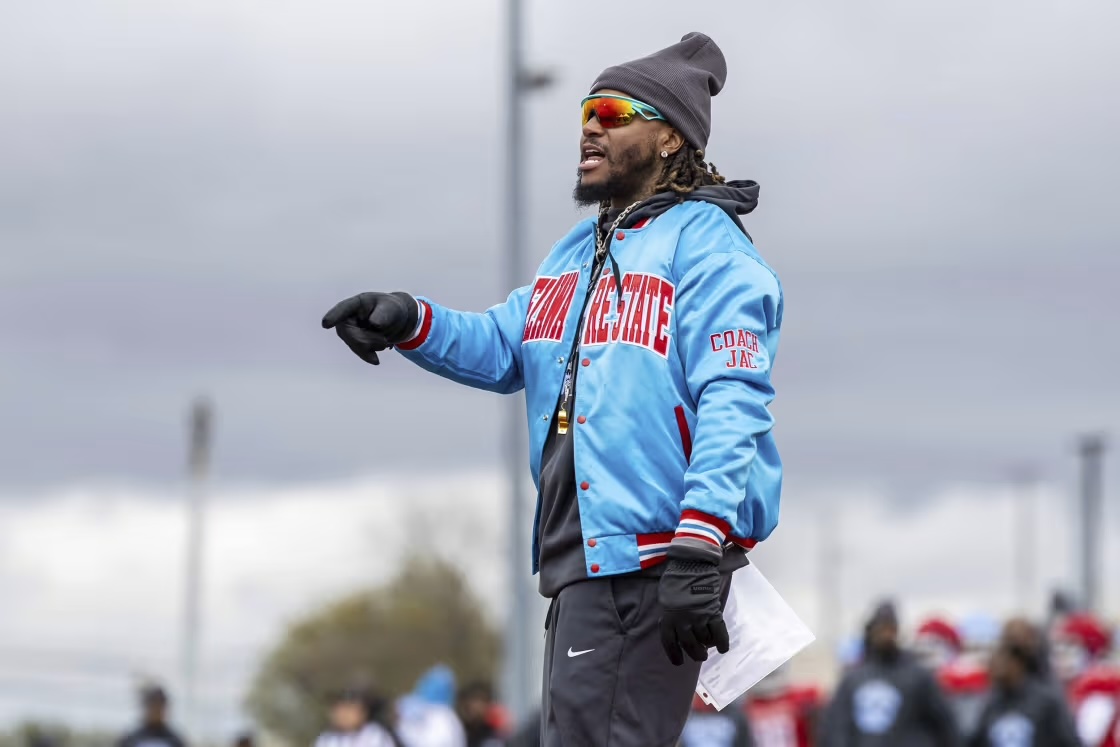
DeSean Jackson’s New Role at Delaware State
When DeSean Jackson took the reins at Delaware State this spring, he admitted to NBC News the job came with surprises.
“As a head coach, man, there’s so many different things that I didn’t even realize took place,” Jackson said.
Jackson is now one of several former NFL standouts who skipped the traditional coaching ladder. At Delaware State’s spring game in April, his debut symbolized a shift in how programs see leadership — not just X’s and O’s, but branding, fundraising, and visibility.
Eddie George, Michael Vick and the Nontraditional Path
The shift started in 2021, when Eddie George — then reluctant and untested — was hired at Tennessee State. The hope was that his Hall of Fame pedigree would raise the school’s national profile. That same year, Alabama State tapped Eddie Robinson Jr., another former NFL player, to take over.
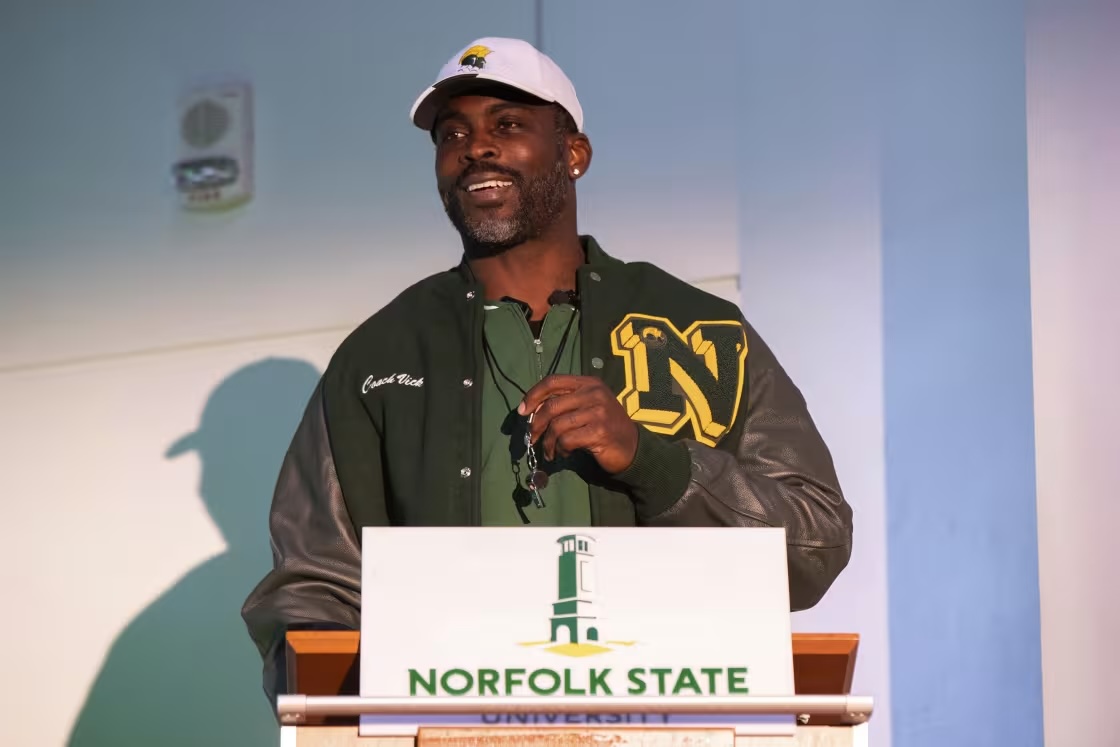
Last winter, Norfolk State introduced Michael Vick as its head coach, reuniting him on the sidelines — though not on the field — with Jackson, his former Philadelphia Eagles teammate. Both hires immediately drew mainstream attention, including an upcoming docuseries following Vick’s program.
George, now at Bowling Green after a four-year run at Tennessee State, says schools are looking for leaders more than technicians.
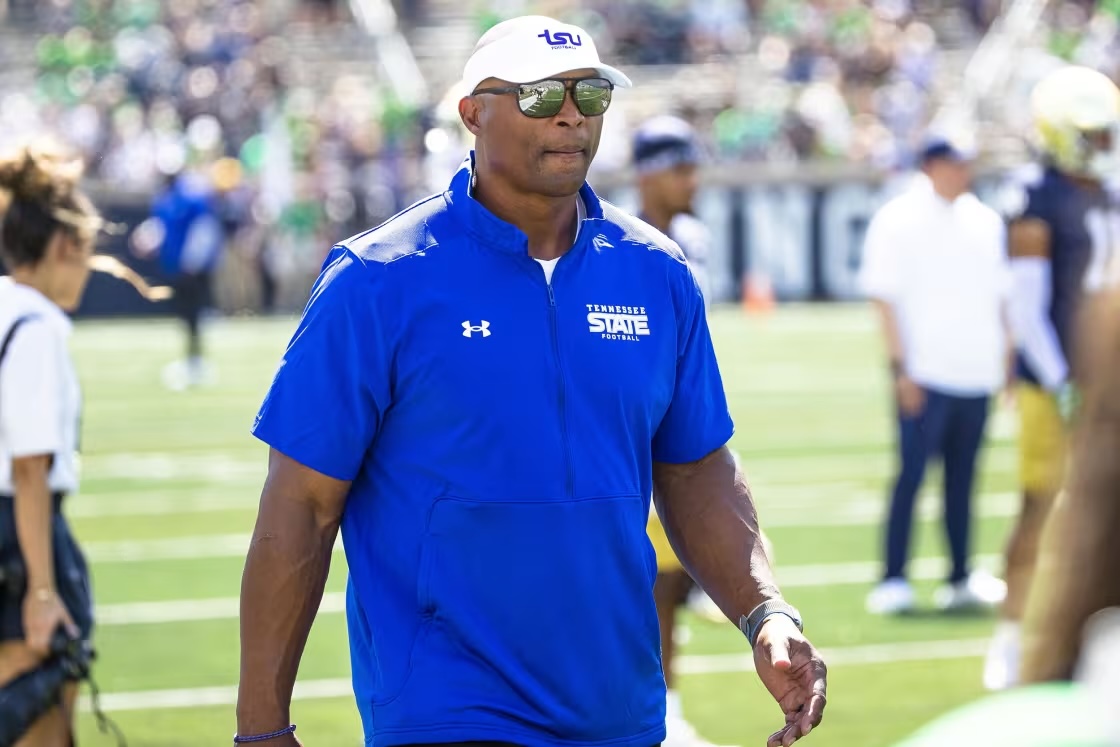
“Just because you’re a play caller or position coach (and) you’ve been doing this for a long time doesn’t necessarily mean that you’re a great leader or head coach,” George said. “So you’re not necessarily looking for a football coach, you’re looking for a leader.”
Sanders’ Blueprint for Success
Deion Sanders was the proof of concept. Hired by Jackson State in 2021 after a brief stint coaching high school ball, he made an immediate impact. ESPN aired nine of his games in his first season, while Walmart and Gillette became program sponsors. He signed five-star recruit Travis Hunter, installed his son Shedeur Sanders at quarterback, and went 27-6 in three seasons — the best winning percentage in school history.
By 2023, Sanders had parlayed that success into a job at Colorado, where his presence sold out a stadium, produced a Heisman Trophy winner, and vaulted the Buffaloes into conversations normally reserved for Alabama or Ohio State.
His example inspired George, Jackson, and Vick to make calls before taking their own jobs. “I don’t think I would have been in this position without that,” Jackson admitted.
Representation, Opportunity and Pressure
The trend also raises deeper questions about representation in a sport where 65% of players are nonwhite but just 23% of head coaches share that background. For years, the pipeline of minority coaches has been narrow, but Sanders’ breakthrough has created new entry points.
Mike Locksley, Maryland’s coach and founder of the National Coalition of Minority Football Coaches, believes Sanders expanded the definition of a qualified candidate.
“It’s definitely made it a little more socially acceptable to maybe hire a guy like a Deion … because of the success he had there, (it) opened up the door for more opportunities,” Locksley said.
Still, the stakes are high. Jackson and Vick’s teams will face each other Oct. 30 in Philadelphia, putting the two friends — and this experiment — under the spotlight.
“I wouldn’t say it’s necessarily ‘pressure,’” Jackson said. “You know, I do feel like it’s a lot riding on it.”
Coaching by Rolodex
One advantage former players bring is access. Jackson leaned on a “Rolodex” of NFL contacts, including Sean McVay, Andy Reid, and David Cully, for advice. Vick called George. And George, in turn, called Sanders when he needed guidance.
For Jackson, the mission is bigger than wins.
“The biggest thing for me is where, man, I got an opportunity to help change these kids’ lives,” he said. “If these young dudes want to make it to NFL, hey, it’s not guaranteed everybody will make it. But one thing you can do is you can give them the information … and apply it to their lives.”
Whether this new wave of coaches thrives or flames out, the “Deion Sanders Effect” has already rewritten the rules of college football.