






Local Efforts Aim to Stop the Cycle Between Housing Instability and Repeated Jail Stays
Bexar County faces a growing, intertwined challenge: homelessness and criminal justice involvement feed each other. People leaving jail are more likely to become homeless, and people experiencing homelessness are more likely to be arrested — creating a “revolving door” between the streets and the justice system. Below I explain how those links work locally, show the data that points to the problem, and highlight local efforts that try to break the cycle.
The region’s annual Point-in-Time (PIT) counts are a useful snapshot. The 2024 PIT reported roughly 3,372 people experiencing homelessness in the San Antonio/Bexar County area, with about 888 unsheltered (sleeping outside or in places not meant for habitation). That was a rise from the prior year and marked an increase since pre-pandemic levels.
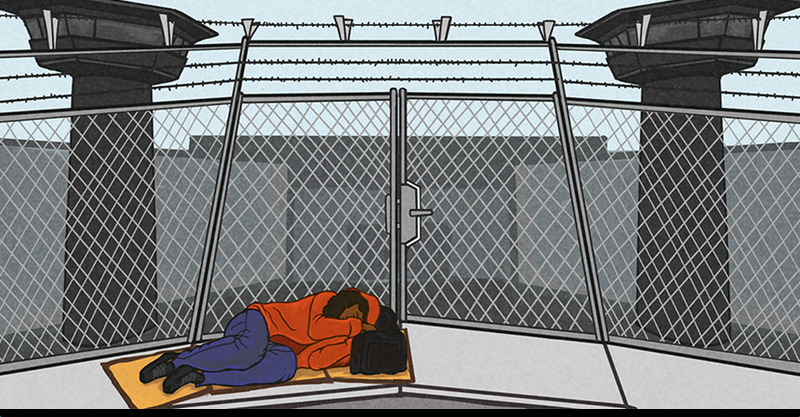
At the same time, local criminal-justice data show that many people cycle through jails and come back to the community without stable housing or support. There is a three-year recidivism rate near 34% for Bexar County as recently measured — illustrating how often people return to the system after release. When people reenter the community without housing or services, the odds of rapid re-arrest increase.
Statewide research also documents this cycle: studies of Texas cities found that people who are homeless are far more likely to be arrested and that those released from jail are often returned to homelessness — a pattern community advocates call a “revolving door.” That larger pattern helps explain why Bexar County’s homelessness and criminal-justice data look linked.
Why Incarceration and Homelessness Feed Each Other
Release with no housing plan. Many people leave jail with no arrangement for a place to sleep. Without ID, money, or connections, securing housing immediately is difficult — and the first nights back on the street make other problems worse (mental health, substance use, medical needs). Those vulnerabilities increase the chance of new offenses or parole violations. Criminal records and housing barriers. A conviction or even recent jail stay can make landlords refuse applicants, especially in tight rental markets. That locks people out of stable housing even if they want it. Combined with limited income and benefits delays after release, the obstacle can be insurmountable.

Health and behavioral-health gaps. Incarceration often disrupts treatment for mental health or substance-use disorders. When people return to the street without continuity of care, crisis behaviors or relapse can follow — behaviors that make arrest more likely. Local health-justice task forces have emphasized that untreated behavioral health needs are a core driver of repeated jail interactions. While outreach often precedes cleanups, those enforcement actions may return people to jail instead of housing, perpetuating the cycle.
In Bexar County the data and local experience point to a clear conclusion: homelessness and incarceration are tightly linked. Fixing one without addressing the other will leave the revolving door spinning. That means policies should combine housing, health care, and justice reforms — ensuring people leave jail into a plan, not into the street. Bexar County’s growing reentry and coordination efforts are a step in the right direction, but scaling housing and supportive services remains the crucial next step.