





AT A GLANCE
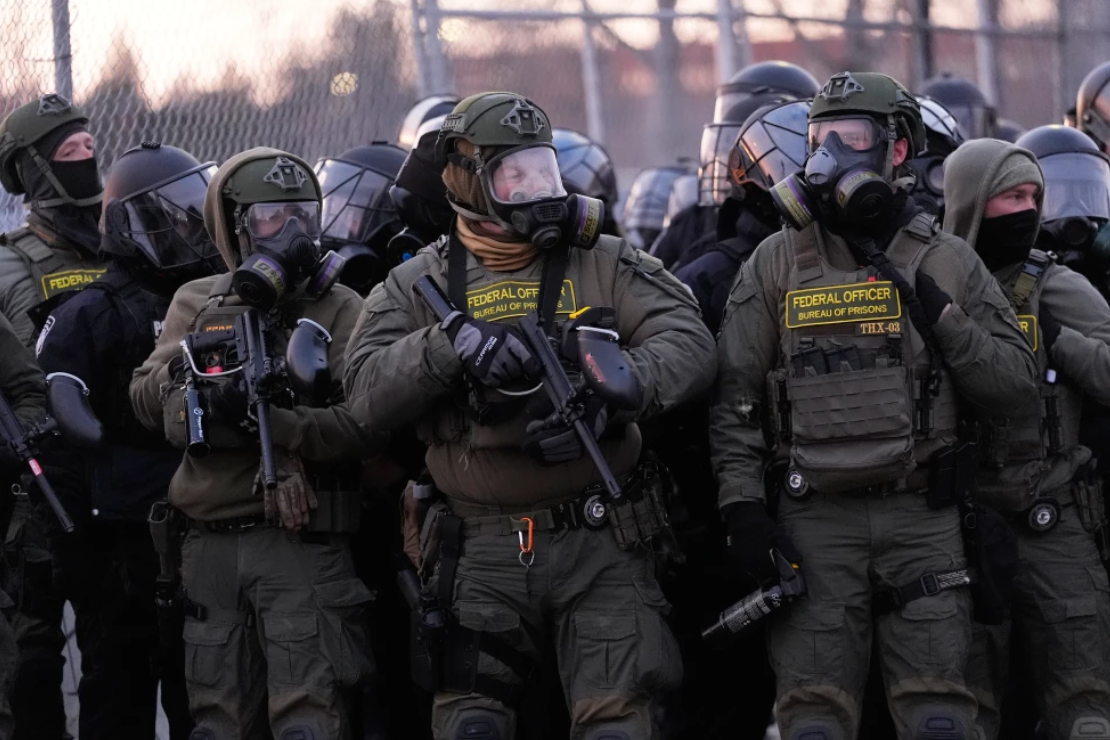
- Billions in new federal funding are fueling a rapid expansion of Immigration and Customs Enforcement under President Donald Trump.
- The money comes directly from a Republican-backed tax and spending cuts bill passed by Congress.
- ICE’s budget has effectively tripled, creating one of the largest federal law enforcement forces in the country.
- Aggressive enforcement tactics in major U.S. cities have sparked protests, political backlash, and renewed shutdown threats in Congress.
Trump ICE Deportation Surge Is Being Bankrolled by His Tax and Spending Cuts Bill
Donald Trump promised the largest mass deportation operation in U.S. history. What was once campaign rhetoric has now materialized into a sweeping, heavily funded national enforcement apparatus — made possible by billions of dollars approved by Congress and paid for by U.S. taxpayers.
At the center of the expansion is Immigration and Customs Enforcement, whose budget and staffing levels have surged following the passage of a sweeping Republican tax and spending cuts bill. The legislation dramatically increased funding for the Department of Homeland Security, allowing ICE to expand far beyond its historical role.
Budget analysts say the scale of the investment is unprecedented for domestic law enforcement.
“I don’t think people have a sense of the scale,” said Bobby Kogan, senior director of federal budget policy at the Center for American Progress. “We’re looking at ICE in a way we’ve never seen before.”
The Big Bill That Supercharged ICE
Under the new law, Homeland Security funding was essentially doubled, adding roughly $170 billion over four years. ICE alone — which historically operated on about $10 billion annually — received approximately $30 billion for operations and $45 billion specifically for detention facilities.
The funding is locked in through 2029, placing the money largely beyond the reach of future congressional intervention while Trump remains in office.
Policy experts warn the structure of the bill leaves few guardrails on how the money can be used.
“Spending at this level is typically reserved for the military,” said Kathleen Bush-Joseph of the Migration Policy Institute. “This is the militarization of immigration enforcement.”
From Border Enforcement to City Streets
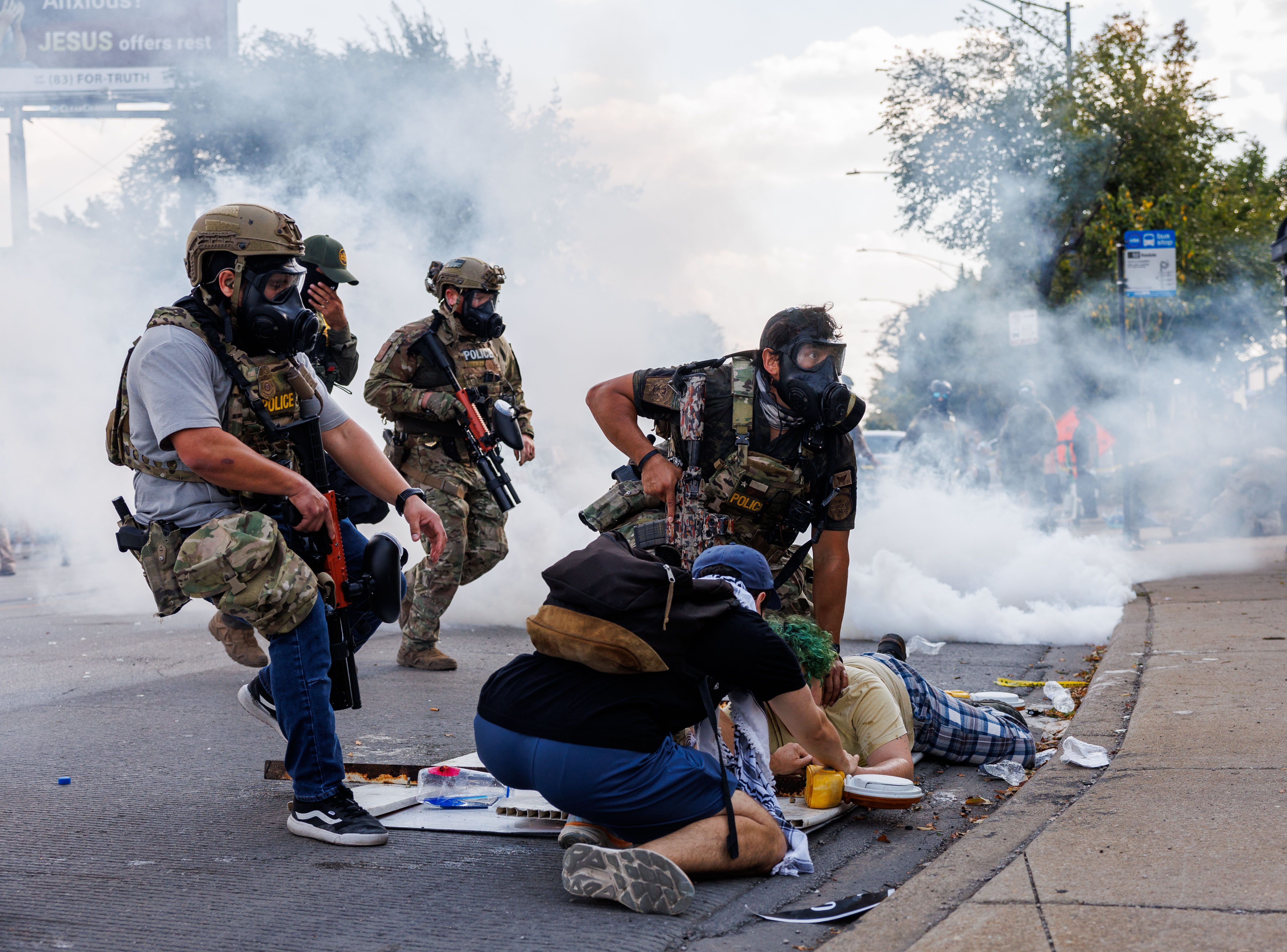
While border crossings have dropped to historic lows, enforcement efforts have shifted inward. ICE agents, often masked and heavily armed, are now a frequent presence in major cities including Minneapolis, Los Angeles, and Chicago.
Videos circulating online show officers smashing car windows, pulling people from vehicles, and conducting street arrests that resemble tactical raids rather than traditional civil immigration enforcement.
ICE is no longer operating alone. Federal, state, and local law enforcement agencies have entered into partnership agreements with Homeland Security, further expanding the reach of immigration enforcement into everyday community spaces.
Minneapolis Shooting Sparks National Outcry
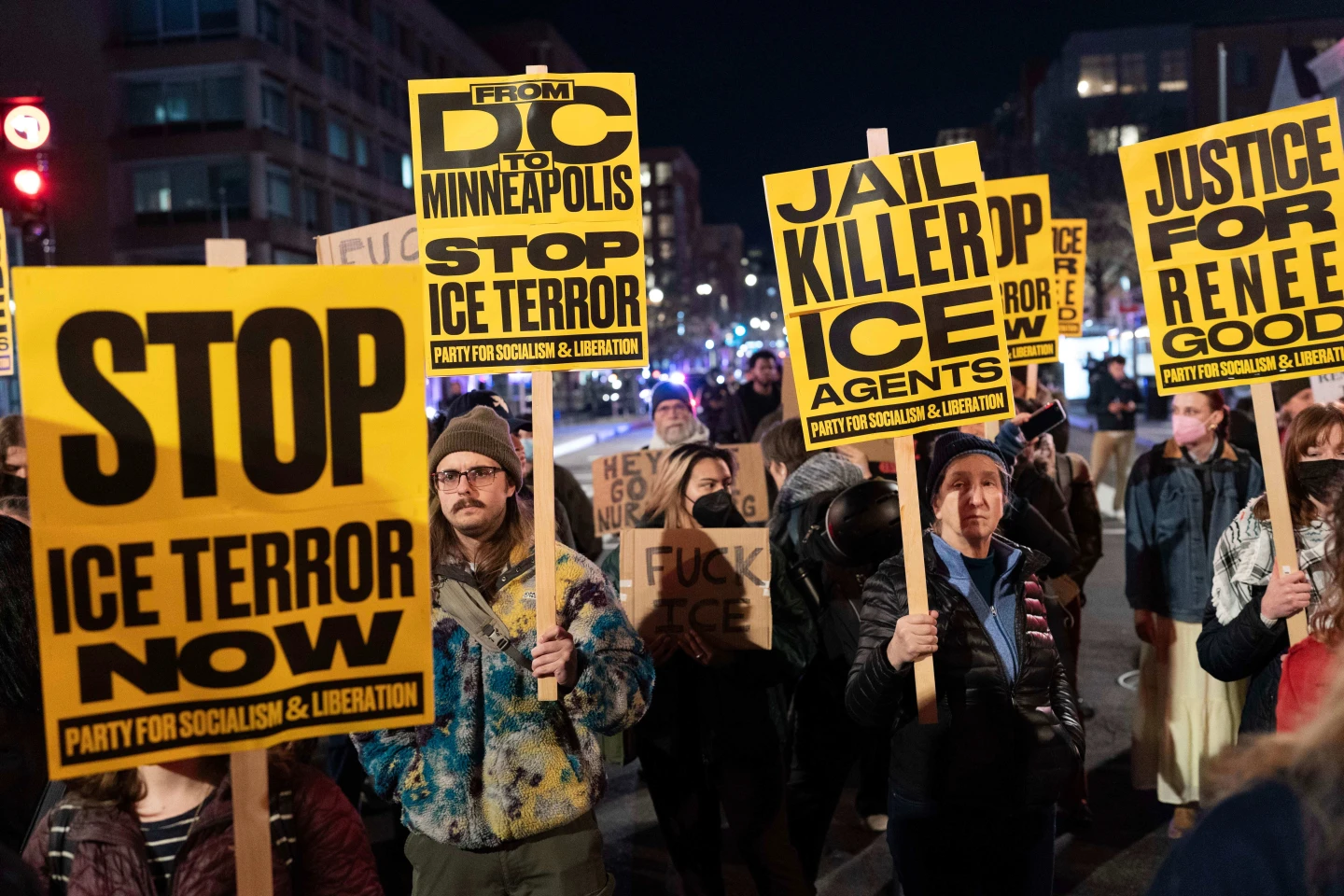
The expansion of ICE’s authority has been underscored by violence. The shooting death of Renee Good in Minneapolis ignited days of protests and intensified scrutiny of the agency’s tactics.
Demonstrators have accused ICE of operating like a federalized police force, with little accountability and broad discretion. In response to unrest, Trump revived threats to invoke the Insurrection Act, while the U.S. Army confirmed that 1,500 soldiers were on standby for potential deployment.
Despite the administration’s hardline stance, public support for Trump’s immigration policies has slipped, according to recent polling.
“Public sentiment is everything,” said Rep. Nydia Velázquez of New York. “Americans are upset at what they are seeing. They didn’t sign on for this.”
Claims of Targeting Criminals Clash With Reality
The Department of Homeland Security maintains that ICE is targeting what officials call “the worst of the worst.” However, reports continue to surface of non-criminal immigrants — and even U.S. citizens — being detained during enforcement operations.
The Supreme Court last year lifted a ban on the use of race alone in immigration stops, a decision civil rights advocates say has emboldened racial profiling.
Trump has also reignited controversy with inflammatory rhetoric, recently referring to Somali immigrants as “garbage,” echoing language from his first term that drew widespread condemnation.
Enforcement Goals That Stretch the System
The administration has set an aggressive target of 100,000 detentions per day — roughly three times typical levels — with a goal of one million deportations annually.
Homeland Security officials say the money is already being put to use. ICE has hired more than 12,000 new officers in just months, doubling the force to roughly 22,000 agents nationwide. New recruits were offered signing bonuses of up to $50,000.
By the department’s own accounting, about 600,000 people have been arrested and deported, while another 1.9 million have “voluntarily self-deported” since Trump returned to office in January 2025.
Democrats Push Back, but Funding Keeps Flowing
With Republicans controlling Congress, efforts to impeach Homeland Security Secretary Kristi Noem or roll back ICE funding face steep odds. Even threats of a government shutdown may have limited impact, as the largest pools of ICE funding are already authorized and obligated.

Democratic lawmakers are now pushing narrower restrictions, including bans on arrests near hospitals, churches, and courthouses, along with requirements that officers display identification and avoid face coverings.
“I think ICE needs to be totally torn down,” Sen. Ruben Gallego of Arizona said recently. “People want immigration enforcement that goes after criminals — not a goon squad.”