





AT A GLANCE
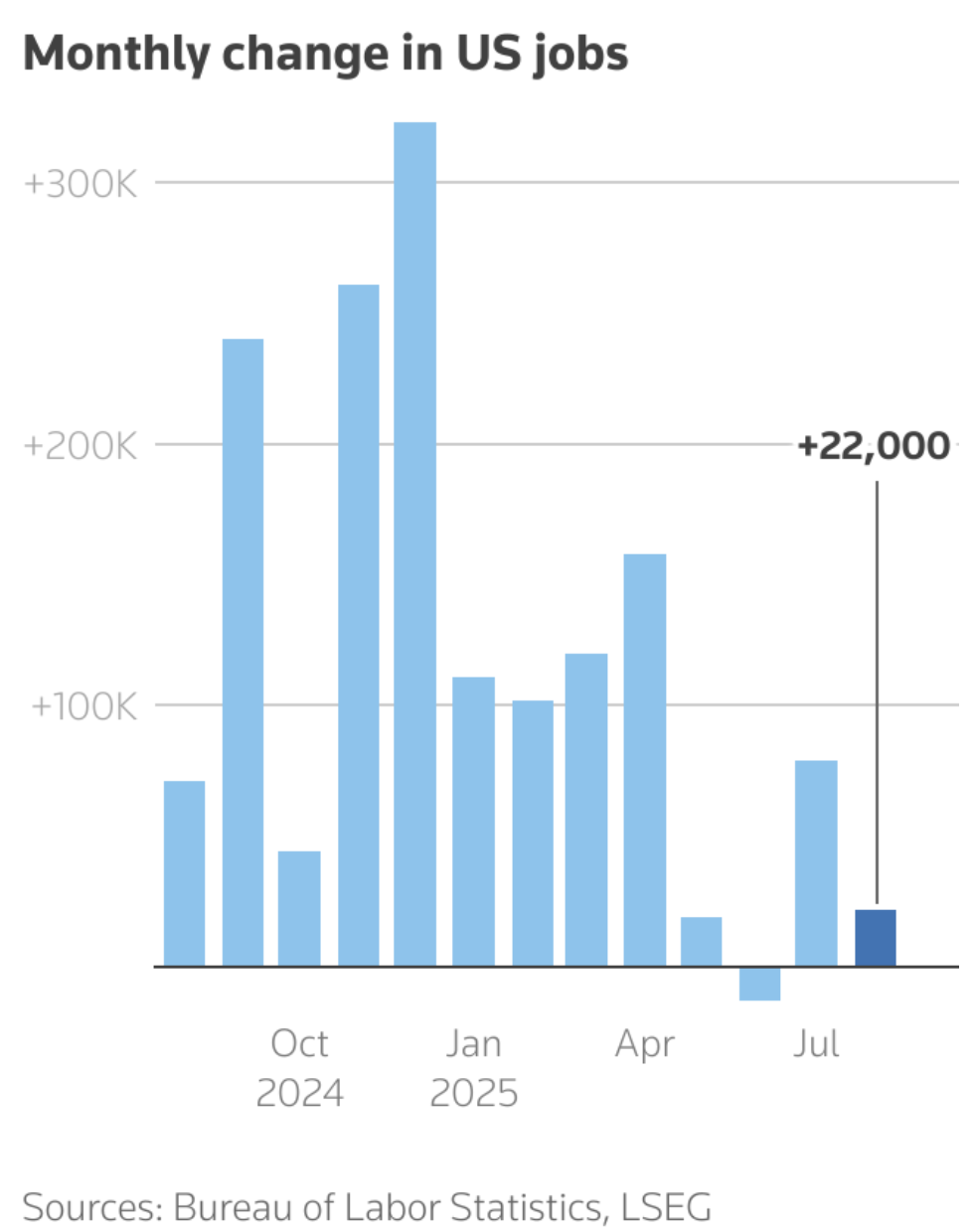
- U.S. job growth slowed to just 22,000 in August, far below expectations.
- Unemployment rose to 4.3%, the highest in nearly four years.
- Economists blame Trump’s tariffs, immigration crackdown, and political meddling at the Labor Department.
- Federal Reserve expected to cut interest rates this month in response.
US Labor Market Weakens as Job Growth Nearly Stalls in August
The U.S. labor market is flashing red after the government’s latest employment report showed job growth slowing sharply in August, raising new concerns about the economy and spotlighting President Donald Trump’s influence over federal labor data.
Job Growth Falls Well Below Expectations
The Labor Department reported just 22,000 jobs were added in August, far fewer than economists’ forecast of around 75,000. Revisions showed payrolls in June actually declined by 13,000, the first monthly loss since late 2020, while July’s count was revised upward to 79,000.
The unemployment rate rose to 4.3% from 4.2% in July, its highest level since 2021. Economists say the slowdown reflects both weak hiring and Trump administration policies that have disrupted the labor market.
Trump’s Tariffs and Immigration Crackdown Cited
Analysts point to Trump’s sweeping tariffs—which have pushed U.S. import duties to their highest level since 1934—as a major drag on businesses already navigating inflation concerns. An appeals court ruling last week that many of those duties are illegal has only deepened the uncertainty.
Meanwhile, Trump’s aggressive immigration crackdown has reduced the available labor pool, leaving employers struggling to fill openings. Despite administration claims that this benefits U.S.-born workers, the unemployment rate for native-born Americans is now at 4.7%, the highest in eight years.
“The warning bell that rang in the labor market a month ago just got louder,” said Olu Sonola, head of U.S. economic research at Fitch Ratings.
Political Turmoil at the Bureau of Labor Statistics
This jobs report is the first since Trump fired Bureau of Labor Statistics commissioner Erika McEntarfer, accusing her without evidence of manipulating employment data. Economists widely rejected those claims, attributing recent revisions to long-standing statistical models.
Trump has nominated E.J. Antoni, chief economist at the Heritage Foundation, as McEntarfer’s replacement. Antoni has previously argued the monthly jobs report should be paused altogether, a stance experts say could rattle global markets.
Weakness Spreads Across Sectors
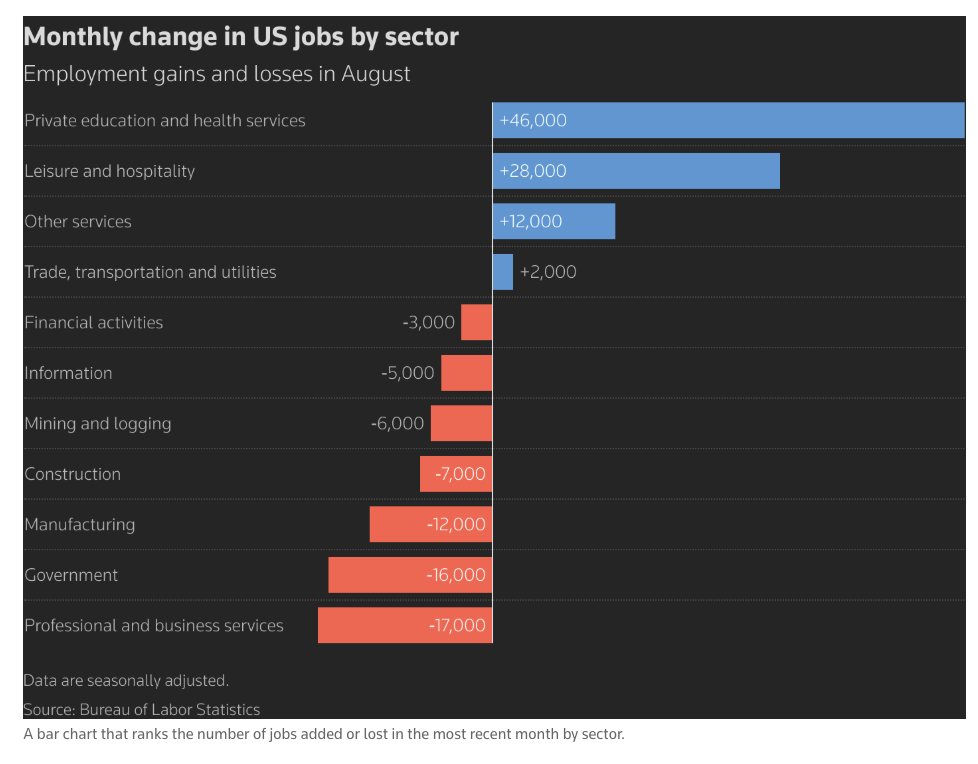
Healthcare added 31,000 positions in August and social assistance rose by 16,000, but both increases were below their 12-month averages. Federal government payrolls dropped by 15,000, while wholesale trade, manufacturing, construction, and professional services also shed jobs.
Layoffs have surged, with Challenger, Grey and Christmas reporting a 39% increase in August compared to July. Employers also announced plans to add just 1,494 jobs for the month, the lowest total on record since the consultancy began tracking hiring plans in 2009.
Fed Likely to Cut Rates
The weak August report bolsters expectations that the Federal Reserve will cut interest rates at its Sept. 16–17 policy meeting. Fed Chair Jerome Powell recently acknowledged rising risks to the labor market even as inflation remains above the bank’s 2% target.
Markets responded quickly: Treasury yields fell and the dollar slipped against other currencies. Economists now expect upcoming revisions could reveal an even weaker jobs picture, with total employment potentially revised down by as much as 800,000.
Outlook: A Stalled Job Market
Employment growth has averaged just 29,000 jobs per month over the past three months, compared with 82,000 during the same period last year. With seasonal holiday hiring around the corner, analysts warn that August’s record-low announcements may signal a bleak outlook for retail and consumer spending.
“If anything, the job market for U.S.-born workers is worse so far in 2025 than it was in preceding years,” said Ben Zipperer, senior economist at the Economic Policy Institute.