





AT A GLANCE
- President Donald Trump told pregnant women not to take Tylenol and revived debunked claims linking vaccines to autism.
- Decades of studies show no credible link between vaccines and autism; experts call Trump’s comments “irresponsible.”
- Evidence on Tylenol use in pregnancy is mixed—some studies suggest an association, but the largest research finds no causal link.
- Medical groups stress that untreated fever in pregnancy carries more risks than recommended use of acetaminophen.
Trump’s Remarks Spark Backlash From Medical Experts
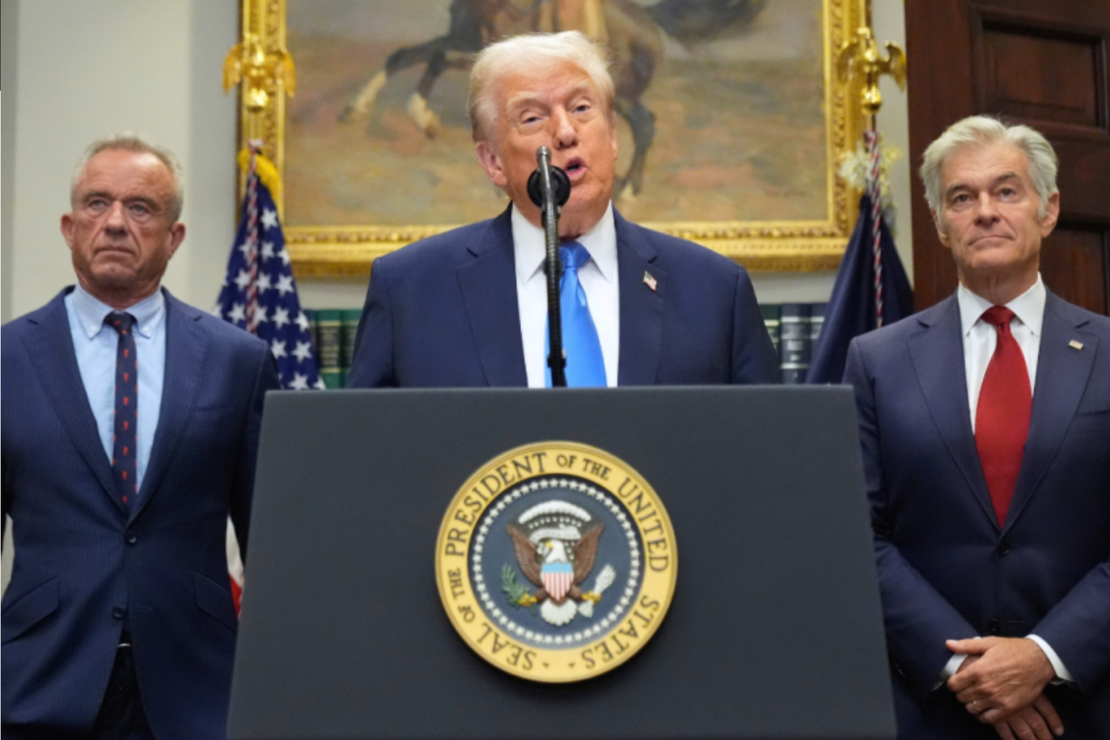
At a White House news conference, President Donald Trump repeatedly told pregnant women not to take Tylenol and suggested childhood vaccines could contribute to autism rates. He claimed acetaminophen, the active ingredient in Tylenol, “can be associated” with autism and said vaccines given close together might play a role.
His comments contradicted his own FDA, which only advised doctors to “consider minimizing” acetaminophen use in pregnancy due to uncertain evidence, not a proven risk. Trump’s remarks quickly drew fire from medical groups.
Dr. Steven Fleischman, president of the American College of Obstetricians and Gynecologists, warned the claims could terrify mothers. “It’s nothing you did,” he told parents of children with autism. “Not treating the fever probably has more adverse effects than taking the medication.”
Bioethicist Art Caplan called Trump’s speech “the saddest display of a lack of evidence, rumors, recycling old myths, lousy advice, outright lies, and dangerous advice I have ever witnessed by anyone in authority.”

Autism: What It Is and Why Diagnoses Are Rising
Autism spectrum disorder is not a disease but a developmental condition affecting communication, learning, and social skills. Symptoms range widely: some people remain nonverbal with intellectual disabilities, while most have milder effects.
Rates of autism have risen sharply in recent decades, but experts say this is largely due to broader diagnostic criteria, improved screening, and increased awareness. In the 1990s, only the most profound cases were counted. Today, about 1 in 31 children in the U.S. are diagnosed with autism spectrum disorder.
Tylenol in Pregnancy: The Evidence
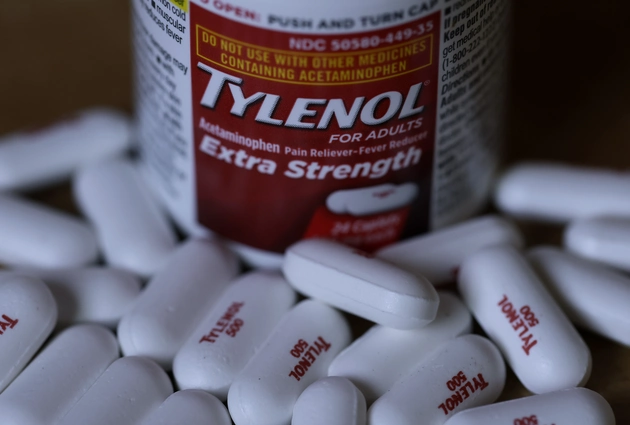
Some studies suggest a possible link between acetaminophen use in pregnancy and autism. Others show no connection. The Coalition of Autism Scientists noted that Tylenol use has not risen in recent decades, while autism diagnoses have—weakening the case for a causal link.
A 2023 study of 2.5 million children in Sweden compared siblings and found no association between prenatal acetaminophen use and autism, ADHD, or intellectual disability. Researchers caution that studies using medical records cannot always separate the effects of fever itself from the effects of the drug.
The FDA now advises minimizing acetaminophen use during pregnancy when possible but emphasizes that evidence is inconclusive. The Society for Maternal-Fetal Medicine still recommends Tylenol as an appropriate option to treat fever and pain, since untreated fever carries proven risks such as miscarriage and preterm birth.
Vaccines and Autism: A Settled Question
Trump also repeated claims that vaccines might cause autism, despite decades of research showing no link.
Dr. Susan Kressly, president of the American Academy of Pediatrics, called the rhetoric dangerous: “Any effort to misrepresent sound, strong science poses a threat to the health of children.”
Pediatric vaccine expert Dr. Paul Offit warned that Trump’s words would lead children to suffer: “No doubt children will suffer from Monday’s claims.”
Scientific consensus is clear—vaccines save lives and do not cause autism.
New Treatment Efforts: Folate and Leucovorin
The FDA also announced it was considering leucovorin, a folic acid metabolite, as a potential treatment for some people with autism who may have low folate levels in the brain.
Early studies suggest leucovorin may improve symptoms in a subset of individuals, but experts stress that trials so far are small and preliminary. Larger, rigorously controlled studies are needed before conclusions can be drawn.
Women are already advised to take folic acid before and during pregnancy to reduce the risk of birth defects. Researchers suggest this supplementation could also potentially lower autism risk.
Global Health Authorities Push Back
Trump’s remarks triggered swift responses worldwide.
- Australia’s health regulator said Trump’s claims were a “misrepresentation of the science” and reaffirmed that paracetamol (the global name for acetaminophen) is safe in pregnancy.
- New Zealand’s Ministry of Health restated that paracetamol remains “the safest medicine to take in pregnancy.”
- The U.K.’s MHRA and Germany’s Health Ministry echoed that paracetamol is safe when used as directed, noting untreated fever can itself endanger mother and child.
- Spain’s health minister accused Trump of “ignoring all medical studies,” warning denialism “puts lives at risk.”
- The European Medicines Agency said available evidence shows no increased risk of malformations or autism from paracetamol in pregnancy.
- The World Health Organization reaffirmed vaccines do not cause autism and noted evidence on acetaminophen remains inconsistent.
Scott White of the Royal Australian and New Zealand College of Obstetricians and Gynaecologists said denying pregnant women safe pain relief was “misogynistic.”
Bottom Line
Autism is primarily genetic, with hundreds of genes identified as contributing factors, though environmental influences such as parental age, preterm birth, or maternal illness during pregnancy can also play a role. D
espite recent political claims, Tylenol remains an appropriate option during pregnancy when medically indicated, as studies have not proven any causal link to autism. Vaccines are safe and essential, with the scientific community in full agreement that they do not cause autism.
Ultimately, medical guidance should be grounded in evidence and research rather than political rhetoric or conspiracy theories.