





AT A GLANCE
- The federal government shutdown is now in its 33rd day, on track to become the longest in U.S. history.
- President Donald Trump said he “won’t be extorted” by Democrats over health care subsidies.
- Two federal judges ordered the Trump administration to use contingency funds to continue SNAP, but benefits have already lapsed for millions.
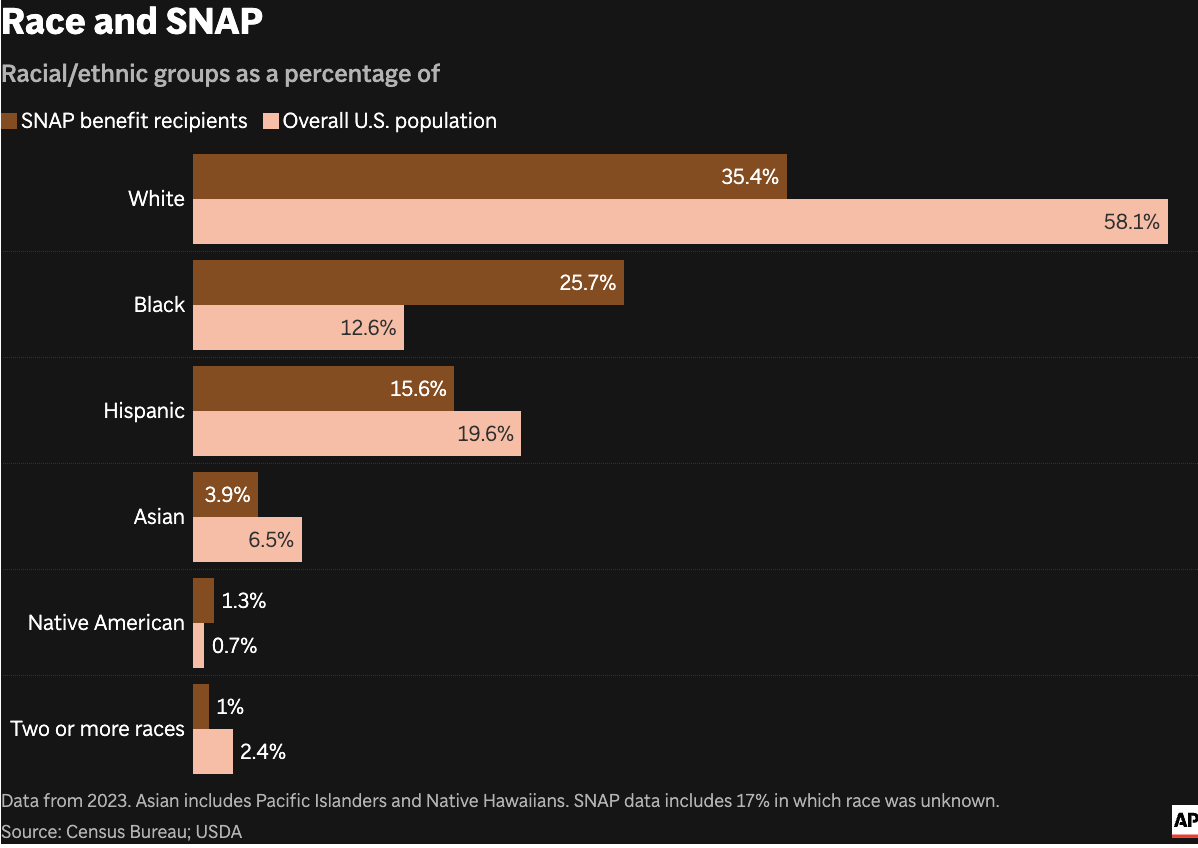
- Black Americans, who represent just 13.7% of the population, make up 25.7% of SNAP recipients—making them disproportionately affected.
Shutdown Enters Record Territory Amid Political Deadlock, The End of Federal Food Aid Could Hit Black Americans Hardest
The federal government shutdown, now entering its sixth week, is on pace to become the longest in U.S. history. Negotiations between Democrats and Republicans remain frozen as President Donald Trump doubles down on his refusal to negotiate until the government reopens.
“I won’t be extorted,” Trump said during an interview on 60 Minutes, accusing Democrats of “losing their way” for insisting on renewing Affordable Care Act subsidies before reopening agencies. He predicted Democrats would “capitulate” as the standoff continues to grind down essential services.
Millions of Americans are now caught in the political crossfire. Federal workers are missing paychecks, airport delays are worsening, and food aid for low-income families remains at risk despite a court order directing the administration to release emergency SNAP funds.
The U.S. Department of Agriculture confirmed that more than 42 million Americans depend on SNAP benefits that were set to stop flowing over the weekend. While judges have ordered the Trump administration to use contingency funds, officials said the delay means many recipients will face days—or even weeks—without assistance.
Treasury Secretary Scott Bessent deflected responsibility in a Sunday CNN interview, saying the “best way” to ensure SNAP payments resume is for Democrats to “cross the aisle and reopen the government.”
House Democratic Leader Hakeem Jeffries fired back, accusing the administration of “weaponizing hunger.”
“They’ve managed to find money for everything else during this shutdown,” Jeffries said, “but somehow can’t find the funds to make sure Americans don’t go hungry.”
In communities already navigating deep economic inequality, the lapse in food aid has hit hardest. Black Americans account for more than a quarter of all SNAP recipients, despite representing less than 14% of the total population. The disparity reflects long-standing structural barriers in employment, housing, and wealth accumulation.
“There’s so much discrimination in the workforce, so much discrimination in America today, that Black people who were enslaved and segregated for 350 years are still fighting for economic parity,” said Marc Morial, president of the National Urban League.
The McKinsey Institute for Black Economic Mobility estimates it could take one to three centuries for Black Americans to reach economic parity with white Americans at the current pace.
Meanwhile, Black unemployment has risen to 7.5%, and the racial income gap remains virtually unchanged for two decades. For many, the loss of SNAP is the tipping point. “Even if benefits return this month, families are already behind on rent and bills,” said a food aid volunteer in Louisville. “You can’t just pause hunger.”
For tribal nations, the food aid shutdown carries both legal and moral implications. Programs like SNAP are part of federal trust and treaty obligations, yet remain vulnerable to budget standoffs.
Mary Greene-Trottier, president of the Food Distribution Program on Indian Reservations, said her agency secured a one-month waiver to expand food distribution. “This is the weaponization of food again,” she said, referencing historical U.S. policies that withheld food to control Native populations.
Several tribes, including the Spirit Lake Nation and Cherokee Nation, have declared states of emergency ahead of the anticipated SNAP lapse.
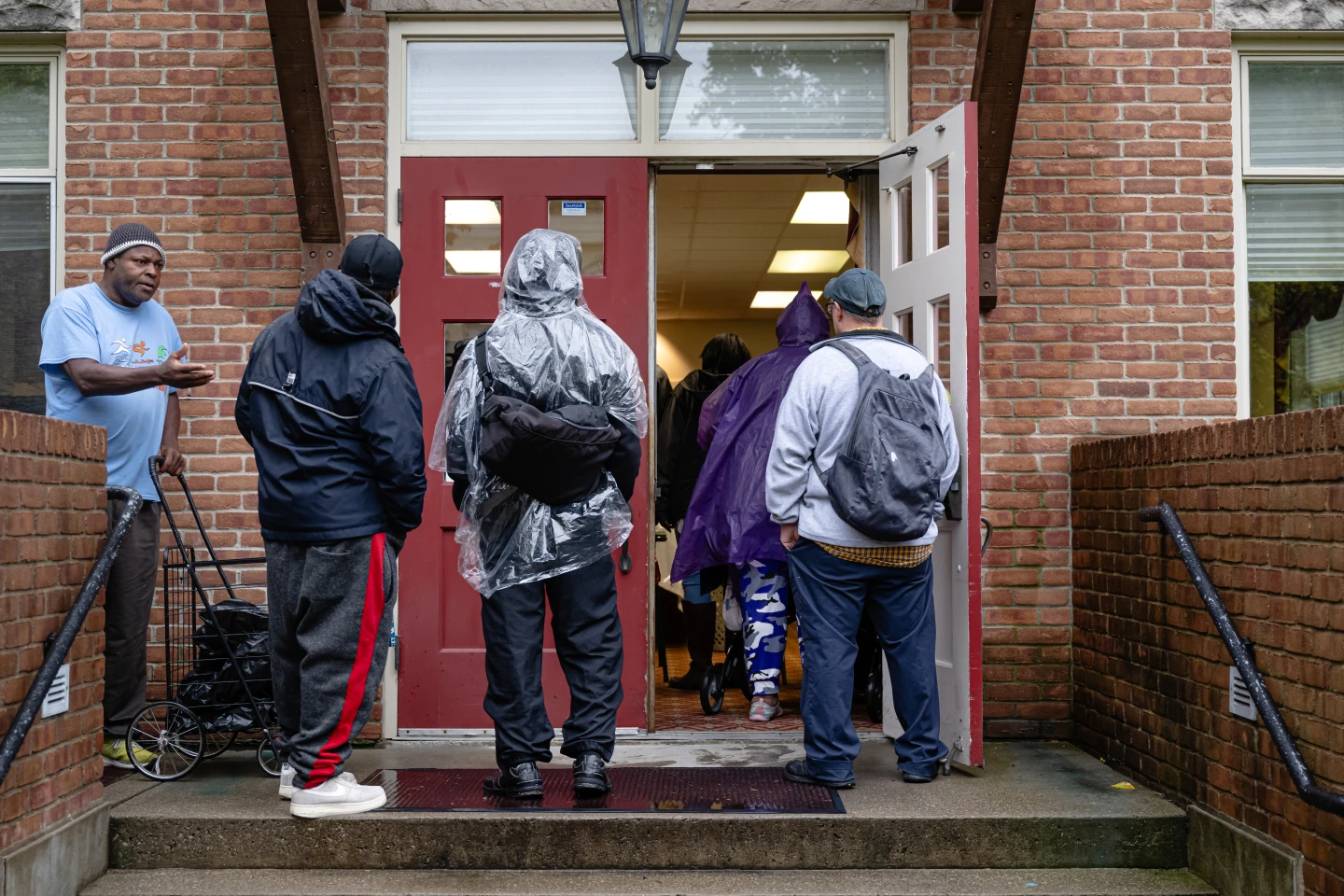
The effects of the shutdown stretch far beyond Washington. At food banks from New York to Kentucky, lines are growing. At Calvary Episcopal Church in Louisville, Marine veteran Brock Brooks cried as he described skipping meals to feed his children. “I’ve served this country, and now I’m begging for food,” he said.
Transportation Secretary Sean Duffy warned that as federal workers remain unpaid, the crisis is expanding. “People are being forced to choose between putting food on the table or showing up to work without pay,” he said.
Air traffic controllers have already reported increased delays, with New York’s Newark Airport announcing a two-hour average delay due to staffing shortages.
Trump has leaned into the confrontation, even mocking Democrats online with memes and parody pages. The White House website features a “My Space” spoof targeting Democratic leaders, reading: “We just love playing politics with people’s livelihoods.”
While Trump calls for scrapping the Senate filibuster to push through his agenda, Republican leaders like Senate Majority Leader John Thune have resisted, insisting the 60-vote rule prevents “the worst impulses of the far-left.”
As the stalemate deepens, Democrats continue to insist that no progress can be made without White House cooperation. “Republicans can’t move on anything without a Trump sign-off,” Sen. Mark Warner said.
For millions of Americans living paycheck to paycheck, the political theater feels like cruelty disguised as governance. With food shelves emptying and patience wearing thin, one truth is inescapable: hunger can’t wait for politics to end.