





AT A GLANCE
- Texas National Guard troops arrived in Illinois despite a pending lawsuit to block their deployment.
- Illinois Gov. JB Pritzker and California Gov. Gavin Newsom accuse Trump of violating state sovereignty.
- Chicago’s mayor called the deployment “unconstitutional, illegal, and dangerous.”
- Democratic governors are threatening to leave the National Governors Association over its silence.
Troops Arrive in Illinois Despite Legal Challenge
National Guard members from Texas were stationed Tuesday at an Army Reserve center in Elwood, Illinois — the clearest sign yet of the Trump administration’s determination to send troops into Chicago over state objections.
The Associated Press confirmed the presence of uniformed personnel bearing Texas National Guard patches at the site, roughly 55 miles southwest of Chicago. Trucks marked Emergency Disaster Services shuttled supplies, portable toilets, and trailers into neat rows, signaling preparations for an extended stay.
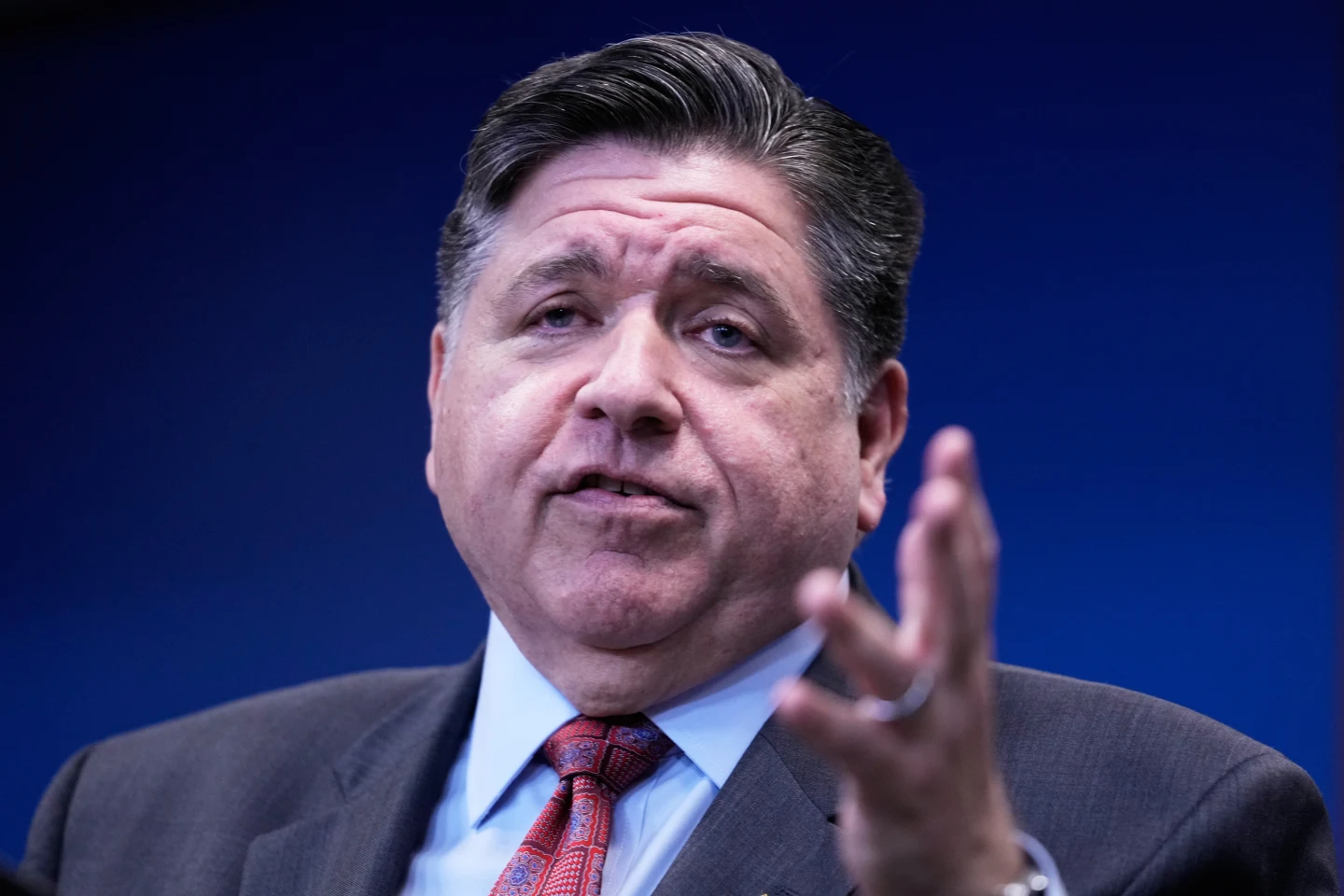
Illinois Gov. JB Pritzker, who has accused President Donald Trump of using soldiers as “political props” and “pawns,” did not immediately respond to the deployment. Chicago Mayor Brandon Johnson condemned it outright, calling the president’s plan “unconstitutional, illegal, and dangerous.”
The Trump administration has framed the operation as part of a broader immigration enforcement effort in the nation’s third-largest city, where protests have erupted at detention sites.
Illinois Pushes Back
Pritzker revealed Monday that the administration planned to activate 400 Texas Guard members alongside Illinois troops. Texas Gov. Greg Abbott, who authorized the deployment, celebrated on social media with photos of troops boarding planes, declaring them “ever ready.”
Illinois, joined by the city of Chicago, has filed a federal lawsuit arguing the move violates the 150-year-old Posse Comitatus Act, which restricts the military’s role in domestic law enforcement. A hearing is set for Thursday.
Trump has indicated he’s open to invoking the Insurrection Act of 1807 — a rarely used federal law allowing presidents to deploy active-duty troops inside states defying federal orders.
“I think the president might be overstepping his boundaries,” said Robert Hartley, 62, who runs Raceway Pizza & More near the Elwood base. “This doesn’t feel like disaster relief — it feels like a message.”
Mounting Tension in the Cities
Chicago residents have watched the buildup with alarm. The sight of armed Border Patrol agents making arrests in immigrant neighborhoods has sparked new protests and prompted the mayor to sign an executive order banning federal immigration agents from staging operations on city property.
Similar tensions are playing out in Memphis, where Guard troops could arrive by Friday. Tennessee Gov. Bill Lee has backed the move, calling it “critical support,” while local officials remain unsure what role the troops will actually play.
Trump’s Expanding Military Strategy
Since the start of his second term, Trump has either sent or proposed sending National Guard troops to 10 U.S. cities, including Baltimore, New Orleans, Los Angeles, and Washington, D.C. The administration argues it’s targeting areas with “rampant crime,” though FBI and local police data show that violent crime and homicides have declined nationwide.
In Chicago, killings dropped 31% through August, while Portland, Oregon — another city fighting a Guard deployment — reported a 51% decline in homicides in the first half of 2025.
A federal judge in Oregon recently blocked the deployment there, ruling that the administration “willfully” violated federal law by attempting to place Guard troops in Los Angeles over similar protests.
Governors’ Group Splinters Over Trump’s Tactics
The controversy has widened into a political crisis inside the National Governors Association (NGA), a bipartisan group traditionally seen as a neutral forum for collaboration.
California Gov. Gavin Newsom and Illinois Gov. Pritzker have threatened to withdraw, accusing the group of cowardice for staying silent while Trump dispatches troops across state lines without consent.
“If we cannot come together, on a bipartisan basis, on this basic principle of state sovereignty, what purpose does the National Governors Association serve?” Newsom wrote to fellow governors.
Some Republican leaders — including Missouri Gov. Mike Kehoe — dismissed the criticism. “Chicago could use some help,” Kehoe said. “I would hope that Governor Pritzker would welcome help to keep his citizens safe.”
The NGA’s chair, Oklahoma Gov. Kevin Stitt, has avoided taking a stance, saying the group should “steer clear of divisive issues.”
Cracks in Bipartisanship
Democratic governors from Kansas, Michigan, and Minnesota have already exited the NGA this year, citing frustration over its reluctance to confront the Trump administration.
“The credibility of the National Governors Association — and our integrity as state executives — rests on our willingness to apply our principles consistently,” Pritzker wrote Monday.
Meanwhile, Trump’s push to federalize immigration enforcement through the Guard shows no sign of slowing. Portable barracks are being erected in Illinois. More deployments loom in Memphis and possibly California.
What began as an immigration crackdown has escalated into a constitutional confrontation over who controls America’s streets — the states, or the man in the White House.