





AT A GLANCE
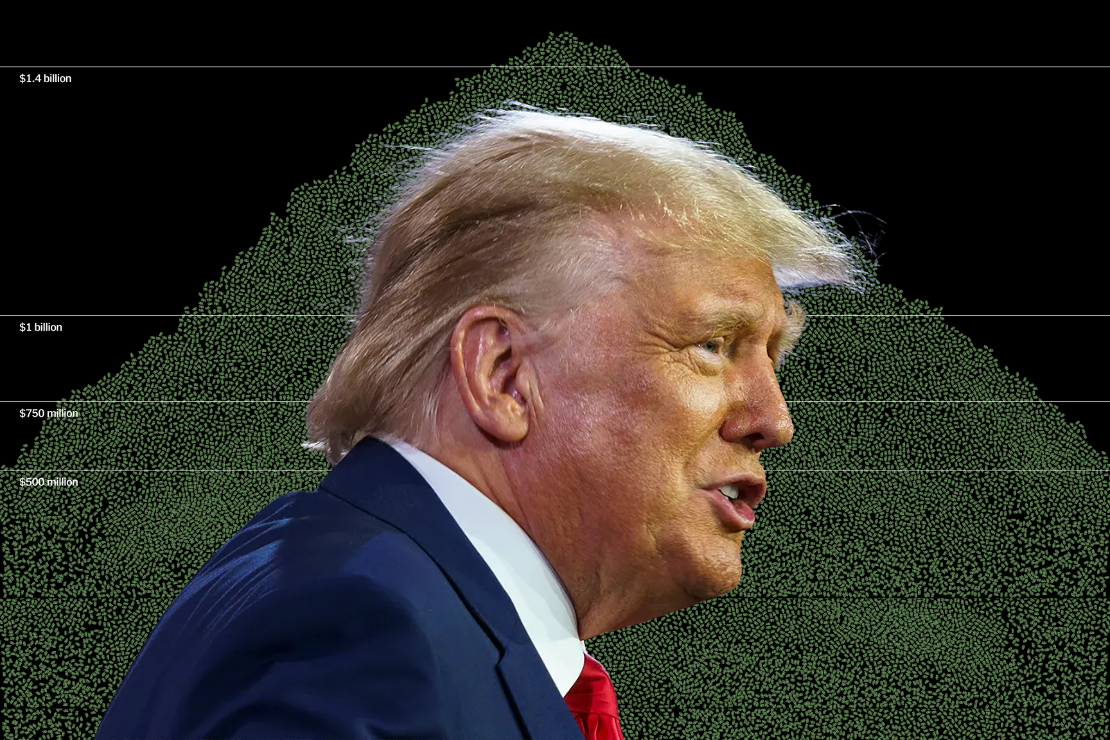
- President Donald Trump and his family have amassed at least $1.4 billion during his second term through settlements, foreign gifts, licensing deals, and cryptocurrency ventures.
- The total, detailed by the New York Times Editorial Board, represents documented gains and is considered a minimum estimate.
- Editorial writers warn that Trump’s financial entanglements threaten democratic legitimacy by blurring the line between public service and private profit.
Trump’s Crypto Ventures Outpace All Other Income Streams
Donald Trump’s return to the White House has been marked less by restraint than by an unprecedented expansion of personal wealth tied directly to the power of the presidency. According to an extensive review by the New York Times Editorial Board, Trump and his family have taken in at least $1.4 billion since his re-election—an amount that continues to grow and likely understates the true scale of his gains.
The board’s analysis draws on reporting from Reuters, The Wall Street Journal, The Financial Times, and other outlets, documenting how Trump has leveraged the presidency to test, in the board’s words, “just how much money people, corporations and other nations are willing to put into his pockets in hopes of bending the power of the government to the service of their interests.”
Foreign Deals and Favorable Treatment
Since Trump’s re-election, the Trump Organization has pursued more than 20 overseas projects, including a luxury hotel in Oman, an office tower in western India, and a golf course outside Riyadh, Saudi Arabia. These ventures often require cooperation from foreign governments and have generated millions for the Trump family.
In Vietnam, for example, the administration agreed to ease threatened tariffs roughly a month after construction began on a $1.5 billion Trump-branded golf complex near Hanoi. Vietnamese officials reportedly bypassed their own legal processes to fast-track the project. Similar overlaps between government action and Trump business interests have appeared repeatedly, raising concerns about conflicts of interest on a global scale.
Media Settlements and Corporate Payoffs
Major technology and media companies have paid Trump $90.5 million in settlements since his return to office, despite legal experts noting that the claims lacked merit. The settlements involved X, ABC News, Meta, YouTube, and Paramount.
Paramount alone agreed to pay Trump $16 million over allegations of deceptive editing in a 2024 interview with then–Vice President Kamala Harris—editing that journalists described as routine. Just three weeks later, the Federal Communications Commission approved Paramount’s $8 billion merger with Skydance, further fueling accusations of pay-to-play politics.
Amazon also paid $28 million for the rights to a documentary about Melania Trump, far exceeding what the company has historically paid for similar projects. Amazon founder Jeff Bezos, whose businesses face antitrust scrutiny and rely on federal contracts, had clear incentives to remain in the administration’s good graces.
A $400 Million Jet and Crypto Windfalls
Perhaps most striking is the $400 million Boeing 747 gifted to Trump by Qatar. Trump has used the jet as Air Force One and has openly stated plans to take the aircraft with him after leaving office, transferring it to his presidential library. Shortly after Qatar offered the plane, Trump publicly pledged U.S. protection for the country, suggesting the gift influenced policy considerations.
Even larger are the Trump family’s cryptocurrency profits. According to Reuters, Trump-linked crypto ventures have generated at least $867 million, making digital assets his single biggest moneymaker. Because many transactions are opaque, the true figure could be far higher. One disclosed deal involved a United Arab Emirates–backed investment firm planning to deposit $2 billion into a Trump-associated company shortly before the administration granted the UAE access to advanced semiconductor chips.
A Stark Contrast With Past Presidents
The editorial board contrasts Trump’s conduct with that of earlier presidents who went to great lengths to avoid even the appearance of personal enrichment. When President Harry Truman left office in 1953, he owned no car and declined lucrative offers that he felt would commercialize his public service. Trump, by contrast, has openly celebrated the rapid expansion of his fortune while in office.
All told, the editorial board calculates that Trump’s second-term profits equal 16,822 times the median U.S. household income, underscoring the extraordinary scale of his enrichment.
Democratic Legitimacy at Risk
The board emphasizes that the most dangerous aspect of Trump’s financial dealings is not merely the money itself, but the uncertainty they create. “It is impossible to know how often Mr. Trump makes official decisions, in part or entirely, because he wants to be richer,” the editors write. That uncertainty, they argue, corrodes public trust and undermines democracy.
Drawing on political philosophy as old as Aristotle, the board warns that when leaders prioritize private gain over the public good, the structures of democracy become hollow. Citizens lose faith that laws apply equally, participation declines, and government shifts from representing the people to serving the highest bidder.
As Trump continues his second term, the question raised by the New York Times Editorial Board is no longer whether corruption exists, but whether the country is willing to accept a presidency where public office operates as a personal profit engine—and what that means for the future of American democracy.