





Lawmakers Divided Over Conditions at ‘Alligator Alcatraz’
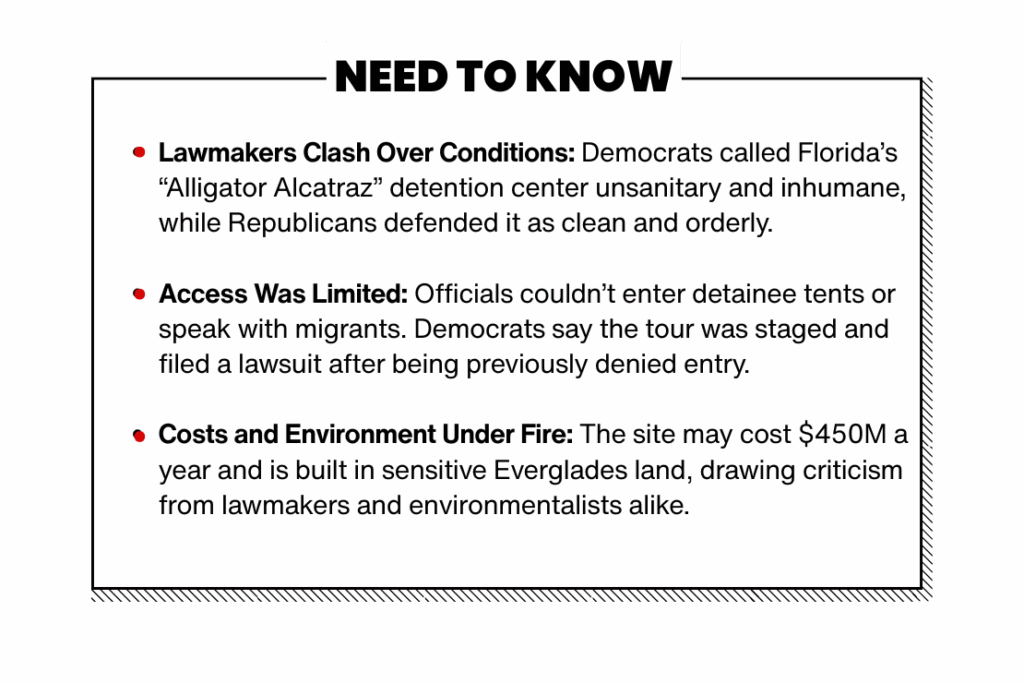
A group of state and federal lawmakers toured the newly built immigration detention center in Florida’s Everglades—nicknamed “Alligator Alcatraz”—over the weekend, and their reactions exposed sharp partisan divisions over the facility’s purpose, conditions, and legitimacy.
Democrats emerged from the visit condemning the 3,000-bed compound, which they described as crowded, unsanitary, and dehumanizing. “They are essentially packed into cages, wall-to-wall humans,” said U.S. Rep. Debbie Wasserman Schultz, who likened the facility to an internment camp. She and other Democrats called for its immediate closure.
Meanwhile, Republicans defended the center as clean and orderly. State Sen. Blaise Ingoglia, a close ally of Gov. Ron DeSantis, dismissed Democrats’ criticisms as political theater. “The rhetoric does not match the reality,” he said. “It’s basically all political theater coming from the Democrats. What they’re saying is pure bullshit.”
Tension and Secrecy Mark the First Official Tour
The state-organized tour came after five Democratic lawmakers were previously denied access on July 3, prompting a lawsuit accusing DeSantis’ administration of violating their oversight authority. Cameras, phones, and electronic devices were banned during the tour, and lawmakers were not allowed to speak to detainees unless they had submitted specific names 48 hours in advance per ICE protocol.
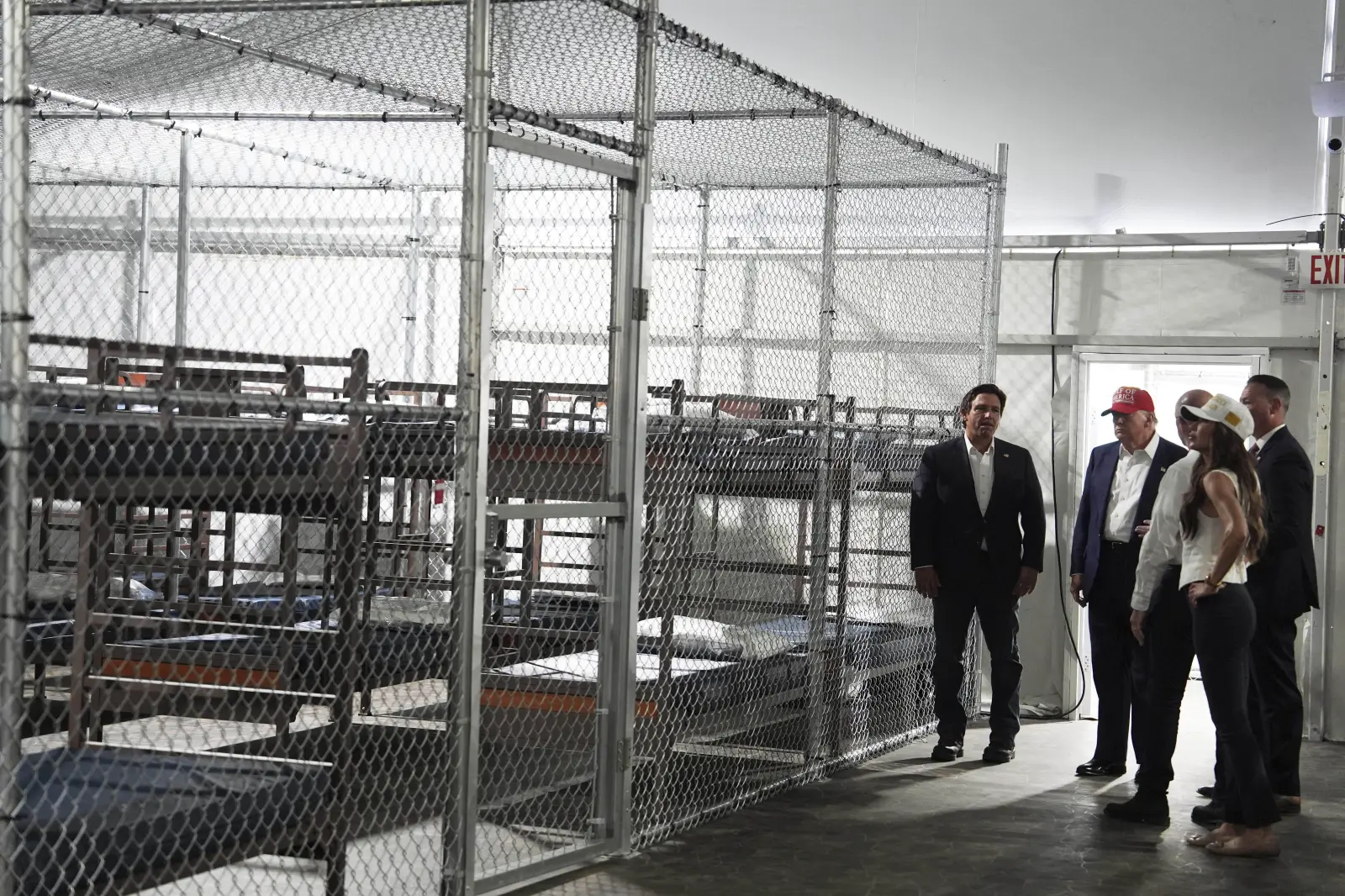
The delegation was shown food preparation areas, medical tents, and other public-facing parts of the facility—but not the housing tents where detainees sleep. Democrats said the tour was “sanitized” and failed to provide transparency about actual conditions.
Descriptions of Conditions Vary Widely
Democrats reported high temperatures (up to 85°F in some areas), bug infestations, limited access to showers, and insufficient toilets—citing three combo toilet-sink units for 32 men per cage.
Republicans, however, praised the facility’s setup. State Sen. Jay Collins, a military veteran, said it resembled well-run disaster response centers, complete with backup generators, clean bunks, and dietary tracking systems. “Would I want that toilet-and-sink combination at my house? Probably not,” he said. “But this is a transitional holding facility.”
Who’s Running the Show? Questions About Oversight Persist
Democrats like Rep. Maxwell Frost raised concerns about jurisdictional ambiguity, questioning whether the center is under state or federal control. According to lawmakers, ICE provides operational directives, while Florida’s Division of Emergency Management manages the day-to-day, led by director Kevin Guthrie.
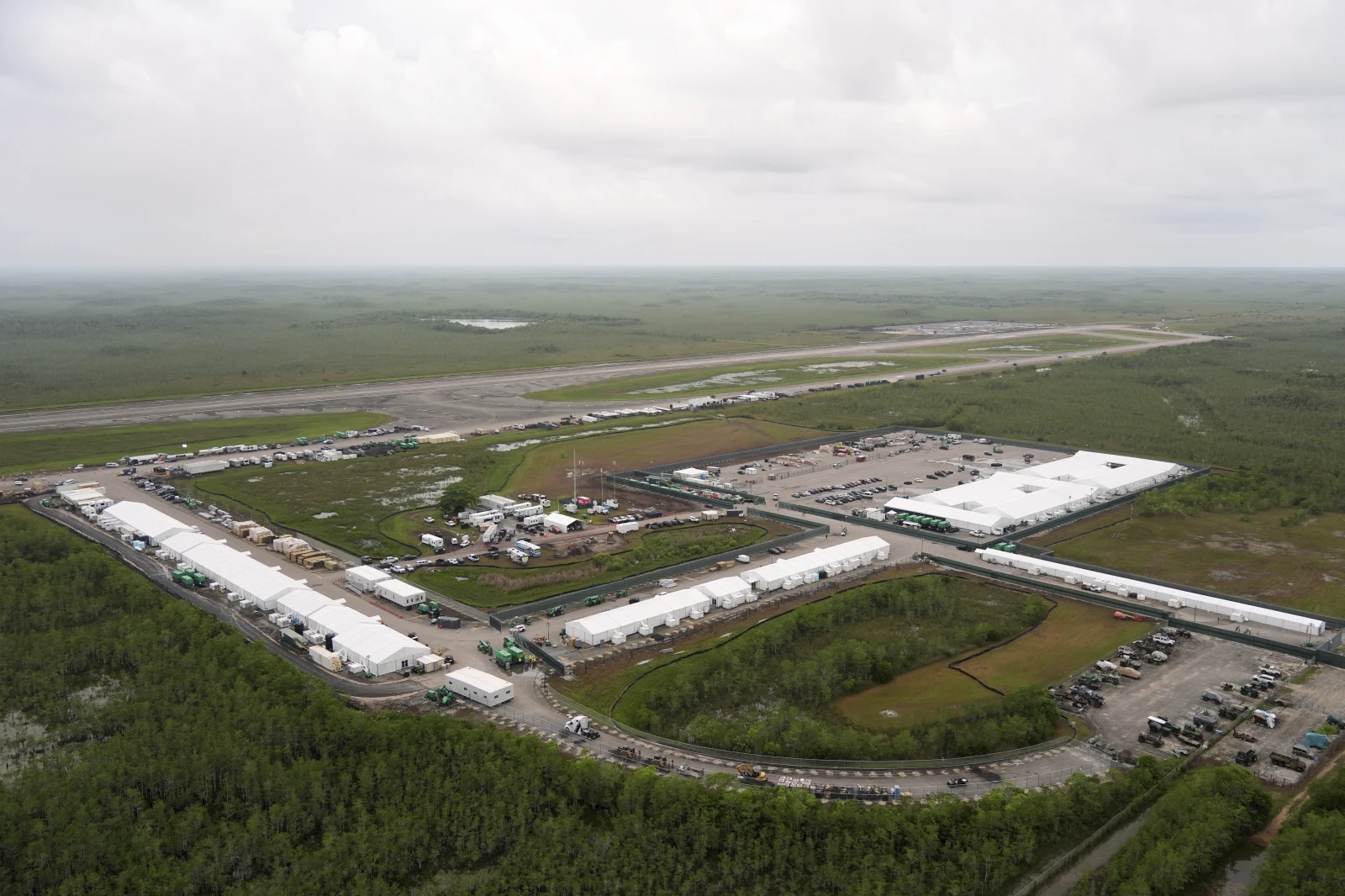
Gov. Ron DeSantis and former President Donald Trump have touted the pop-up facility as a fast, efficient answer to the federal government’s goal of increasing detention capacity to 100,000 beds. Trump personally toured the site before the first detainees arrived on July 3.
Environmental and Financial Concerns Mount
Critics are also alarmed about the facility’s location deep in the Everglades, raising environmental and tribal land concerns. Lawsuits from environmental groups are already underway. Others, like Democratic House Leader Fentrice Driskell, flagged the center’s steep $450 million annual price tag, questioning if and how much the federal government will reimburse.
As Homeland Security Secretary Kristi Noem praised the facility as a model for other states, Democrats left the Everglades with one message: shut it down. Republicans, meanwhile, hailed it as an efficient solution to a growing crisis.