





African Philosophy Has Long Challenged Eurocentric Domination in Thought and Politics
Attempts have been made to reduce the impact and importance of African Political philosophy. This is part of the calculation of white supremacy to reduce the world of philosophy to European models of thinking. It is a conscious attempt to enshrine white supremacy or European culture in thought and deed. A bias exists in the study of philosophy by placing a superior light around the Greek tradition as if no other cultural tradition has validity.
Anti-Colonial Thought and Early Philosophy
After the Berlin Conference of 1885, the ideas of anti-colonial struggles against racism became clearer as the world was heading toward carving up of the world by the European colonial powers. Before European powers conquered parts of Africa, African societies reflected African values and philosophy. Kwame Nkrumah, the leader and revolutionary from Ghana, and eventual leader of Pan-Africanism, may have been the first to use the term “ethnophilosophy.”
Challenging the Greek Myth of Origins
Many have argued that all of philosophy is ethnic based, an idea that is disturbing to some European thinkers. The centuries-old myth that philosophy has its origins in ancient Greece is challenged by the fact that philosophy can be traced back to ancient Egypt. This is the concept of “Stolen Legacy,” whereby African political and philosophical thought spread to Greece and other areas but is denied by traditionalists. Certainly, the Greek Goddess Isis is an Egyptian God that Greece borrowed.
The Rise of Black Pride Movements
In the 1930s, a group of African and Caribbean students in Paris started the cultural and political anti-colonial movement known as Black pride. They wanted to reclaim the value of Blackness and African culture that had been so thoroughly denigrated. Léopold Sédar Senghor, who was elected as the first president of the Republic of Senegal in 1960, started, along with Martinique’s Aimé Césaire and French Guiana’s Léon Damas, to critically examine Western values and reevaluate African culture in a world dominated by white supremacy.
Harlem Renaissance Influence
The Harlem Renaissance that emerged in New York City in the 1920s among a group of Black thinkers and artists was influential on this Black movement. The movement was determined to break free from racist thought and policies in a hostile society. Langston Hughes was associated with the period. He believed a writer should address significant political issues, and he had a lot to say about institutionalized white supremacy. A protest against assimilation into White belief systems was heard in this Black movement as members made declarations of Black pride.
Nationalism and Pan-Africanism
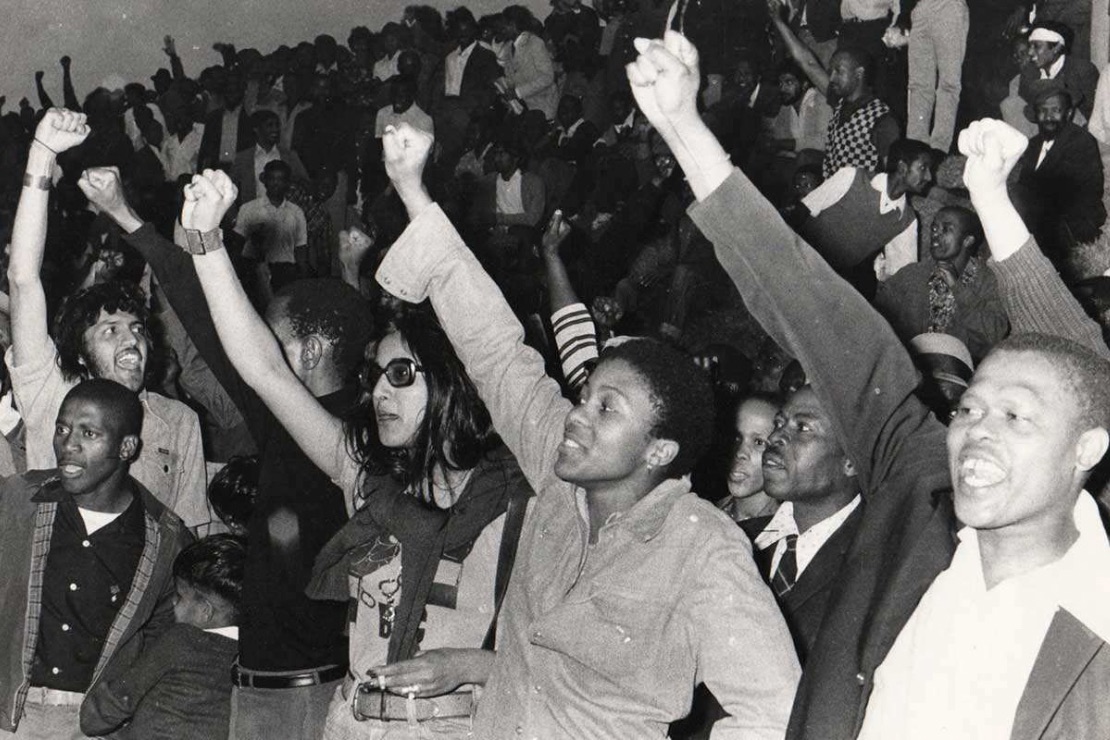
Opposition to oppression and the denial of African contributions also produces various forms of nationalism, revolt, and insurgent movements that take various forms. These forms begin at a narrow nationalist phase and may develop into a national liberation movement. Revolutionary Nationalism is the belief that racism must be fought against in all its forms. This philosophy says that Black people, Brown people, Native people, and all other non-whites should be proud of their culture but not at the expense of any other culture.
Narrow Nationalism vs. Pan-Africanism
Cultural Nationalism or Narrow Nationalism is extreme pride at the expense of other groups. Cultural nationalists often claim that their “race” is supreme to any other. On the other end of the spectrum, though influenced by narrow forms of nationalism, the idea that people of African descent should unite globally and share interests is known as Pan-Africanism. W.E.B. Dubois, the renowned Black scholar, and considered by many to be the father of Pan Africanism, along with Carter G. Woodson, set the stage for the eventual development of Black Studies courses in the United States.
The Legacy of Black Studies
Black Studies were brought into existence by protesting Eurocentric racist history that Trump wants to return to.