




Super Bowl Ads Try to Overcome Tough Times With Health, Caring and the Usual Laughs
At a difficult moment for the country, Super Bowl advertisers chose reassurance over edge—urging viewers to look out for themselves and one another, and to laugh when possible.
Brands leaned into gentle storytelling: Ring highlighted neighbors using doorbell cameras to reunite lost pets; Budweiser sent its iconic Clydesdale to shield a bald eagle chick from the rain; Toyota reminded viewers to buckle up; and Novartis spotlighted a blood test designed to detect prostate cancer earlier.
Mister Rogers’ legacy surfaced twice. Lady Gaga delivered a tear-jerking rendition of “Won’t You Be My Neighbor?” for Rocket Companies, while the National Football League used “You Are Special” to promote its youth sports initiatives.
“A key thread running through this year’s Super Bowl ads was a desire for peace, harmony, community, and neighborliness,” said Kimberly Whitler, a marketing professor at the University of Virginia’s Darden School of Business. “There is a general theme centered on people coming together to support one another.”
That tone matched the moment. Consumer confidence dipped to its lowest level since 2014 in January, the killings of two protesters by federal officers in Minneapolis last month sparked outrage, and winter storms battered much of the country. “There is a collective trauma,” said Vann Graves, executive director of the Brandcenter at Virginia Commonwealth University. Super Bowl ads, he added, offer a rare shared pause. “It’s a bit of time that we can just be human and be silly.”
Playing for Laughs
Silliness still ruled the breaks. Sabrina Carpenter attempted to build the perfect man from Pringles. Benson Boone and Ben Stiller flipped through a disco-charged Instacart spot. Andy Samberg, billed as “Meal Diamond,” slathered Hellmann’s mayo on deli sandwiches. Liquid I.V. leaned all the way in with singing toilets and a blunt hydration check.
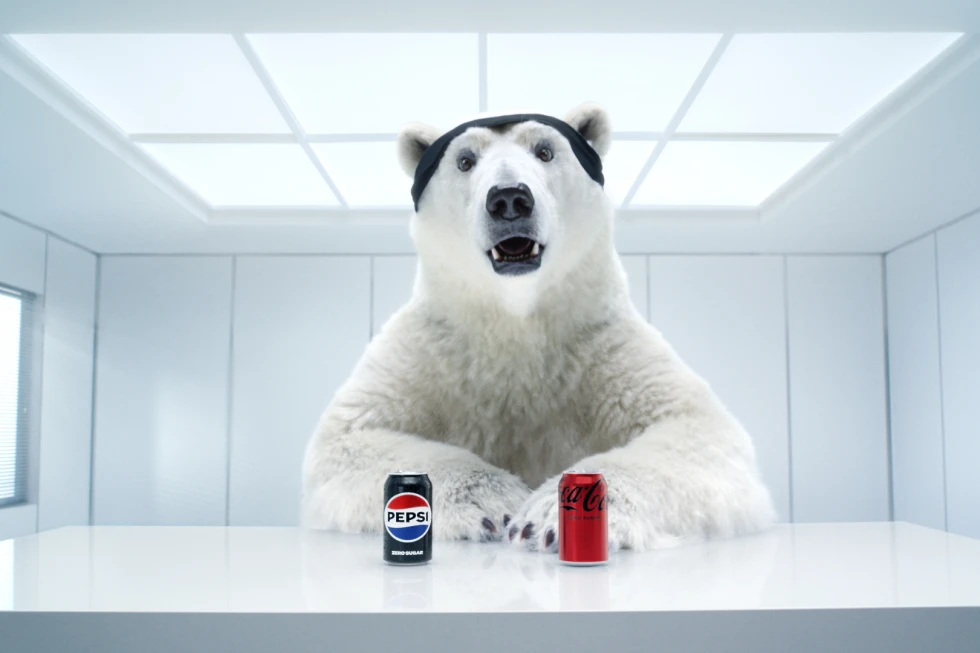
Classic brand rivalries got a wink: Coca-Cola polar bears shared a Pepsi in a spoof of last year’s viral kiss cam. Adrien Brody knowingly over-acted for TurboTax.
Delivery wars escalated. George Clooney touted Grubhub free delivery, while Matthew McConaughey tried to convince Bradley Cooper and Parker Posey—for Uber Eats—that football exists to make people hungry. 50 Cent couldn’t resist trolling Sean “Diddy” Combs in a DoorDash spot.
AI Bowl
Artificial intelligence was everywhere. Oakley Meta showcased AI-enabled glasses with Spike Lee and Marshawn Lynch filming on the fly. Wix debuted Wix Harmony, an AI-assisted web design tool. Svedka Vodka partnered with Silverside AI to animate robot mascots FemBot and BroBot.
The tech wasn’t controversy-free. Anthropic ran ads touting that its chatbot Claude “doesn’t have ads,” prompting a public response from Sam Altman, as OpenAI confirmed it will test ads to keep ChatGPT free.
Amazon also struck a nerve with a Chris Hemsworth spot poking fun at AI fears—landing days after the company announced 16,000 corporate layoffs. “It might reinforce some people’s very real concerns about AI,” said Tim Calkins, a marketing professor at Northwestern University.
Health Takes Center Stage
Snacks still had their moment—Bowen Yang, Scarlett Johansson, and Jon Hamm pitched Ritz, while Lay’s told a generational handoff story on a potato farm. But health messaging surged.
Octavia Spencer and Sofía Vergara urged kidney disease testing for Boehringer Ingelheim. Mike Tyson spoke about losing his sister to obesity in an ad encouraging unprocessed foods, funded by MAHA Center Inc., a nonprofit tied to allies of U.S. Health Secretary Robert F. Kennedy Jr..
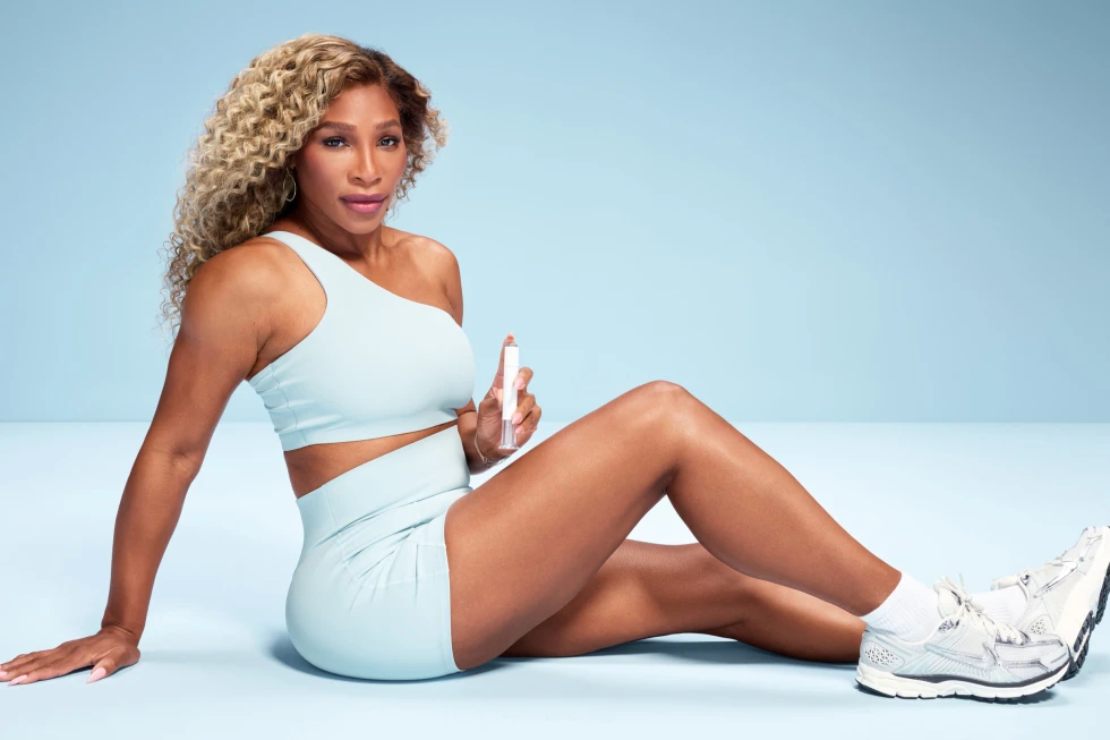
GLP-1 drugs broke through the noise. Novo Nordisk promoted its Wegovy pill with Kenan Thompson, DJ Khaled, Danielle Brooks, Ana Gasteyer, John C. Reilly, and Danny Trejo. Telehealth firm Ro enlisted Serena Williams. Hims & Hers framed access to personalized care as a class-leveler.
“There was a remarkable number of health ads,” Calkins said, singling out Novartis and Ro for impact—while noting Wegovy’s long list of side effects dulled its punch.
Nostalgia Sells
If comfort was the goal, nostalgia did the work. State Farm opened with Bon Jovi’s 1986 hit “Livin’ on a Prayer,” capped by a cameo from Jon Bon Jovi.
The ’90s dominated. Dunkin’ spoofed Good Will Hunting with Ben Affleck, Tom Brady, and sitcom staples Jennifer Aniston, Matt LeBlanc, Jason Alexander, and Alfonso Ribeiro. Pokémon celebrated its 30th anniversary. T-Mobile brought back the Backstreet Boys, who also popped up in a sing-along Coinbase ad. Volkswagen cranked House of Pain’s “Jump Around,” while Xfinity reunited Sam Neill, Laura Dern, and Jeff Goldblum in a playful Jurassic Park redux.
Whitler notes the trend is accelerating: nostalgia appeared in 28% of Super Bowl ads in 2015, rising to 54% by 2025.
Record-Breaking Prices, Unified Audience
The reach explains the spend. A record 127.7 million U.S. viewers watched the 2025 game across TV and streaming. Companies paid an average $8 million per 30 seconds this year, with some slots topping $10 million, according to NBC Sports’ Peter Lazarus, who dubbed the slate—alongside the Olympics and NBA All-Star Game—“legendary February.”