






2025 Emerges as One of the Deadliest Years for Journalists Globally
By nearly any measure, 2025 has been a rough year for anyone concerned about freedom of the press.
It is likely to be the deadliest year on record for journalists and media workers. The number of assaults on reporters in the United States nearly equals the last three years combined. The president of the United States berates many who ask him questions, calling one woman “piggy.” And the ranks of those doing the job continue to thin.
It is hard to think of a darker time for journalists. Many say so, including Tim Richardson, a former Washington Post reporter who now serves as program director for journalism and disinformation at PEN America. “It’s safe to say this assault on the press over the past year has probably been the most aggressive that we’ve seen in modern times,” Richardson said.
Worldwide, the 126 media industry workers killed in 2025 by early December matched the number of deaths recorded during all of 2024, according to the Committee to Protect Journalists, and last year was a record-setter. Israel’s bombing of Gaza accounted for 85 of those deaths, 82 of them Palestinians.
“It’s extremely concerning,” said Jodie Ginsberg, CEO of the Committee to Protect Journalists. “Unfortunately, it’s not just about the sheer numbers of journalists and media workers killed, it’s also about the failure to obtain justice or accountability for those killings.”
“What we know from decades of doing this work is that impunity breeds impunity,” she said. “A failure to tackle journalists’ killings creates an environment where those killings continue.”
The committee estimates that at least 323 journalists are imprisoned worldwide.
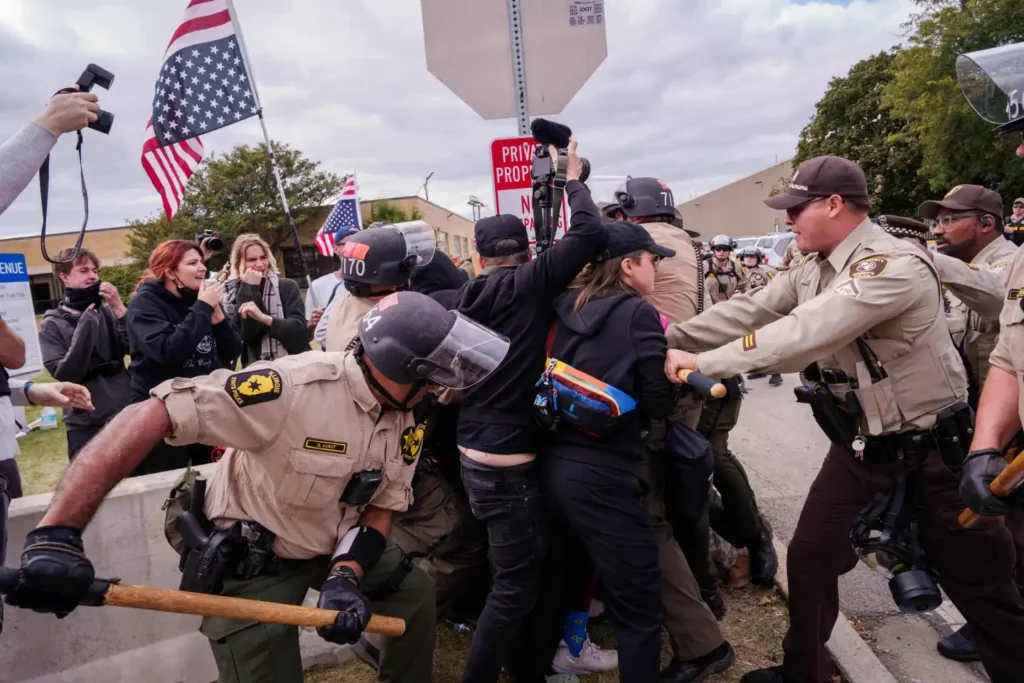
None of those killed this year were from the United States. Still, reporting on American soil has become increasingly dangerous. There have been 170 reports of assaults on journalists in the U.S. this year, 160 of them involving law enforcement, according to the U.S. Press Freedom Tracker. Many of the incidents occurred during coverage of immigration enforcement.
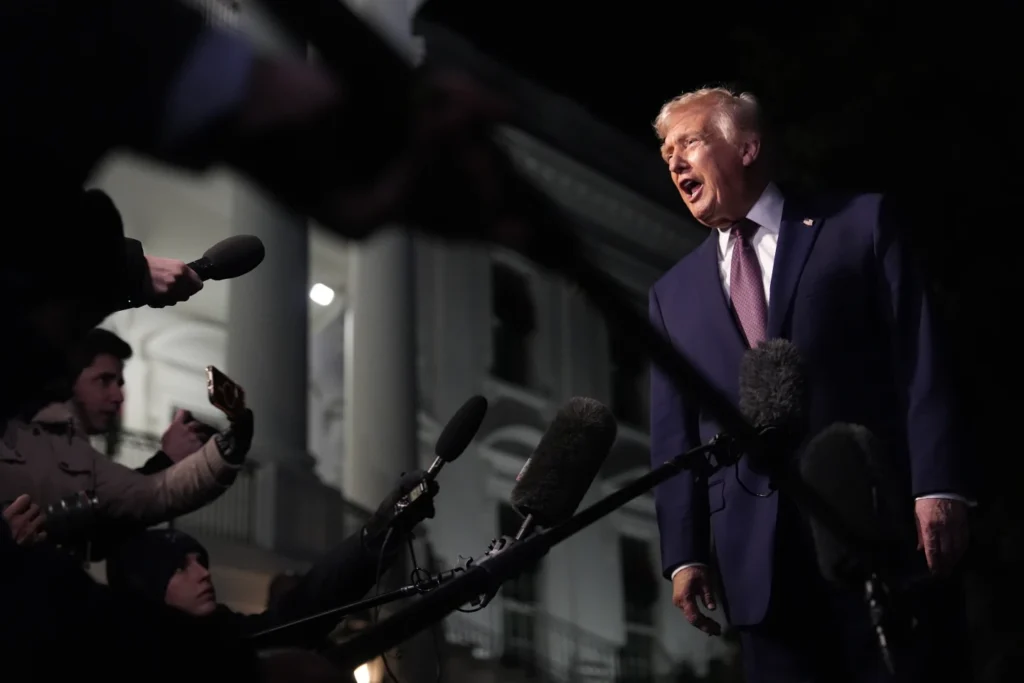
The influence of President Donald Trump looms large. He frequently lashes out at the press while simultaneously engaging with journalists more than any president in recent memory, often taking their phone calls directly.
“Trump has always attacked the press,” Richardson said. “But during the second term, he’s turned that into government action to restrict and punish and intimidate journalists.”
The Associated Press learned that quickly when Trump limited its access after the outlet refused to rename the Gulf of Mexico. The dispute resulted in a court fight that remains unresolved. Trump has also extracted settlements from ABC and CBS News over coverage he opposed and has sued The New York Times and The Wall Street Journal.
Long angered by what he perceives as liberal bias, Trump and allies in Congress successfully cut funding for public broadcasting, including PBS and NPR. His administration also moved to dismantle government-funded international broadcasters such as Radio Free Europe, Radio Free Asia and Voice of America.
“The United States is a major investor in independent media development globally,” Ginsberg said. “The evisceration of these outlets is another blow to press freedom worldwide.”
Other administration actions have followed that same pattern, including the launch of a public web portal allowing complaints about journalists and outlets. Trump’s defense secretary, Pete Hegseth, has portrayed journalists as shadowy figures roaming the Pentagon to steal classified information, a justification for imposing new restrictions on coverage.
That prompted a notable act of resistance. Many mainstream news outlets relinquished their Pentagon credentials rather than accept the new rules and have continued reporting from outside the building. The New York Times has sued to overturn the restrictions and has publicly defended itself when attacked by the president, including over coverage of Trump’s health.
Despite the intensity of these actions, public attention has been limited. The Pew Research Center found that only 36% of Americans reported hearing a lot about the Trump administration’s relationship with the press earlier this year, compared with 72% at the same point in his first term.
Pew polling also shows trust in news organizations has declined over the past decade, leaving journalists with little public sympathy as their work becomes harder.
“The harm really falls on the public,” Richardson said. “People depend on independent reporting to understand and scrutinize decisions made by the most powerful office in the world.”
The news industry has been in retrenchment for more than two decades, driven largely by the collapse of advertising revenue. Layoffs continued throughout 2025. A report by Muck Rack and Rebuild Local News found that in 2002, there were 40 journalists per 100,000 people in the United States. By this year, that number had fallen to just over eight.
Even so, there are modest signs of hope. Ginsberg and Richardson pointed to the growth of independent local outlets such as the Baltimore Banner, Charlottesville Tomorrow in Virginia and Outlier Media in Michigan.
Despite persistent attacks, Axios CEO Jim VandeHei recently wrote that reporters at mainstream outlets are still working aggressively and remain capable of setting the national agenda.
“Over time,” he told the AP, “people will hopefully come to their senses and say the media, like anything else, is imperfect, but it’s a good thing to have a free press.”