





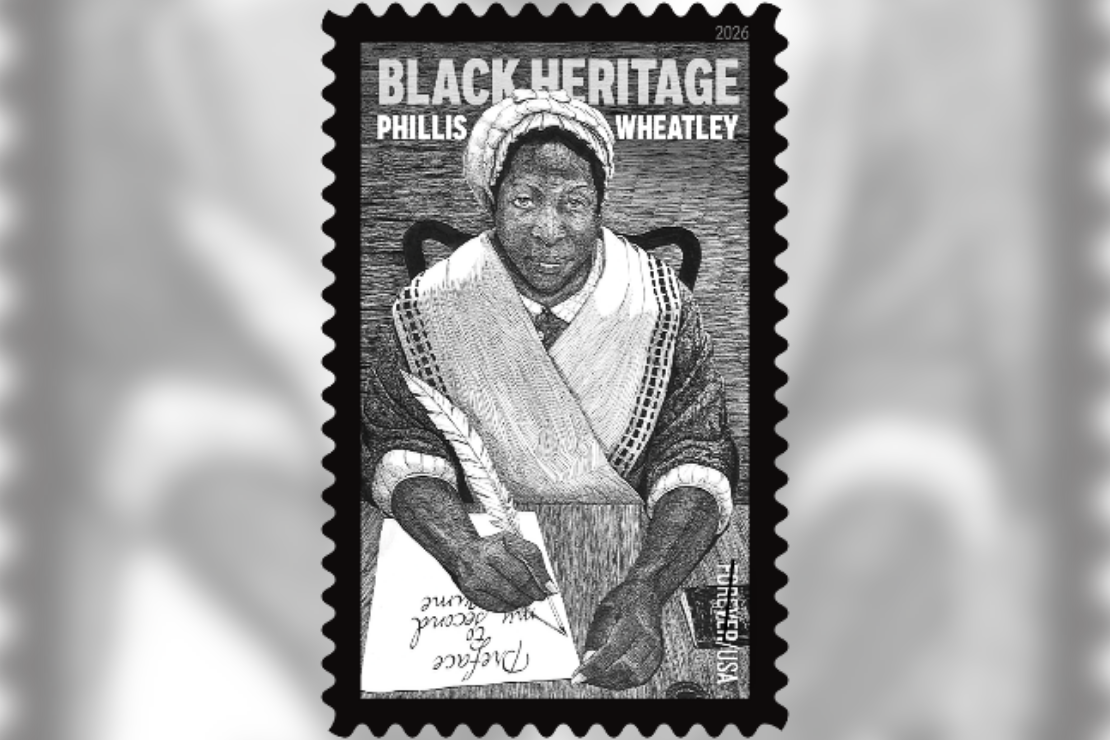
Wheatley, Known as the “Mother of African American Literature,” Joins Booker T. Washington and Harriet Tubman in Stamp Series
The United States Postal Service announced that Phillis Wheatley will be honored as the subject of its 49th Black Heritage stamp, recognizing a woman widely regarded as the mother of African American literature.
Wheatley’s inclusion places her among a distinguished group of historical figures previously featured in the long-running Black Heritage series, including Booker T. Washington, Martin Luther King Jr., and Harriet Tubman.
According to the Smithsonian National Postal Museum, Frederick Douglass was the first African American to appear on a regular-use U.S. postage stamp. Wheatley’s stamp will be issued as a “Forever” stamp, meaning it will retain its value regardless of future First-Class Mail price increases.
The Black Heritage stamp series began in 1940 and remains the longest-running stamp series in U.S. history, serving as an ongoing effort to acknowledge the lasting contributions of Black Americans to the nation’s cultural, political, and intellectual life.
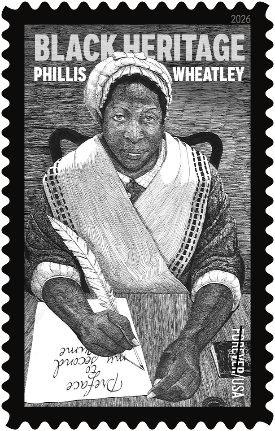
The Wheatley stamp was designed by USPS art director Antonio Alcalá and is based on a portrait by acclaimed artist Kerry James Marshall, whose work is known for its deliberate use of multiple shades of black to explore representation and identity.
Born around 1753, Wheatley’s life was both brief and extraordinary. She was captured in West Africa and brought to Boston as an enslaved child, yet was taught to read and write—an uncommon circumstance at the time. Her literary talent emerged early; according to the Poetry Foundation, she published her first poem, “On Messrs. Hussey and Coffin,” at just 13 years old. At age 20, Wheatley published her first collection, Poems on Various Subjects, Religious and Moral, in London in 1773. She was freed that same year.
A public ceremony unveiling the stamp is scheduled for January 29 in Boston at the Old South Meeting House, a site best known for its role in organizing resistance leading up to the Boston Tea Party.