





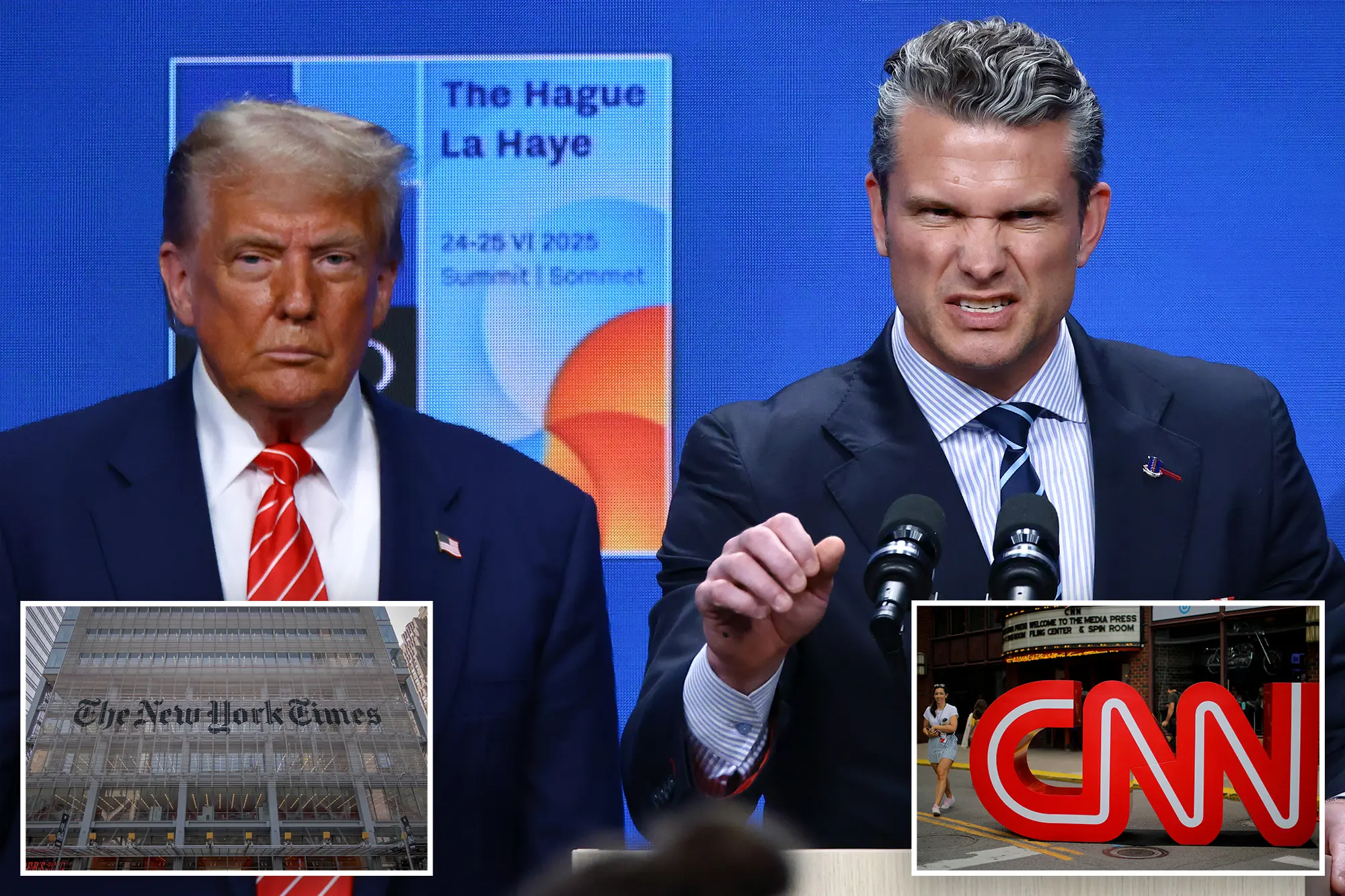
Trump’s “Total Obliteration” Claims Face Media Pushback
President Donald Trump is threatening to sue CNN and The New York Times for what he calls “false” and “unpatriotic” reporting about the impact of recent U.S. airstrikes on Iran’s nuclear sites. Both outlets published stories citing early Defense Intelligence Agency (DIA) assessments suggesting the strikes likely only set Iran’s program back by a few months—directly clashing with Trump’s assertion that the sites were “completely destroyed.”
Trump’s reaction has been explosive. In a string of Truth Social posts, he labeled CNN’s Natasha Bertrand “fake news” and said she should be “thrown out like a dog.” He called the Times reporters “bad and sick people,” accusing them of undermining a military success and trying to “demean the great works our B-2 pilots did.”
CNN, NYT Refuse to Retract: “We Told the Truth”
On June 25, Trump’s attorney Alejandro Brito sent formal letters to both CNN and The New York Times, demanding retractions and apologies. The outlets flatly refused.
David McCraw, deputy general counsel for the Times, replied: “No retraction is needed. No apology will be forthcoming. We told the truth to the best of our ability. We will continue to do so.” In his letter, McCraw highlighted Trump’s own public comments from the NATO summit where he acknowledged the intelligence was “very inconclusive” and admitted, “We don’t know—it could have been very severe.”
McCraw added, “The story that the President may have overstated the case… that the impact of the bombing raid was uncertain… is not false and does not defame the President.”
CNN confirmed receipt of a similar legal threat and responded by “rejecting the claims.” A spokesperson added, “We stand 100% behind Natasha Bertrand’s journalism.” The network defended its reporting as accurate, noting the DIA’s assessment was always framed as preliminary and open to change with further intelligence.
What the Media Actually Reported
CNN was first to report on June 24 that early U.S. intelligence concluded the airstrikes did not destroy the core of Iran’s nuclear infrastructure and would likely only delay progress by several months. The New York Times, AP, ABC News, and others later confirmed similar details.
The White House quickly dismissed the DIA findings as “low-confidence” and “inconclusive.” Instead, it reinforced Trump’s version of events with this statement: “Everyone knows what happens when you drop fourteen 30,000-pound bombs perfectly on their targets: Total Obliteration.”
Lawsuit Threats as a Press Suppression Strategy
Trump’s legal threats are the latest in a familiar pattern of using the courtroom—or the threat of one—to intimidate critical media. From CBS to NBC to The Washington Post, Trump has frequently threatened lawsuits over unfavorable coverage. Rarely do they proceed to trial.
Press freedom advocates warn that even empty legal threats can chill investigative journalism. “This is about suppressing dissent and accountability,” one First Amendment lawyer said. “You don’t sue for disagreement—you sue for defamation. And this isn’t that.”
Reporters Push Back on “Cheerleader” Expectations
In a separate CNN interview, anchor Kaitlan Collins challenged the idea that journalists should celebrate military action rather than scrutinize it. “It’s not the media’s job to cheerlead—it’s to ask questions and seek clarity,” she told Sen. Markwayne Mullins, a Trump ally who blasted the coverage.
Meanwhile, New York Times spokesperson Charles Stadtlander underscored the contradiction in Trump’s outrage: “The President confirmed the same intelligence he called fake. So their statement was fake, not the Times’s reporting.”
Final Word: Trump’s Fight Is With the Facts
Trump’s fury appears to be less about accuracy and more about optics. In his own words, he accused media outlets of “trying to always make our Country look bad,” rather than “being proud of the great success we had.”
But neither CNN nor The New York Times is backing down. The facts are public. The intelligence exists. And while the full impact of the Iran strikes remains under analysis, the real battle is now about who controls the narrative—and whether facts can survive the politics.