






Lawmakers Demand Nursing Be Added to Federal ‘Professional’ Programs List
A bipartisan group of lawmakers is urging the Education Department to rethink its definition of “professional” college programs after nursing was left off a new federal list, igniting frustration across the healthcare field.
The Trump administration’s proposed rules would allow graduate students in designated professional programs to borrow up to $200,000 in federal loans, with a yearly cap of $50,000. Programs outside that definition would be limited to $100,000 total and $20,500 annually. While medicine, law and theology made the cut, nursing and several other high-demand fields did not. For years, graduate students were able to borrow enough to cover the full cost of their programs.
In a letter sent Friday, more than 140 lawmakers argued that excluding nursing programs from the professional category will make graduate training harder to access. They warned that a $100,000 cap doesn’t come close to covering the costs of some nursing graduate tracks, particularly for certified nurse anesthetists, whose programs regularly exceed $200,000.
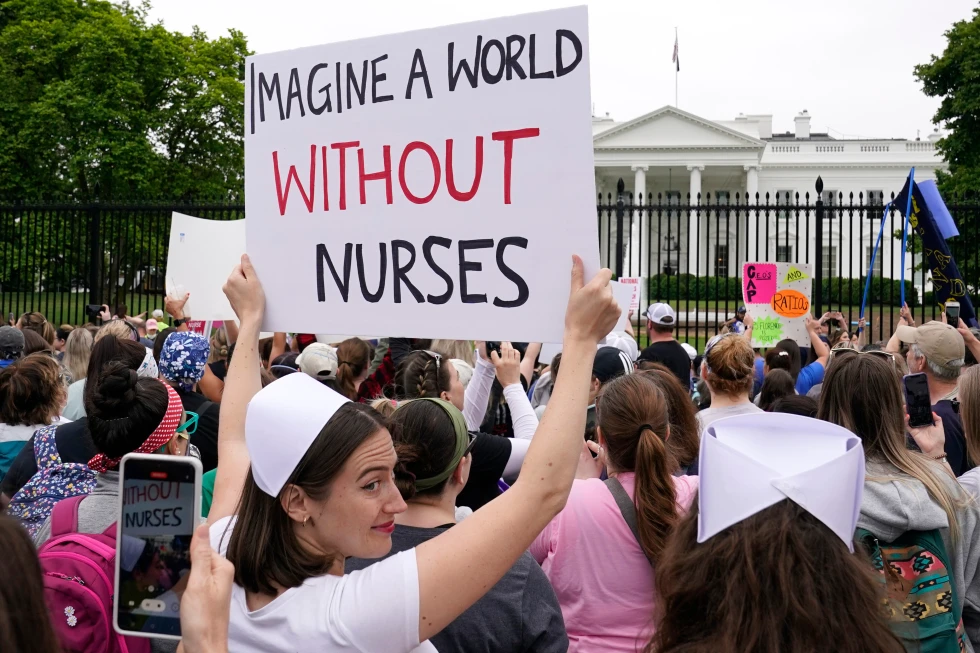
Legislators also pointed out that year-round nurse practitioner programs would be hit quickly by the $20,500 annual borrowing limit, since many operate on three terms a year and already exceed that cost. Their letter rejected the Education Department’s claim that only a small number of students would be affected.
Programs for nurse anesthetists, they argued, are costly but essential, especially for rural and underserved regions where these advanced nurses are often the primary anesthesia providers. Cutting students off from federal loans, they said, risks shrinking a workforce that communities rely on.
The letter was led by Sen. Jeff Merkley of Oregon and Sen. Roger Wicker of Mississippi, along with Rep. Suzanne Bonamici of Oregon and Rep. Jen Kiggans of Virginia, co-chairs of the House and Senate nursing caucuses. Twelve Republicans joined more than a hundred Democrats in signing.
Rep. Ritchie Torres of New York also submitted a separate letter pressing the department to reverse course. In his South Bronx district, he noted, many nursing students are first-generation, low-income or immigrant, and steep borrowing restrictions could shut them out entirely.
“A restrictive interpretation would undermine our healthcare and education systems, weaken our workforce, and close doors for low-income, first-generation, and immigrant students who make up much of my district,” Torres wrote.
The administration argues the caps are needed to push colleges to rein in tuition costs and says its professional definitions are based on examples listed in a 1965 federal financial aid law. Critics counter that the list was never meant to be exhaustive. Under the new proposal, only pharmacy, dentistry, veterinary medicine, chiropractic, law, medicine, optometry, osteopathic medicine, podiatry, theology and clinical psychology qualify.
Nursing organizations, physical therapists, social workers and other groups excluded from the definition have condemned the move, saying it misrepresents modern professional training and jeopardizes critical workforce pipelines. Education Department officials have indicated the rule could still be revised as the federal rulemaking process continues.