





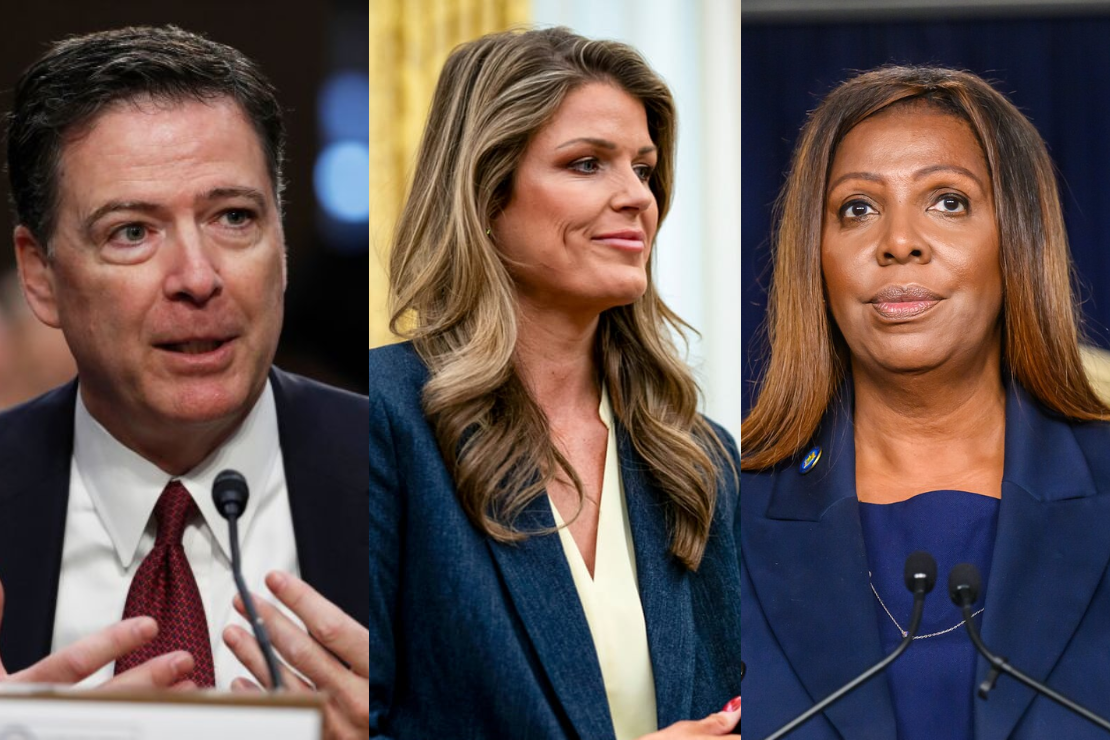
Judge Appears Skeptical Of DOJ Arguments For Keeping Lindsey Halligan As Prosecutor In James Comey And Letitia James Cases
A federal judge showed clear skepticism Thursday as the Justice Department attempted to defend Lindsey Halligan’s authority to prosecute cases against former FBI Director James Comey and New York Attorney General Letitia James. The challenge to Halligan’s appointment could determine whether both indictments survive.
U.S. District Judge Cameron Currie, brought in from South Carolina to avoid internal conflicts within the Eastern District of Virginia, said she would issue a ruling by Thanksgiving.
DOJ attorney Henry Whitaker tried to cast concerns about Halligan’s appointment as a simple “paperwork error,” but Currie made it known she wasn’t convinced.
One major sticking point: missing minutes from the Comey grand jury proceedings. Currie said there was a troubling gap between 4:28 p.m. and the time the grand jury ultimately returned an indictment.
If no court reporter was present, only Halligan and the grand jurors would have been in the room. That possibility raised serious procedural questions.
Currie also took issue with U.S. Attorney Pam Bondi’s claim that she reviewed and approved the proceedings.
“She could not have,” Currie said bluntly, given the missing record.
Attorneys for Comey and James argue that Halligan, a Trump ally with no prosecutorial experience, was unlawfully serving as acting U.S. attorney. If true, they say the indictments should be thrown out.
“When the only person presenting to the grand jury lacks government authority, it’s a fundamental error,” Comey attorney Ephraim McDowell told the court.
James’ lawyer, Abbe Lowell, put it more sharply:
“You wouldn’t let a private citizen like Elon Musk present a case to the grand jury, and you shouldn’t allow Halligan to do so either.”
Because Halligan alone signed the indictments, the defense argues she was essentially a private citizen at the time.
DOJ filings indicate Bondi attempted to retroactively shore up Halligan’s position by naming her a “special attorney” and delegating authority specific to the Comey and James prosecutions.
McDowell argued the move “cannot possibly work,” noting the DOJ provided no legal basis for retroactive appointments.
Halligan is already facing Bar complaints in Florida and Virginia alleging abuse of power and damage to the integrity of the legal system.
Despite the irregularities, DOJ lawyers say the Comey case could still survive because of U.S. Code 3288. The statute allows prosecutors to refile an indictment within six months if the original was dismissed after the statute of limitations expired.
Comey seeks dismissal “with prejudice,” which would block a refile.
Letitia James’ bank-fraud charge is still within its 10-year statute of limitations, meaning prosecutors could indict her again with a properly authorized attorney.
Both defendants are also seeking dismissal before separate judges on claims of selective and vindictive prosecution — pointing to Trump’s repeated public pressure on DOJ leaders to go after political opponents.
Halligan was sworn in on Sept. 22, just days after her predecessor resigned under pressure. The indictments came soon after Trump publicly demanded action against Comey, James, and Rep. Adam Schiff.
Critics say the pattern reflects Trump’s ongoing use of the Justice Department to target perceived enemies. Former national security adviser John Bolton was indicted weeks prior under similar circumstances.