





Need to Knows
- The Supreme Court allowed Trump’s administration to cancel nearly $800 million in NIH research grants tied to DEI.
- The 5-4 decision came through the Court’s shadow docket, criticized for secrecy.
- Justice Ketanji Brown Jackson accused the majority of bending to Trump’s will.
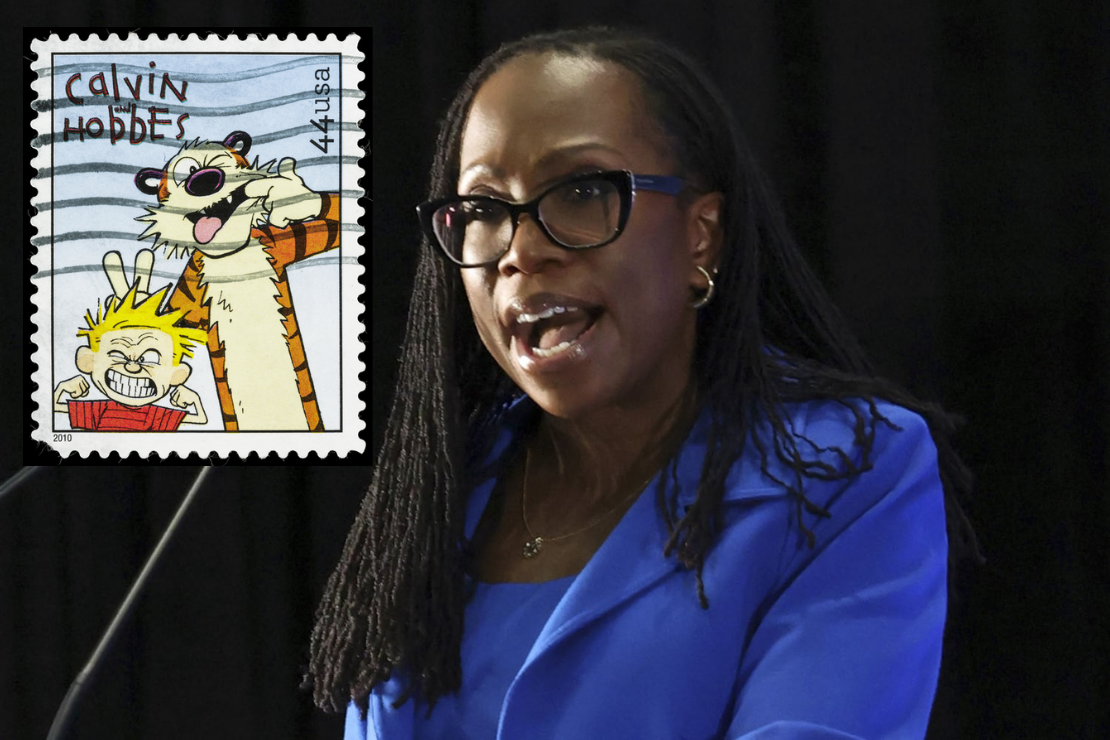
- She compared the rulings to “Calvinball,” a comic strip game with no fixed rules.
Supreme Court Greenlights NIH Grant Cancellations
In a 5-4 ruling, the U.S. Supreme Court gave the Trump administration the green light—at least temporarily—to cancel roughly $783 million in National Institutes of Health (NIH) research grants linked to diversity, equity, and inclusion programs. The decision affects more than 1,700 projects and overturns a lower court ruling that had restored funding.
The ruling came through the Court’s shadow docket, its expedited emergency process. Critics say this procedure lacks transparency, allowing the justices to deliver sweeping decisions with little to no explanation—often to the benefit of the Trump administration.
Jackson’s Rebuke: “Calvinball Jurisprudence”
Justice Ketanji Brown Jackson, the Court’s most junior member, issued a blistering dissent. She accused her colleagues of abandoning legal consistency to ensure victories for Trump’s policies.
“This is Calvinball jurisprudence with a twist,” Jackson wrote. “Calvinball has only one rule: There are no fixed rules. We seem to have two: that one, and this Administration always wins.”
By invoking Calvin and Hobbes, Bill Watterson’s classic comic strip, Jackson underscored her point that the Court’s majority operates without steady principles—changing rules as it sees fit.
What Is Calvinball?
First appearing in Calvin and Hobbes in 1990, Calvinball is a fictional game where rules change at will, often to the advantage of the player inventing them. The Oxford Dictionary defines it as “activity reminiscent of the imaginary game of Calvinball, in not following any discernible rules, or in which individuals act in a self-servingly inconsistent manner.”
Jackson used the metaphor to argue that the Court’s reliance on the shadow docket is creating a system where no legal standard is stable—except siding with Trump.
The Stakes for DEI and Research Funding
The NIH grant cancellations reflect Trump’s broader campaign against diversity, equity, and inclusion across federal institutions. Jackson warned that the Court’s decision signals a willingness to “bend over backwards” for the administration, even at the cost of stability in the law and billions in scientific research.
For now, nearly $800 million in projects—ranging from medical studies to community health programs—remain frozen as litigation moves forward.