






AT A GLANCE
- Judge William “Cruz” Shaw says juvenile court is about long-term impact, not quick outcomes, calling it a “problem-solving court” focused on intervention and rehabilitation.
- Cruz explains why he doesn’t wear a robe on the bench, saying removing intimidation helps kids and families engage honestly in court.
- Changes in school discipline, parenting norms, and the rise of social media are reshaping how youth conflict plays out and how cases enter the juvenile justice system.
- As Cruz seeks re-election, he says his approach to juvenile justice centers on understanding, presence, and accountability.
Judge “Cruz” Shaw Leads the Juvenile Bench Without a Robe but With Major Purpose
When Judge William “Cruz” Shaw steps onto the juvenile bench in Bexar County’s 436th District Court, the authority in the room is already understood.
“We have detention hearings every 10 days,” Cruz said. “The deputies go back to get the kids, and the first thing they always ask is, ‘Is Judge Cruz on the bench?’ When they hear yes, it’s always, ‘Damn.’”
He also doesn’t rely on a robe to reinforce that authority.
“I don’t need the robe to enforce that,” he said during the latest episode of Beyond the Gavel with Judge Ron Rangel. “They already know I’m the judge.”
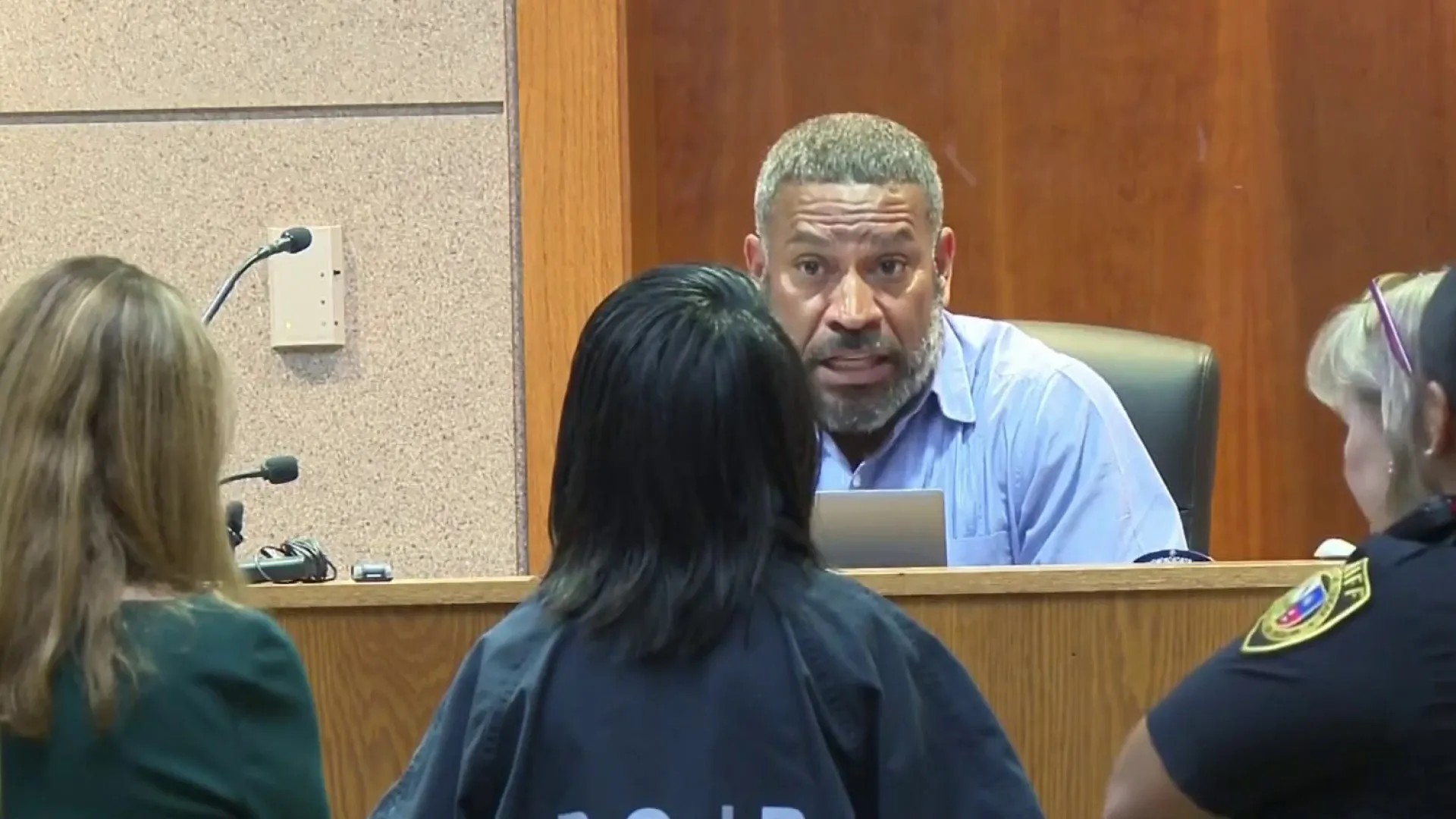
Instead, Cruz takes the bench without a robe, tattoos visible, speaking plainly—an intentional decision aimed at removing the first barrier many kids and families feel the moment they walk into a courtroom.
“When certain families or communities see a uniform, they shut down,” Cruz said. “I want them to see I’m a human being just like them.”
That choice reflects how Cruz approaches juvenile court overall: direct, grounded, and personal without being performative or passive.
“I’m not here to play,” he said. “I’m here to try to save lives, save communities, and keep families intact.”
The “Problem-Solving Court”
Before taking the bench, Judge “Cruz” Shaw spent years handling adult criminal cases. Now, being a judge in juvenile court he changed his approach and perspective.
“With these kids and these families, it’s a long-term process,” Cruz said.
“This is a problem-solving court,” he said. Unlike adult court, where probation violations often trigger immediate punishment, juvenile probation in Bexar County is built around intervention, collaboration, and rehabilitation.
“Juvenile probation is much more caring and collaborative,” Cruz said. “A lot of them are really social workers at heart.”
Each hearing brings together a team: the child, family, probation officers, prosecutors, defense attorneys, and often counselors or CPS—working toward a solution.
“If it works,” Cruz said, “great. I hope I never see you again.”
If it doesn’t, “Then I know your name,” he said. “And we escalate.”
Old vs New School
During the episode, Judge “Cruz” Shaw and Judge Ron Rangel reflect on how youth behavior and society’s response to it has fundamentally shifted.
For Cruz, the stakes are higher now because the culture around youth conflict has changed. “When we were in school, you fought, shook hands, and it was over,” he said. “Those days are gone.”
What was once handled informally by adults is now often criminalized. School fights and misconduct that used to end with discipline now lead to arrests, court referrals, and detention hearings.
That cultural shift, Cruz said, makes it critical to distinguish between normal adolescent behavior or “criminogenic behavior.”
“Is this child just being a child,” he asked, “or are there real issues going on in that house?”
At the same time, kids are navigating conflict in a vastly different environment.
Social media now amplifies disputes that once stayed contained, turning minor disrespect into public spectacle, escalation, and pressure to respond.
“Social media is attached to almost everything we see,” Cruz said.
In that environment, Cruz said, kids aren’t given space to resolve conflict and move on — and the justice system often meets them only after the situation has already escalated.
“Kids aren’t fighting anymore,” Cruz said. “They’re bringing guns.”
“I’m Built for This”
Judge “Cruz” Shaw’s credibility in the courtroom, he said, comes from staying connected beyond it.
“I’m built for this,” he said. “I come from a perspective we’ve never had on the juvenile bench before.”
“I’m a street kid from the south side of Houston—I get it,” Cruz added. “I ran the streets. I did my thing. By the grace of God and my mother, I became educated and moved on.”
That background, he believes, allows him to connect with kids in ways that can’t be taught.
“You can’t learn this in law school,” Cruz said. “Something about how I talk to these kids—they listen.”
For Cruz, that connection has shaped how he approaches the job and how he thinks about the future of the court.
As Judge “Cruz” Shaw seeks re-election, he says his focus remains on an approach to juvenile justice grounded in understanding, presence, and accountability.