





AT A GLANCE
- Pentagon reporters turned in badges rather than sign restrictive new rules.
- Defense Secretary Pete Hegseth’s policy bars unapproved reporting.
- President Trump supported the measure, calling the press “very disruptive.”
- Only One America News Network agreed to the new terms.
Dozens Of Reporters Reject Defense Secretary Pete Hegseth’s “Common Sense” Restrictions, Citing Threats To Press Freedom
In a rare and visible act of defiance, dozens of journalists who have long covered the Pentagon packed up their offices and turned in their credentials Wednesday after refusing to sign new reporting rules imposed by Defense Secretary Pete Hegseth.
The new policy requires reporters to agree not to publish any information—classified or otherwise—unless it has been explicitly approved by Hegseth. Outlets across the political spectrum, from The Associated Press and The New York Times to Fox News and Newsmax, refused to comply.
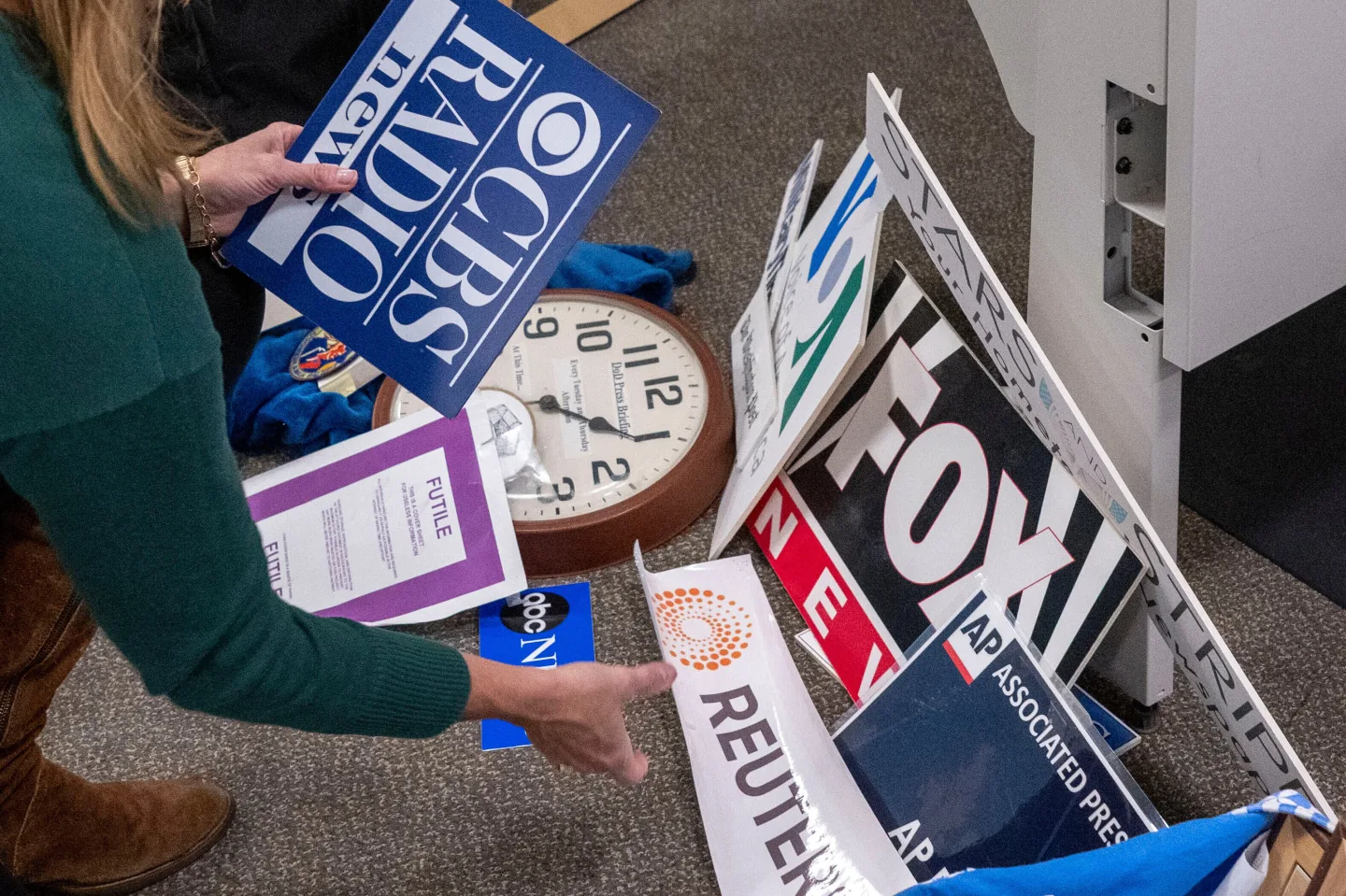
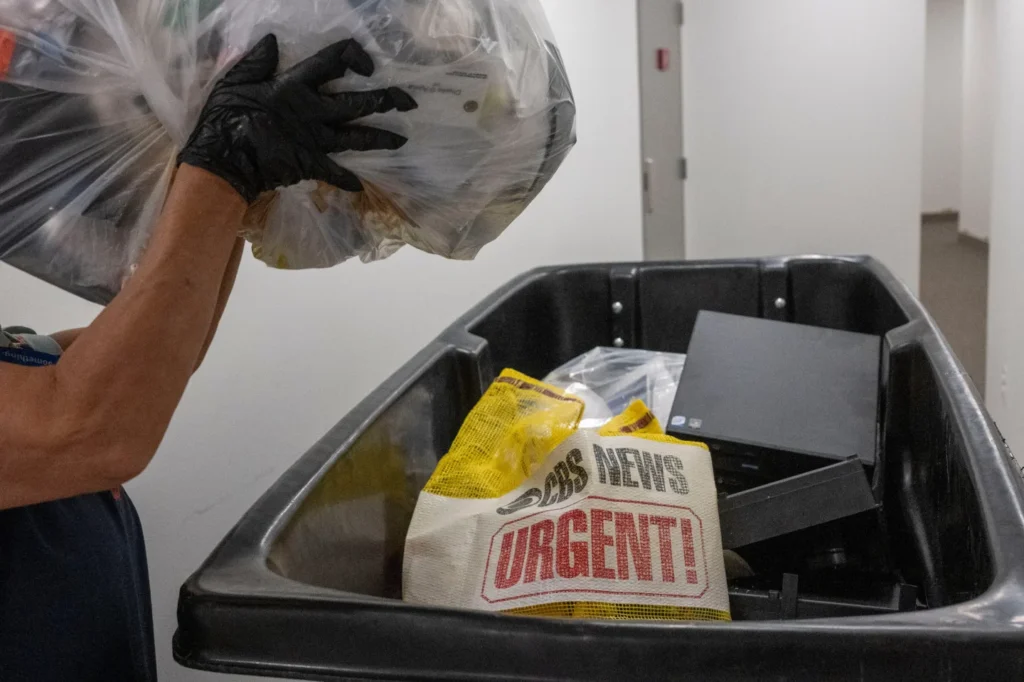
At precisely 4 p.m., the Defense Department’s deadline for compliance, reporters began carrying out boxes, chairs, and even printers from their abandoned workspaces. Around 40 to 50 journalists left together, a quiet procession of defiance down the Pentagon’s corridors.
“It’s sad, but I’m also really proud of the press corps that we stuck together,” said The Atlantic’s Nancy Youssef, who has worked inside the Pentagon since 2007. As she loaded her car, she carried out a map of the Middle East—a relic of years spent reporting from the heart of military power.

Hegseth’s “Common Sense” Rules Spark Outrage
Defense Secretary Hegseth, a former television host, defended the new restrictions as “common sense” efforts to control leaks and “reduce disruptions.” The Trump administration has framed the rules as necessary for national security, though many journalists and former officials see them as a direct attack on transparency.
President Donald Trump publicly endorsed the policy on Tuesday, claiming reporters have been “very dishonest” and “disruptive in terms of world peace.”
Under Hegseth’s tenure, Pentagon briefings have nearly vanished, and journalists have been barred from large sections of the building without escorts. The secretary has also launched leak investigations targeting Defense Department employees who speak to the press.
Jack Keane, a retired Army general and Fox News analyst, criticized Hegseth’s tactics on-air: “What they’re really doing is spoon-feeding information to journalists. That’s not journalism,” he said. Keane noted that when he served, new generals were trained to view the press as essential to democracy, not an enemy of it.
“To Agree to Not Solicit Information Is to Agree to Not Be a Journalist”
Reporters across major outlets echoed that sentiment. Youssef, who refused to sign the new policy, said the restrictions strike at the core of her profession.
“To agree to not solicit information is to agree to not be a journalist,” she said. “Our whole goal is soliciting information.”
Others, like USNINews reporter Heather Mongilio, shared their decision on social media. “It’s such a tiny thing, but I was proud to see my picture on the wall of Pentagon correspondents,” she wrote. “Today, I’ll hand in my badge. The reporting will continue.”
Reporting Continues—From the Outside
Though their physical access to the Pentagon is gone, reporters vowed their coverage of the military will not stop. NPR’s Tom Bowman wrote that military sources—many of whom understand the importance of transparency—have often provided critical information contradicting official statements.
“With no reporters able to ask questions, it seems the Pentagon leadership will rely on slick social media posts, short videos, and interviews with partisan commentators,” Bowman warned. “No one should think that’s good enough.”
The Pentagon Press Association, representing 101 members from 56 outlets, has condemned the new policy as a violation of basic press freedoms. Only One America News Network chose to sign, a move some speculate was motivated by its desire for favor with the Trump administration.
Gabrielle Cuccia, a former OANN Pentagon correspondent fired after criticizing Hegseth, said the network’s compliance was predictable. “They think loyalty will buy them access,” she told the AP.
As reporters packed away decades of shared history from their corner of the Pentagon, the message was clear: independent journalism may have lost its desk in the building, but it hasn’t lost its voice.