





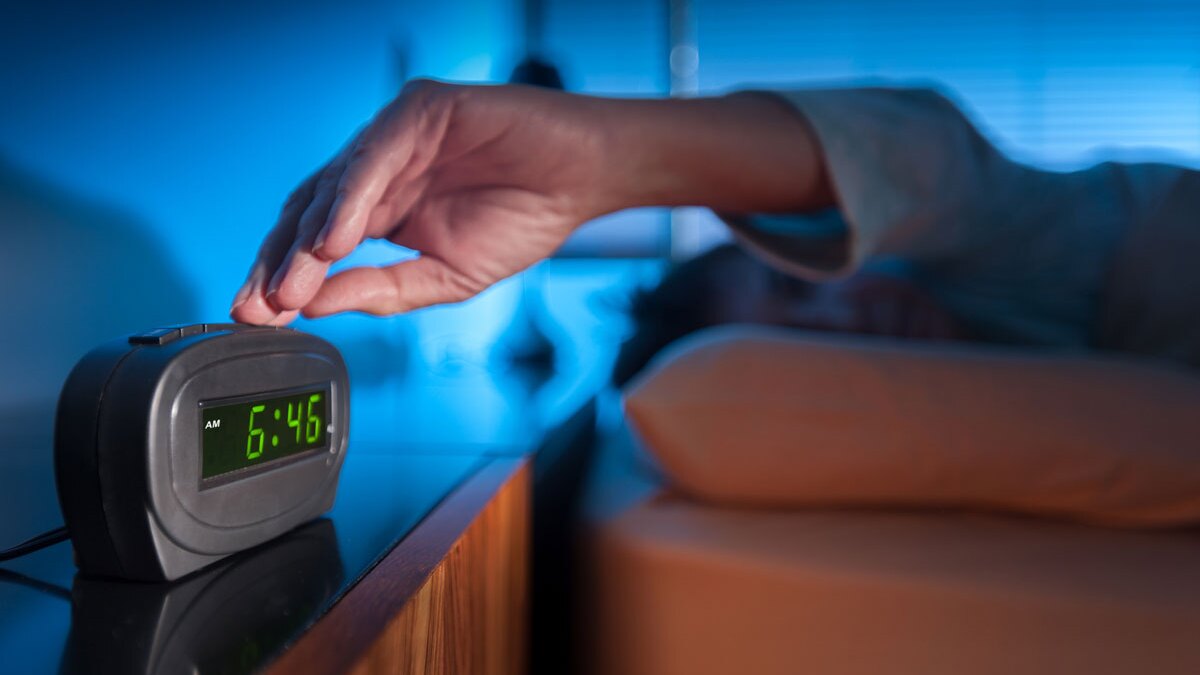
Changing the Clocks Remains Deeply Unpopular
Yes, you’ll get a shot at an extra hour’s sleep. But even with that, it might be one of the most dreaded weekends on the American calendar: the end of daylight saving time.
Only 12% of U.S. adults favor the current system of daylight saving time, which has people in most states changing the clocks twice a year, according to a new AP-NORC poll, while 47% are opposed and 40% are neutral.
Around the country, the clocks will go back one hour at 2 a.m. Sunday (respective local times) to mark the return to standard time and more daylight in the mornings. The poll from The Associated Press-NORC Center for Public Affairs Research shows that for many Americans, it’s an unwelcome change — and if forced to choose, most would prefer to keep that extra hour of daylight in the evening.
Pranava Jayanti is among those who strongly oppose the switch. The 31-year-old Los Angeles resident grew up in India, where the clocks don’t change. When he came to the United States for graduate school, some relatives made sure he knew about it.
He thought he was prepared, “but when it actually happened, it still took me by surprise,” Jayanti said, because of how quickly it got dark in the latter half of the day.
The United States first started using the time shift over a century ago, during World War I, then again in World War II. Congress passed a law in 1966 that allowed states to decide if they would have it or not, but required their choices to be uniform across their territories.
All states except Arizona and Hawaii make the time shifts; those two states remain on standard time year-round.
Time changes are also undertaken in some other parts of the world, like Canada and Europe, but not in others, like Asia. Europe and North America change the clocks a week apart, resulting in a short period where the time difference between the regions is an hour shorter than the rest of the year.
Although about half of U.S. adults are opposed to the switch — including 27% who are “strongly” opposed — many don’t care one way or another. That’s particularly true of adults under 30, with 51% saying they neither favor nor oppose the practice. Those over 30 are more likely to be opposed to it, with about half saying they dislike the twice-a-year switching of clocks.
If they had to choose one time for the country to use, more than half of adults — 56% — prefer making daylight saving time permanent, with less light in the morning and more light in the evening. About four in ten prefer standard time, with more light in the morning and less in the evening.
Those who consider themselves “night people” are much more partial to permanent daylight saving time: 61% of them say this would be their choice.
“Morning people” were just about evenly split, with 49% preferring permanent daylight saving time, and 50% wanting permanent standard time.
Experts say there’s no universal evidence favoring one system over the other, though new Stanford research suggests standard time may better align with human circadian rhythms.
America did try once, in the mid-1970s, to switch to permanent daylight saving time. It was supposed to be a two-year experiment, but lasted less than a year because it was so unpopular.
At this point, the time shift and the resulting change in daylight hours in different seasons have become part of our culture, said Chad Orzel, professor of physics and astronomy at Union College and author of A Brief History of Timekeeping.
“People really like having the long evenings in the summer,” he said. But “we drop back in the fall so that we don’t have the thing that everybody hates, which is it being dark until after you get to work. … We have earlyish sunrises in the winter and late sunsets in the summer. We like both of those things. The price we pay for that is we have to change the clocks twice a year.”