





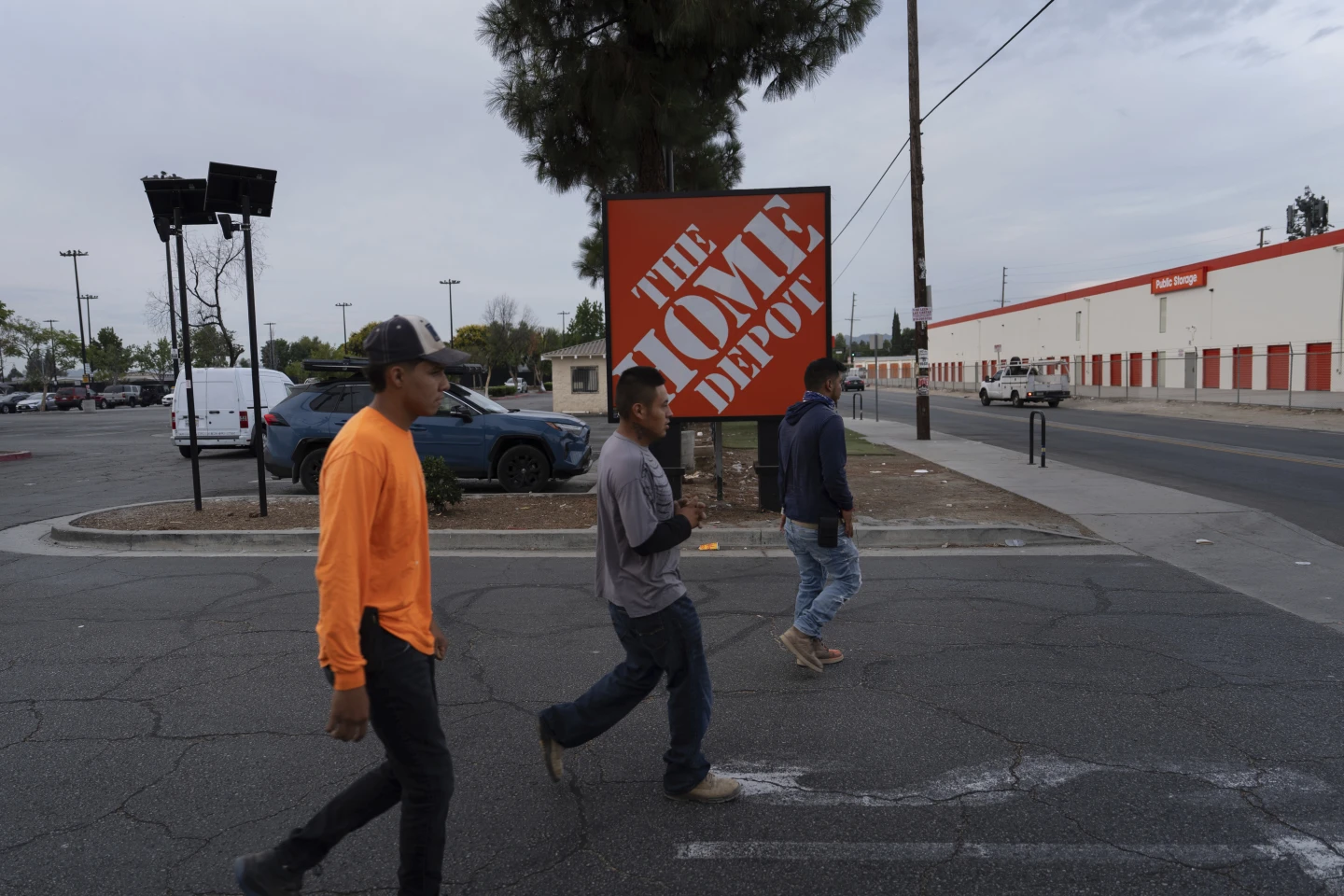
Home Depot Parking Lots Targeted by Immigration Agents
This summer, immigration agents have raided the lot at least five times, sending workers scattering for safety. Similar sweeps have taken place at more than a dozen Home Depot locations across Southern California.
Day Laborers and Activists Sound the Alarm
For decades, Home Depot stores have served as informal hiring hubs for day laborers—some with legal status, others without—seeking jobs in landscaping or construction. Now, those same parking lots have become prime targets for enforcement.
Javier, a 52-year-old Mexican immigrant who has lived in several U.S. states, said he narrowly escaped three raids in Van Nuys by hiding under a truck, driving off quickly, or blending into the crowd of shoppers. “They come in big vans and they all go out to chase people,” he said in Spanish, withholding his last name out of fear of government retaliation.
Legal Challenges and Supreme Court Ruling
Advocates have sued over the sweeps, but the U.S. Supreme Court this week allowed immigration raids to continue in Los Angeles, a major victory for the Trump administration. Homeland Security Secretary Kristi Noem called the ruling “a win for the rule of law.”
Community groups condemned the decision. “When you undermine the civil rights of those who are more vulnerable, you undermine the civil rights of everyone else,” Pablo Alvarado, co-executive director of the National Day Laborer Organizing Network, said at a press conference outside a Home Depot.
The raids have already led to tragedy. In Monrovia last month, a man fleeing immigration agents ran onto a freeway and was struck and killed.
Impact on Home Depot Stores and Business
Home Depot, which brings in nearly $160 billion in annual sales, depends heavily on contractors who often hire immigrant workers. Contractors account for half its business, compared to about 30% at competitor Lowe’s.
In the Los Angeles area, foot traffic at Home Depot stores dropped 10.7% in June and 10% in July compared to last year, according to analytics firm Placer.ai. Nationwide, the declines were only 3.8% and 2.7% during the same months.
The company denies involvement in immigration operations. “We tell associates to report any suspected immigration enforcement activity immediately and not engage with the activity for their safety,” spokesperson Beth Marlowe said. Employees uneasy after a raid are allowed to leave with pay.
Advocates Say Company Benefits From Immigrant Labor
Critics argue Home Depot indirectly benefits from immigrant workers who gather outside its stores, and should take stronger steps to protect them. “Home Depot is not an innocent bystander in all of this,” said Nik Theodore, professor of urban planning at the University of Illinois in Chicago. “Their sources of success were instrumental in catalyzing this change.”
Los Angeles passed an ordinance in 2008 requiring large retailers to provide amenities like bathrooms and seating areas to accommodate day laborers. At Van Nuys, a nonprofit runs a labor center that records worker names and tracks employers who fail to pay. Despite the risks, many workers keep returning because of the support network the site provides.
Community Response and Worker Resilience
Los Angeles Mayor Karen Bass voiced support for lawsuits challenging the raids and said city workers are trained to respond when enforcement happens on city-owned property, such as the Van Nuys Home Depot lot near the airport. City Councilmember Ysabel Jurado also opposed a new Home Depot project in her district, arguing the company has not done enough to protect vulnerable workers.
For many, the parking lot is more than just a job site. “It’s a place that becomes familiar,” Javier said. “Here, all of us together, we’ve become friends.”