






AT A GLANCE
- The Georgia Supreme Court unanimously ruled in favor of descendants of enslaved Africans in a zoning dispute over Sapelo Island’s historic Hogg Hummock community.
- The ruling reinstates the right of residents to challenge zoning changes they say threaten their homes and cultural heritage.
- The case marks a major moment for the Gullah-Geechee people, whose coastal communities are rapidly disappearing due to gentrification and land loss.
- Residents say the fight is about more than zoning—it’s about preserving a centuries-old legacy of freedom and self-determination.
Georgia’s Highest Court Reverses Lower Court in Landmark Decision
In a victory decision for grassroots democracy and cultural preservation, Georgia’s Supreme Court on Tuesday sided with Black landowners on Sapelo Island, overturning a lower court ruling that blocked a community referendum on zoning changes threatening the historic Hogg Hummock neighborhood.
The unanimous ruling reverses a 2024 decision that had stopped residents from voting on whether to repeal a county zoning ordinance that doubled allowable home sizes in Hogg Hummock, a move locals say could irreparably alter the landscape and price them out of their ancestral land.
The court’s opinion, authored by Justice John Ellington, affirmed that the Georgia Constitution’s Home Rule Provision gives county voters the power to challenge zoning ordinances. “Nothing in the text of the Zoning Provision in any way restricts a county electorate’s authority to seek repeal of a zoning ordinance,” Ellington wrote.
The justices’ ruling allows the community’s long-delayed referendum—halted just days before the 2024 election—to move forward, restoring what residents described as their “voice” in determining the future of their island.
Residents Describe a Long Struggle Against Encroachment
For many Sapelo Island residents, the decision represents more than a legal victory—it’s a generational stand to protect land that has been theirs since Emancipation.
“We feel vindicated,” said Jazz Watts, a homeowner and community organizer in Hogg Hummock. “The election should not have been stopped. It was stopping the voice of the people.”
Watts and her neighbors, supported by civil rights advocates, historians, and environmental groups, had gathered over 2,300 signatures from registered voters to force the referendum in McIntosh County. The petition reflected mounting frustration that local officials were ignoring the will of residents in favor of developers and newcomers looking to build luxury vacation homes on the island.
Attorney Dana Braun, representing the Hogg Hummock residents, said the ruling ensures “some real say” for citizens who have fought for decades to preserve one of the last surviving Gullah-Geechee communities.
“This case is about more than a zoning map—it’s about whether a community born from survival and self-reliance has the right to decide its own future,” Braun said.
County Officials “Disappointed” But Complying
McIntosh County officials, whose population is roughly 65% white, expressed disappointment in the court’s ruling but indicated they will comply.
“The county commissioners are obviously disappointed but respect the decision of the Georgia Supreme Court,” county attorney Ken Jarrard wrote in an email.
During oral arguments in April, Jarrard had maintained that zoning powers are uniquely granted to county governments by the state Constitution and therefore should not be subject to public referendum. The justices flatly rejected that claim, reinforcing the principle that local voters retain democratic oversight of their governing bodies—even on technical land-use matters.
A Rare Community With Deep Roots
Hogg Hummock—often called Hog Hammock—is home to only about 30 to 50 full-time Black residents, most of them descendants of enslaved Africans who once toiled on the island’s cotton plantations. Their ancestors purchased the land after the Civil War, building homes, churches, and schools in one of the few places where Black landownership endured for generations along the coastal South.
The community is part of the broader Gullah-Geechee Cultural Heritage Corridor, a stretch of coastal land and islands from North Carolina to Florida that Congress designated in 2006 to recognize the descendants of West African people enslaved on rice, indigo, and cotton plantations.
Separated by water and marsh, Sapelo Island remained largely isolated for more than a century. That isolation helped preserve much of the Gullah-Geechee language, cuisine, and customs—from net-making and basket weaving to praise-house worship and communal land stewardship.
In 1996, Hogg Hummock was placed on the National Register of Historic Places in recognition of its cultural and historical significance. Yet the community’s population has dwindled as rising property values, escalating taxes, and limited job opportunities have driven younger generations away.
Encroaching Development Threatens the Island’s Future
For decades, Sapelo Island residents have faced an uphill battle against land development and gentrification. Many parcels of land have been bought up by wealthy outsiders, some of whom seek to build large vacation homes on an island accessible only by ferry.
The 2023 zoning changes passed by McIntosh County commissioners allowed home sizes to double from 1,400 square feet to 3,000 square feet—changes that residents feared would not only invite more affluent buyers but also raise property assessments, pushing longtime families off the land.
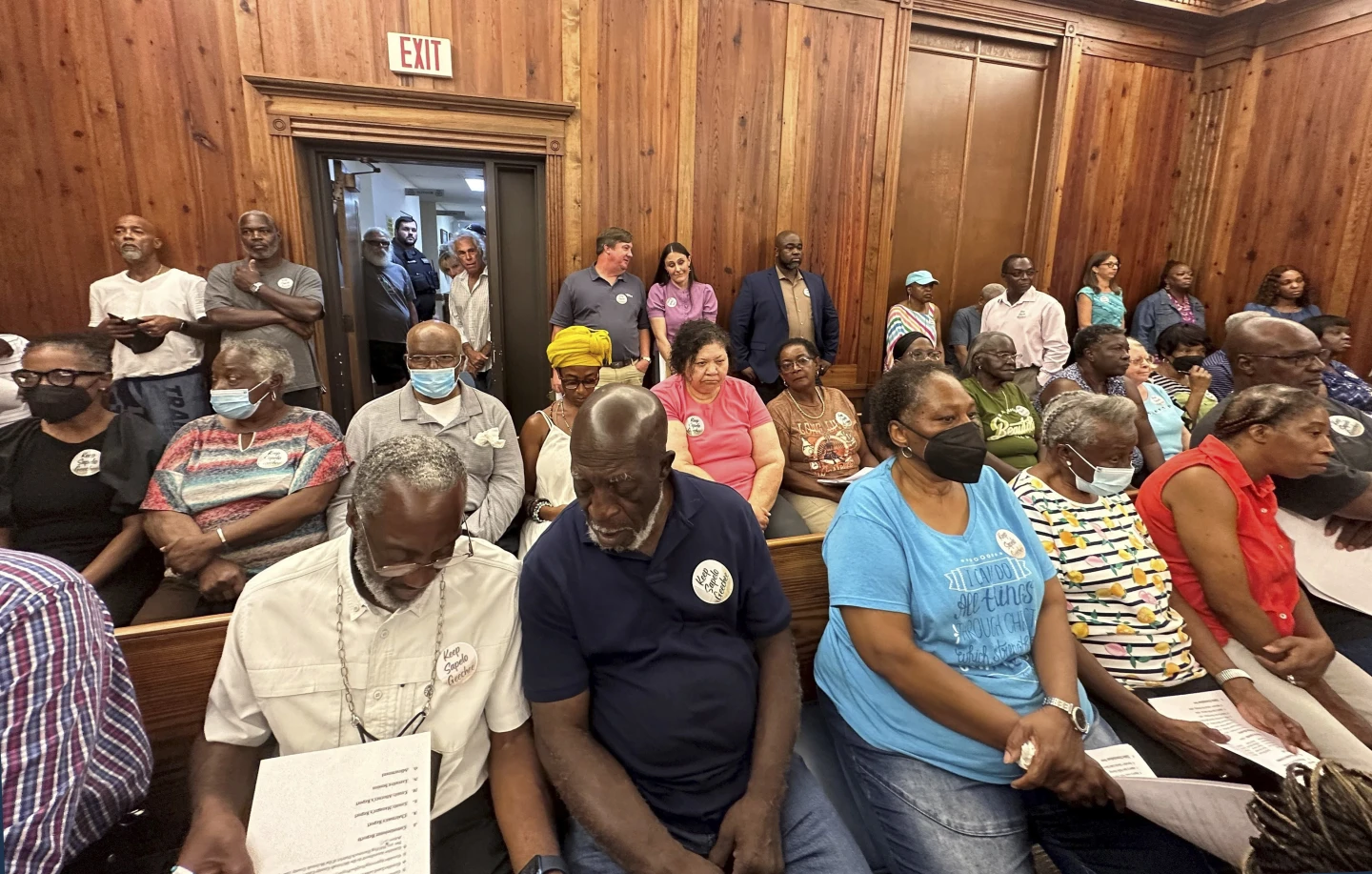
The ordinance, locals argued, undermined the protections they fought to establish in the 1990s, when the community successfully lobbied for zoning limits meant to safeguard Hogg Hummock’s cultural identity and prevent overdevelopment.
Attorney Philip Thompson, who also represents the residents, said the case carries national significance. “This is about whether descendants of enslaved people can continue to live on the land their ancestors purchased after freedom,” Thompson said. “It’s a cultural and historical treasure, and it’s been under threat for years.”
Preservationists and Scholars Praise the Decision
Historians and cultural preservationists across the Southeast praised the Georgia Supreme Court’s decision, calling it a model for protecting vulnerable Black historic communities from erasure.
“This ruling gives hope to other Gullah-Geechee families fighting similar battles along the coast,” said Dr. Melissa Cooper, a historian at Rutgers University who studies Gullah-Geechee history. “Land ownership is the foundation of cultural survival. Once it’s gone, so is the community.”
Advocacy groups like the Sapelo Island Cultural and Revitalization Society (SICARS) have worked for decades to defend the community’s land rights and preserve its traditions. The group has filed multiple lawsuits since the 1990s to challenge unfair taxation and zoning policies that disproportionately burden Black residents.
The late Cornelia Walker Bailey, a revered community elder and cultural historian, often described Sapelo as “a place where our ancestors’ voices still live in the trees.” Her vision of protecting that heritage continues to inspire younger generations who refuse to let developers rewrite the island’s story.

What Comes Next for Sapelo Island
It remains unclear when McIntosh County will reschedule the referendum. Election officials will need to coordinate with residents and legal representatives to restore the vote that was abruptly canceled in 2024.
In the meantime, Hogg Hummock residents say they are prepared to keep fighting. “This decision doesn’t end our struggle,” said Watts. “It just means we get to keep having one.”
For many families, the ruling represents more than a legal triumph—it’s a declaration that their history, culture, and existence matter in a state that has too often erased Black spaces for the sake of profit.
“Every generation of our family has been born here,” Watts said. “We’ve buried our people here. We’ve worked this land. We’re not leaving.”