






The Gay Harlem Renaissance: Exhibition Illuminates Queer Legacy of a Cultural Revolution
The New York Historical Society’s latest exhibition, The Gay Harlem Renaissance, finally puts that truth front and center, celebrating the queer artists, writers, and performers who helped define one of the most transformative periods in American culture.
Reframing the Harlem Renaissance
Curator Allison Robinson, who leads the exhibit, said the project challenges traditional narratives that focus only on race and class. “Sexuality and gender are just as important,” Robinson told NBC News. The Harlem Renaissance, which flourished in New York City from the 1920s to the early 1930s, gave Black artists an unprecedented platform for self-expression. Within that movement, Robinson added, “Black queer creatives are really a driving force.”
With over 200 works on display—paintings, sculptures, photos, and rare books—the show runs through March and includes historical insight from Columbia University’s George Chauncey, author of Gay New York, 1890–1940.
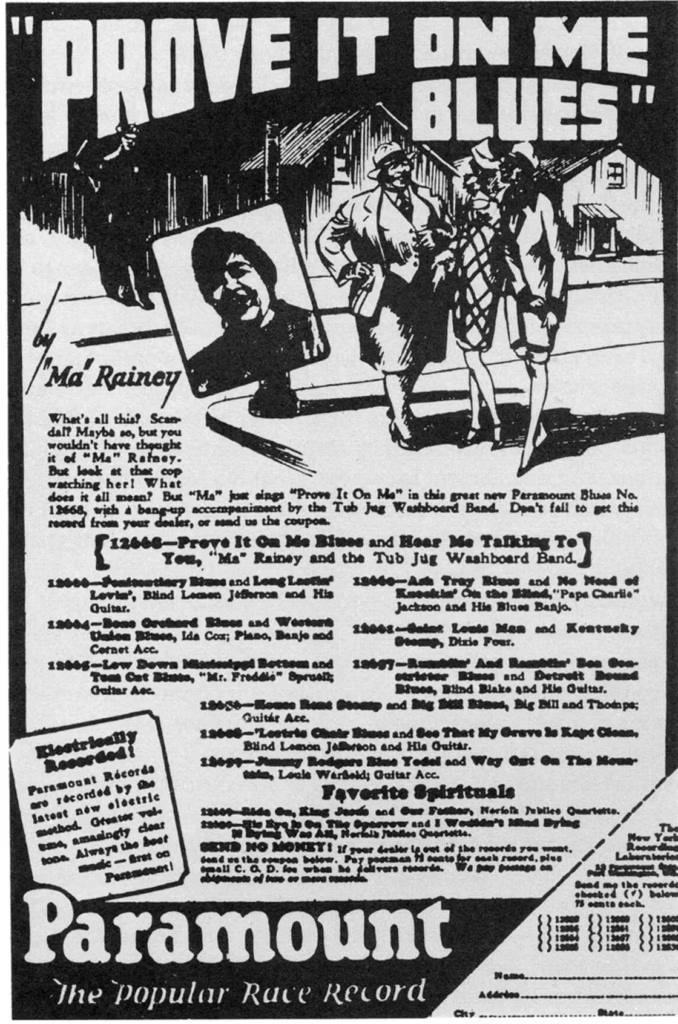
Where Art, Identity, and Resistance Collided
Visitors move through multiple rooms that trace the era’s energy from the Great Migration and the emergence of literary figures like Langston Hughes and Alain Locke to the rent parties, drag balls, and jazz clubs that pulsed through Harlem’s nightlife.
Locke, the so-called “dean” of the Harlem Renaissance, edited The New Negro, a foundational 1925 anthology that united the movement’s visionaries. Among them was writer and artist Richard Bruce Nugent, whose 1926 work “Smoke, Lilies and Jade” openly explored bisexual desire—a radical act for its time.
Drag Balls, Rent Parties, and Defiant Joy
Harlem’s drag scene was legendary, with the Hamilton Lodge Ball drawing thousands from across the East Coast and Europe. A re-creation of the 1932 prize-winning gown worn by Bonnie Clark captures the glamour and defiance of the time.
The exhibition also resurrects the story of Gladys Bentley, the tuxedo-clad performer who commanded Harlem’s clubs and scandalized audiences with her unapologetic gender expression. “She’s walking up and down Seventh Avenue with a woman on her arm,” Robinson said. “She embraced her sexuality and gender in ways that were so cutting edge.”
Rent parties, thrown to offset sky-high housing costs, became safe havens for queer and straight Harlem residents alike. One invitation on display belonged to dancer and activist Mabel Hampton, who saved it for nearly 60 years.
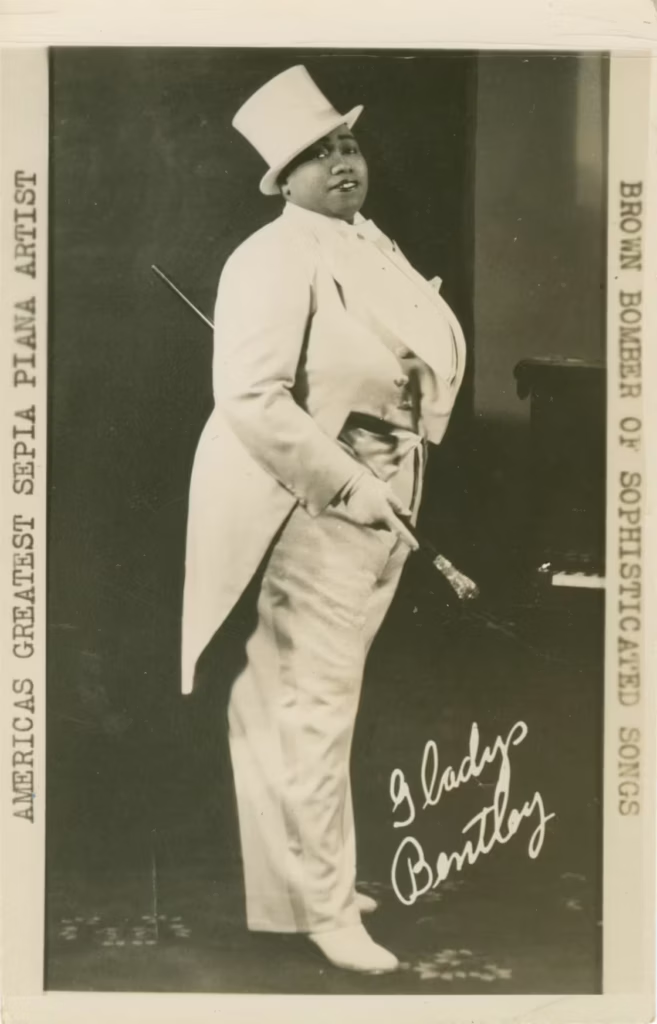
A’Lelia Walker and the Dark Tower
Another central figure is A’Lelia Walker, daughter of entrepreneur Madam C.J. Walker, whose home the Dark Tower served as a salon for Harlem’s creative and queer elite. Langston Hughes once called her the “joy goddess of Harlem’s 1920s.” Artifacts from her gatherings, including her signature coat, stand beside Countee Cullen’s poem From the Dark Tower, bridging art, identity, and liberation.
The Legacy Lives On
For Robinson, The Gay Harlem Renaissance isn’t about rewriting history but expanding it. “The end is not an end, but a display of what came after,” she said. The exhibition reminds visitors that the Harlem Renaissance’s queer legacy remains deeply woven into the fabric of American culture a story of beauty, defiance, and joy in the face of constraint.