





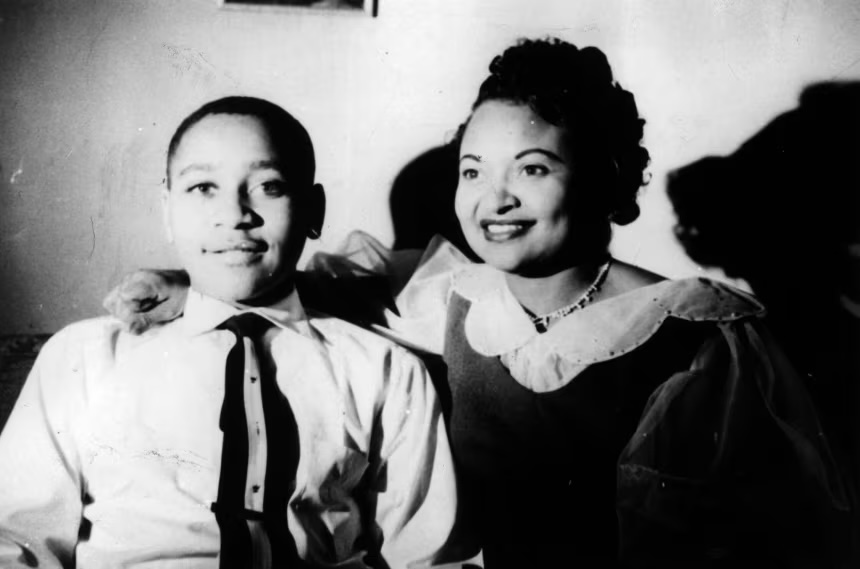
Need to Knows
- The gun used to kill 14-year-old Emmett Till is now permanently displayed at the Two Mississippi Museums.
- The weapon had been privately held for decades before being acquired by the Foundation for Mississippi History.
- Till’s 1955 lynching and his mother’s decision for an open-casket funeral helped spark the civil rights movement.
- Family members call the gun’s display both painful and necessary for truth and education amid modern-day censorship battles.
The Gun That Killed Emmett Till Is No Longer Hidden
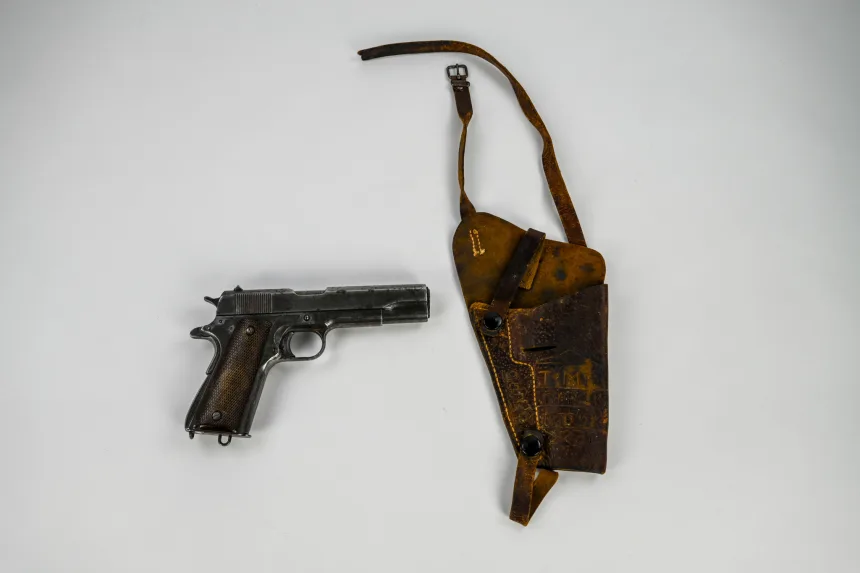
For the first time, the gun used in one of America’s most infamous racial killings is on public display. The .45-caliber Colt pistol, along with its weathered saddle-brown holster marked “J.M.,” belonged to J.W. Milam, one of the two white men who abducted, tortured, and murdered 14-year-old Emmett Till in Mississippi in 1955.
The artifacts had been quietly kept for decades by an anonymous Mississippi family with no direct connection to the case. Journalist Wright Thompson, who stumbled upon them while researching his book The Barn: The Secret History of a Murder in Mississippi, confirmed their existence after finding the gun in a bank safe deposit box.
Negotiations led by the Foundation for Mississippi History resulted in the acquisition of both items, which are now permanently displayed at the state’s Two Mississippi Museums—the Museum of Mississippi History and the Mississippi Civil Rights Museum.
Revisiting the Crime That Changed America
Till, a Black teenager from Chicago, was visiting relatives in Money, Mississippi, when he was accused of whistling at Carolyn Bryant Donham, a 21-year-old white woman, outside the grocery store she co-owned with her husband, Roy Bryant. Four days later, Bryant and his half-brother Milam dragged Till from his great-uncle’s home in the dead of night.
They beat him mercilessly, gouged out one of his eyes, shot him in the head, and tossed his body into the Tallahatchie River, weighed down with a 75-pound cotton gin fan.
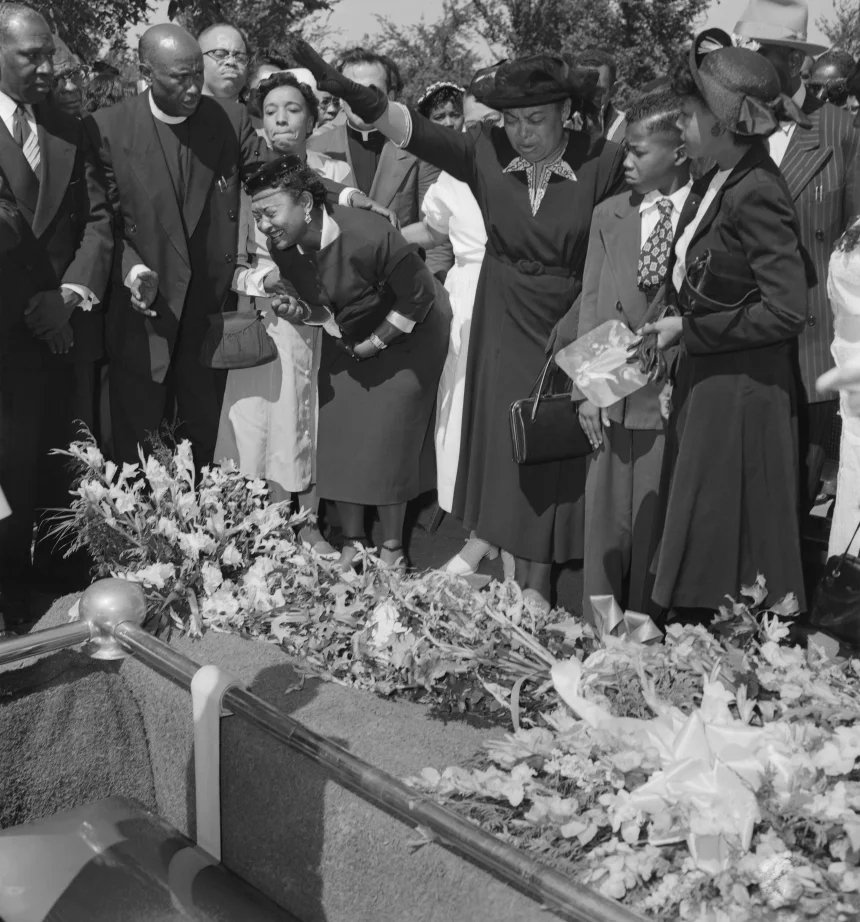
When his mutilated body was returned to Chicago, his mother, Mamie Till-Mobley, demanded an open-casket funeral. Thousands viewed the body; photographs published in Jet Magazine seared the horror of Jim Crow violence into the conscience of the nation and the world.
In 1956, Milam and Bryant openly confessed to the killing in Look magazine, protected by double jeopardy after being acquitted by an all-White jury that deliberated for less than an hour. Neither man ever faced justice.
“Evidence in a Case Still Seeking Justice”
Deborah Watts, Emmett Till’s cousin and co-founder of the Emmett Till Legacy Foundation, called the pistol’s display a deeply conflicted moment.
“The gun that was used in Emmett’s heinous murder is in fact evidence in a case that, while closed, is one in which we still seek justice,” Watts said in a statement. She added that the exhibit serves as a safeguard against historical erasure: “We also understand the importance of the gun as an artifact for education so that current and future generations are able to reflect and grasp the importance in resisting erasure or the changing of historical facts.”
Rev. Wheeler Parker, Till’s cousin and the last living witness to his abduction, said the display “brings closure.”
Museum officials said the gun was authenticated through its serial number, which matched FBI records. Nan Prince, director of collections for the Mississippi Department of Archives and History, admitted the weapon is unlike any artifact she has ever handled. “The emotions that are centered around it are hard. It’s a hard thing to see and a hard thing to convey.”
Confronting Hard History Amid Political Attacks
The unveiling coincides with the 70th anniversary of Till’s murder, marked by a multi-day commemoration that included a symbolic train ride from Chicago to Mississippi, retracing Till’s final journey south. Civil rights leaders used the occasion to highlight his enduring legacy and the ongoing movement for racial justice.
But the exhibit also arrives at a tense political moment. President Donald Trump has accused museums of focusing too heavily on what he calls the “negative aspects” of U.S. history, including slavery. His administration has pushed for restrictions on how historical injustices are taught, sparking backlash across the museum sector.
The American Alliance of Museums warned such efforts risk creating a “chilling effect” on the profession.
Michael Morris, director of the Two Mississippi Museums, said their mission will not change. “One of the reasons why the Civil Rights Museum was created is to tell the unvarnished truth about what happened in terms of the civil rights movement here in Mississippi. The acquisition of this artifact is a part of our mission, and so we’re just going to continue doing public history work.”
The Power of Remembering
For many, the display of Milam’s pistol ensures that Emmett Till’s story cannot be softened or forgotten. While most of the people involved in his killing have long since died, the weapon itself is a stark reminder of the violence that fueled Jim Crow and the courage of those who fought to expose it.
Seventy years later, the gun sits not as a trophy but as a testament—a piece of evidence that speaks to the cruelty of white supremacy and the power of memory to resist erasure.