





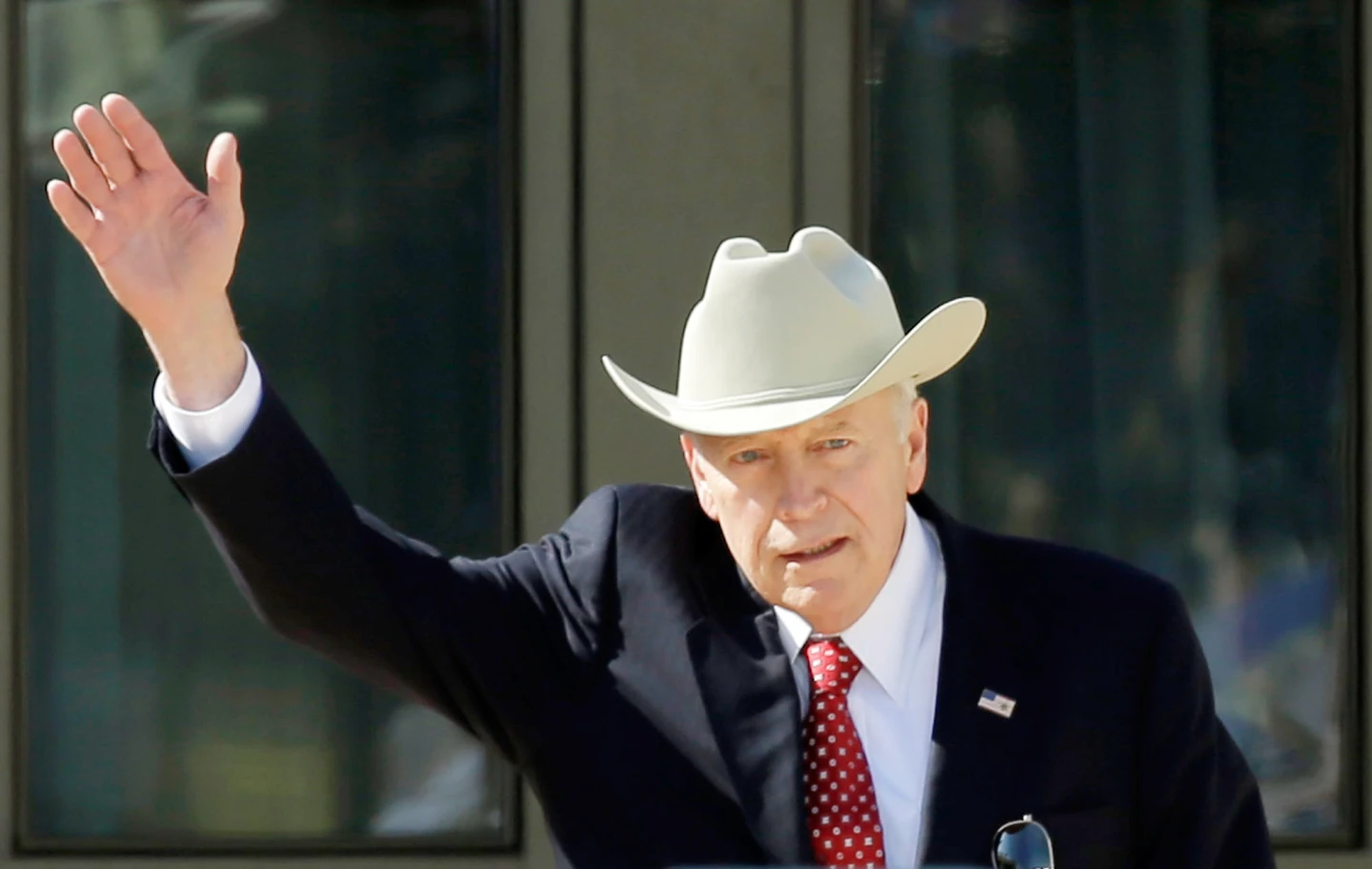
Dick Cheney, Former Vice President and Architect of the Iraq War, Dies at 84
Dick Cheney, the hard-driving conservative who reshaped the vice presidency into a seat of real power and pushed the U.S. into the Iraq War, has died at 84. His family said Cheney died Monday night from complications of pneumonia and cardiac and vascular disease.
“For decades, Dick Cheney served our nation,” his family said in a statement. “He was a great and good man who taught his children and grandchildren to love our country… and to live lives of courage, honor, love, kindness, and fly fishing.”
Cheney served under both Bush presidencies, first as defense secretary during the Persian Gulf War under George H.W. Bush, then as vice president to George W. Bush. In the wake of 9/11, Cheney became the administration’s most influential voice on national security, steering intelligence and defense policies that would define an era.
Inside the Bush White House, Cheney acted as the chief operating officer the hand that quietly guided much of American policy. He defended the use of extreme interrogation tactics, warrantless surveillance, and expanded executive powers in the name of fighting terrorism.
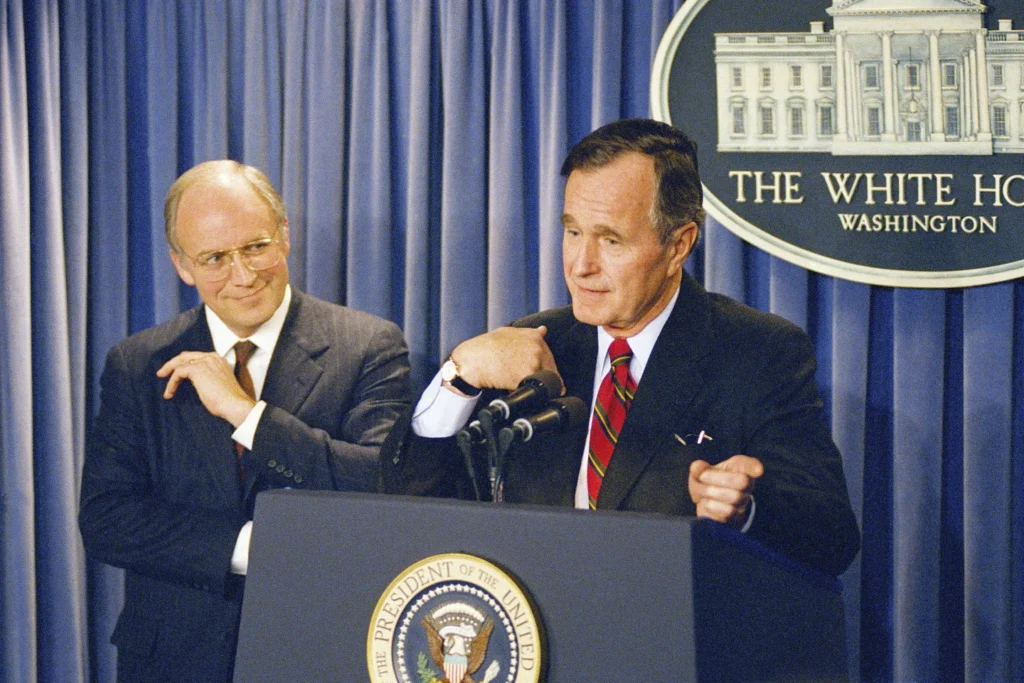
He once joked about his reputation for secrecy and control: “Am I the evil genius in the corner that nobody ever sees come out of his hole? It’s a nice way to operate, actually.”
But beneath the sardonic humor was a man living on borrowed time. A survivor of five heart attacks, Cheney underwent a heart transplant in 2012 and once admitted he’d had the wireless function on his defibrillator disabled to prevent potential hacking.
Cheney’s greatest influence, and deepest controversy, came with the 2003 invasion of Iraq. He insisted Saddam Hussein possessed weapons of mass destruction and suggested ties to the 9/11 attacks, claims that proved false.
He predicted U.S. troops would be “welcomed as liberators.” They weren’t. By 2005, with more than 1,600 American service members killed, Cheney declared the insurgency was in its “last throes.” The war dragged on for years.
His critics saw him as stubbornly wrong; his supporters saw him as steadfastly loyal to a cause. Either way, he helped define a war that reshaped the Middle East — and America’s standing in it.
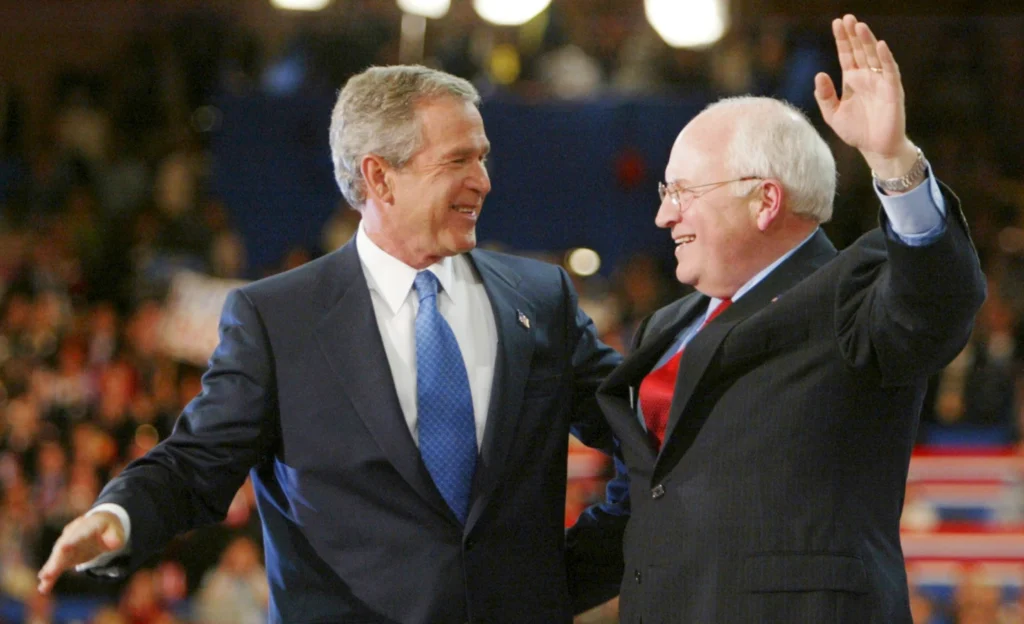
By Bush’s second term, Cheney’s dominance began to wane. Courts rolled back some of his most aggressive policies, and political momentum shifted away from neoconservatism.
Years after leaving office, Cheney’s feud with Donald Trump would mark one of his final political battles. After his daughter, Rep. Liz Cheney, emerged as Trump’s fiercest internal critic following the Jan. 6 Capitol riot, the elder Cheney backed her fully.
“In our nation’s 246-year history, there has never been an individual who was a greater threat to our republic than Donald