






Crockett Questions CBS As Colbert Talarico Interview Sparks FCC Equal Time Debate
With early voting underway in Texas, the Democratic primary for U.S. Senate has taken an unexpected turn after a late night television controversy placed the race in the national spotlight.
Rep. Jasmine Crockett is speaking out after Stephen Colbert revealed that CBS lawyers advised against airing a taped interview with her primary opponent, James Talarico, over concerns tied to federal election law.
CBS Cites FCC Equal Time Concerns
During a recent broadcast of The Late Show with Stephen Colbert, Colbert told viewers that network attorneys warned airing the interview could trigger the Federal Communications Commission’s equal time requirement. The rule can obligate broadcasters to offer comparable airtime to other candidates in the same race.
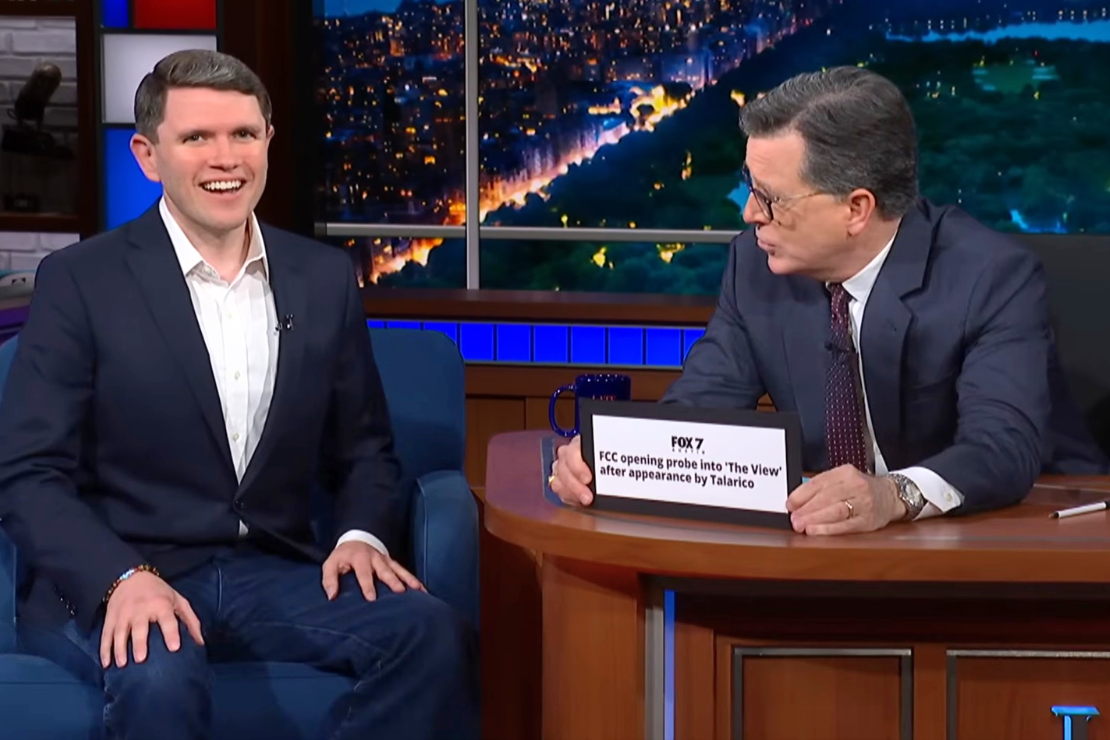
CBS later stated it did not prohibit the interview from airing but instead “provided legal guidance” and “presented options” for complying with equal time rules.
Rather than broadcast the segment, the show posted the full interview online through its YouTube channel. Colbert openly criticized the network’s handling of the situation on air.
On “The Late Show” Tuesday, Colbert said he was surprised by a statement from CBS denying that its lawyers told him he couldn’t show an interview with Democratic Texas Senate candidate James Talarico — which the host said had happened the night before.
He then took a copy of the network statement, wrapped it in a dog poop bag, and tossed it away.
Colbert had instead shown his Talarico interview on YouTube, but told viewers why he couldn’t show it on CBS. The network was concerned about FCC Chairman Brendan Carr trying to enforce a rule that required broadcasters to give “equal time” to opposing candidates when an interview was broadcast with one of them.
“We looked and we can’t find one example of this rule being enforced for any talk show interview, not only for my entire late-night career, but for anyone’s late-night career going back to the 1960s,” Colbert said.
The Political Juxtaposition, Crockett Says The Move May Have Backfired
For candidates against censorship, this new rule creates a delicate juxtaposition.
On one hand, she benefits from the equal time principle, which is intended to protect candidates from being sidelined in major media appearances. On the other hand, when the rule is applied in a way that limits broadcast exposure, it can unintentionally elevate the very opponent it seeks to balance, particularly when controversy drives digital engagement and fundraising.
Appearing on The Briefing with Jen Psaki, Crockett said the controversy may have had the opposite effect of what CBS intended.
“I think it probably gave my opponent the boost he was looking for,” Crockett said, referring to the heightened attention surrounding Talarico in the days since the decision.
The moment comes at a critical time in the race, as early voting has already begun and candidates are working to consolidate support across Texas.
Donation Surge Follows Online Release
According to Politico, Talarico’s campaign has raised approximately $2.5 million in donations since the interview controversy erupted. The fundraising spike underscores how quickly media moments can translate into campaign momentum, particularly in competitive Democratic primaries.
The incident has also reignited broader conversations about how equal time rules apply in modern media environments, especially when interviews migrate from traditional broadcast television to digital platforms.