






Cosmetic Surgery Chain Lawsuits Expose Pandemic Loopholes, the Rise of a Empire, and the Hidden Dangers Behind “Dream Body” Promises
When the pandemic hit, temporary medical licenses meant to fight COVID-19 somehow became a backdoor for cosmetic surgery empires to expand. Goals Aesthetics & Plastic Surgery, headquartered in New York, used the emergency licensing system to ship in out-of-state doctors for elective procedures in Georgia.
In March 2021, Goals launched its Atlanta center, plastering Instagram with ads promising “precision body contouring” and “a dream body in just one visit.” Patients paid cash or signed up for high-interest financing to afford the $6,000-to-$8,000 procedures.
The company’s marketing leaned heavily on millennial and Gen Z aesthetics — glowing before-and-after shots, TikTok dances from nurses in scrubs, and hashtags like #GoalsBody and #BBLQueen. The ads targeted Black and Latina women, promising “minimal downtime” and “safe awake procedures.”
Behind the ring light glamour, the new Atlanta location was chaos.
A Trail of Lawsuits and Hidden Arbitration Clauses
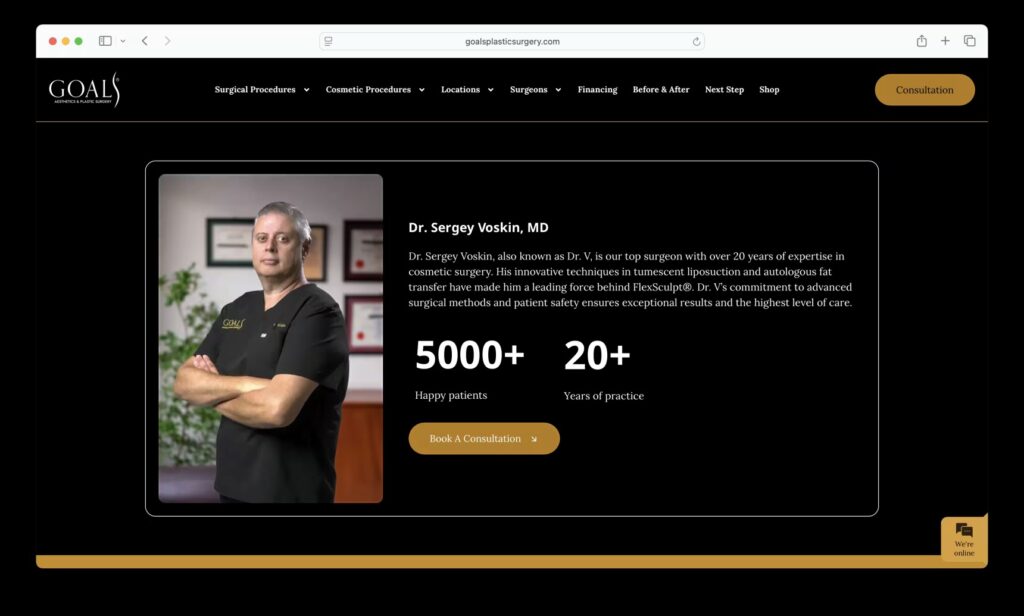
Within months of opening, the lawsuits started rolling in. More than 20 patients accused Goals and its surgeons of malpractice. The most frequent defendant: Dr. Andrew S. Hsu, a California-based general surgeon hired under the state’s temporary license program.
Court filings reveal that Goals knew about Hsu’s disciplinary problems in California. In fact, the company admitted in a separate court case that it had to provide him “significant legal and other assistance” to keep his license from being revoked.
Seven of Hsu’s former patients sued him and the company for botched Brazilian butt lifts and liposuctions in 2021 alone. One alleged he left a scalpel blade inside her abdomen. Another discovered a metal liposuction tip lodged in her stomach after surgery. Both cases were quietly settled or dismissed because the patients had signed arbitration agreements — contracts that strip patients of the right to take their complaints to court.
Goals denies all wrongdoing. So does Hsu. Neither agreed to comment.
The Marketing Mirage of “Minimally Invasive” Procedures
Cosmetic surgery has ballooned into a multi-billion-dollar industry built on buzzwords: “minimally invasive,” “non-surgical,” “quick recovery.” The message is seductive surgeries that fit between errands. But the reality is that liposuction and Brazilian butt lifts (BBLs) are among the most dangerous elective surgeries performed in America.
A 2017 study by the American Society for Aesthetic Plastic Surgery found that BBLs carry a death rate higher than almost any other cosmetic procedure, largely due to fat embolisms.
Chains like Goals and Mia Aesthetics market these risky procedures as if they were spa treatments. Their websites feature polished influencers who flaunt new curves weeks after surgery. But behind that social media sheen lies an industry with minimal regulation, revolving-door surgeons, and zero federal oversight of injury or death statistics.
No government agency tracks complication rates for cosmetic surgery centers. No national database warns patients when a doctor’s license is suspended. Even state boards vary in how they discipline repeat offenders.
A Patient’s Story: “They Burned Me and Sent Me Home”
Charleetra Hornes, 52, learned that lesson the hard way. She lives outside Atlanta and says she chose Goals after seeing their Instagram ads promising “minimal downtime.”
She paid $6,650 for what the company called a “double BBL.” The day of her surgery, she tested positive for COVID-19, yet the clinic went ahead anyway. Her lawsuit alleges she suffered “excruciating pain” during the operation and was given only pills for pain relief.
Hours later, she was in the emergency room with a high fever, severe burns, and tissue damage. She spent two weeks hospitalized.
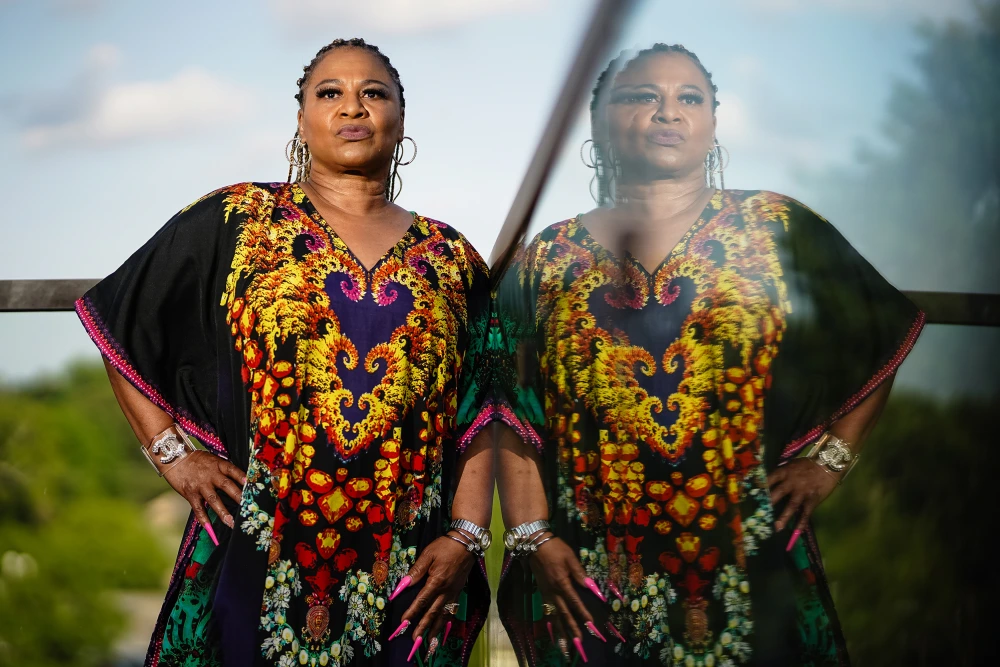
“I’ve been disfigured and burned up, and it’s not fair,” Hornes said. “They said it was safe. It wasn’t.”
Her malpractice case was dismissed after the court ruled she’d missed the deadline to serve one of the defendants in Texas and because she had unknowingly signed an arbitration clause.
“I wish I’d taken it more seriously,” Hornes said. “Because it was life-altering.”
Private Equity and the “Assembly Line” of Surgery
Behind the marketing and lawsuits is a booming business model driven by private equity. Investment firms buy up surgery chains, standardize procedures, and push volume — more operations per day, faster turnover, higher profits.
For Goals, Mia Aesthetics, Belle Medical, and Sono Bello, it’s a cash-based system: no insurance, no claims, just quick transactions. These centers often partner with lenders that charge double-digit interest to patients who can’t afford the lump sum.
According to lawsuits, surgeons are paid per procedure, creating financial incentives to perform as many as possible each day. Some contracts revealed in court filings show doctors making as little as $600 per surgery while chains pocket the rest.
In a contract dispute, Goals even admitted that one of its Atlanta surgeons was “unable to perform his duties” and described another as “abrasive, vulgar, and unprofessional.” Despite that, the company continued scheduling surgeries.
A Pattern of Negligence Across the Country
The Atlanta clinic isn’t unique.
- Mia Aesthetics, a Miami-based chain, operates 13 clinics nationwide. Court records show at least four of its surgeons have three or more malpractice suits since 2020.
- Belle Medical, which operates in Utah, Idaho, and Oklahoma, is facing a wrongful death lawsuit after a 70-year-old woman died from pulmonary embolism two days after liposuction. Her family alleges staff ignored her husband’s desperate calls for help.
- Sono Bello, the largest cosmetic surgery chain in the U.S. with over 100 locations, has been sued repeatedly. Three patients died under one of its contracted surgeons in Ohio. That surgeon’s license was later revoked.
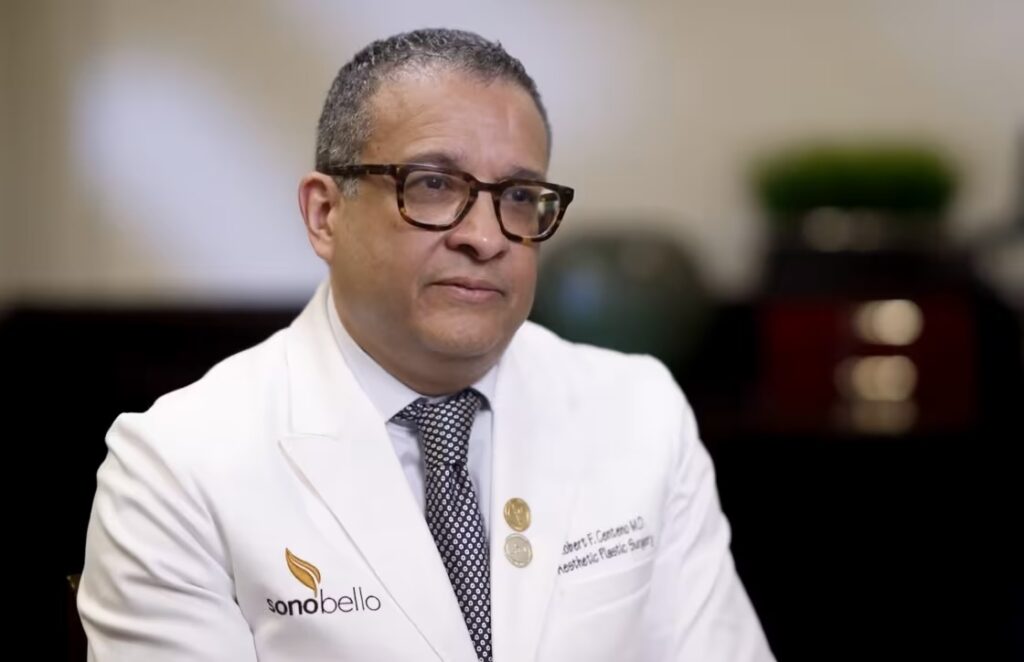
Despite this, Sono Bello’s East Region medical director, Dr. Robert Centeno, defended the company’s hiring standards. “Many surgeons have past performance issues,” he said. “That’s not, in fact, disqualifying.”
It’s not comforting to know that “past performance issues” is how some in the industry describe patient deaths.
Unqualified Doctors, Invented “Fellowships,” and Misleading Ads
Sono Bello and other chains have created their own so-called “fellowship” programs — six to eight-week crash courses that promise to turn general surgeons into cosmetic specialists. Real fellowships, by contrast, are accredited, yearlong programs supervised by professional boards.
One patient, Shirley Webb, 79, nearly died after a liposuction and tummy tuck performed by a Sono Bello doctor who had previously faced multiple malpractice settlements and a reprimand from the Nevada medical board. Her lawsuit said Sono Bello’s advertising led her to believe her doctor was a “board-certified plastic surgeon.”
The company insists it was transparent and that all its surgeons are “board-certified” — just not necessarily in plastic surgery. Webb’s case was settled privately in 2024.
A System That Protects Corporations, Not Patients
Cosmetic surgery chains thrive in a vacuum of accountability. Arbitration agreements silence victims. Confidential settlements conceal patterns. State boards act slowly or inconsistently.
Even when doctors are disciplined — like Hsu, whose California license was revoked and then reinstated under probation — they can continue operating in other states.
Meanwhile, these clinics keep churning out surgeries, marketing to working-class women who finance their procedures with credit cards or loans. A “dream body” has become another form of debt — and for some, a lifelong reminder of a medical system that prizes profit over safety.
A Cosmetic Crisis Hiding in Plain Sight
America’s cosmetic surgery industry is essentially an unregulated frontier. Private equity calls the shots, surgeons moonlight across state lines, and social media functions as the primary source of “research” for thousands of hopeful patients.
Until the government requires transparent reporting on injuries and doctor histories, stories like Hornes’s will keep surfacing — usually too late, when the scars are permanent.
As one medical ethics expert told investigators, “When you make beauty a business, safety becomes optional.”