




A Judicial Sweep Changes the Makeup of Bexar County Courts Following a Divisive Democratic Primary
The recent Democratic primary elections reshaped the makeup of Bexar County’s courts and ignited a continuing conversation about the future of Black representation within the Democratic Party.
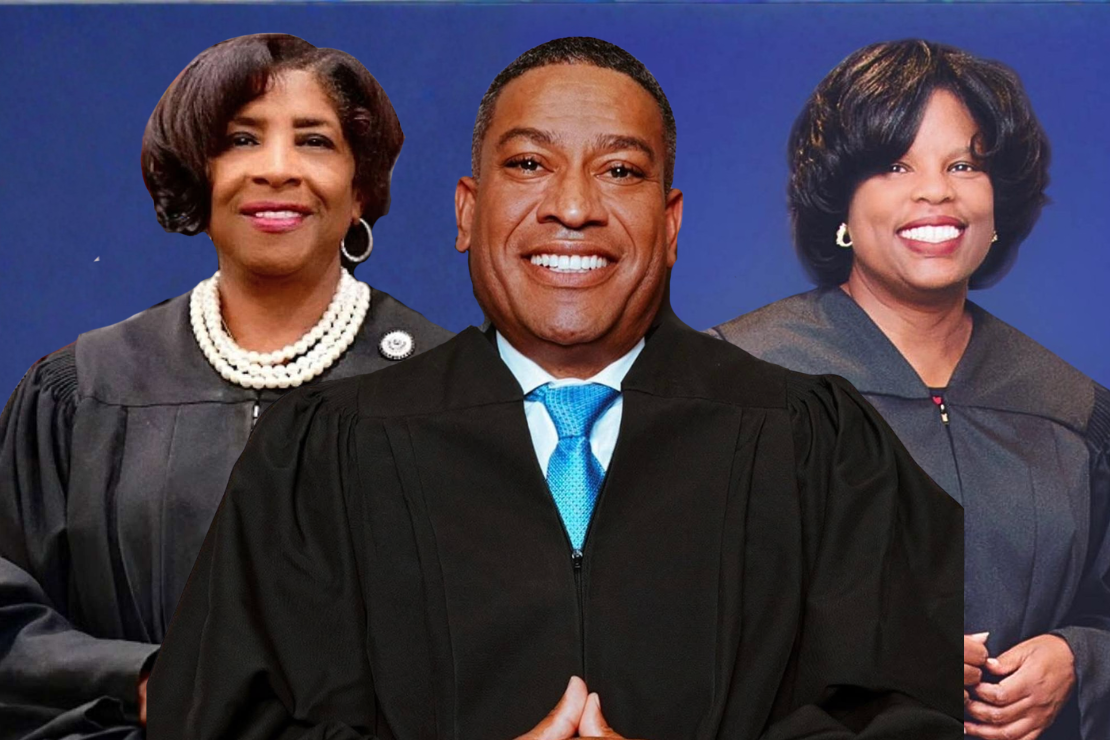
Three Black judges lost their reelection bids in the primaries: County Court at Law No. 12 Judge Yolanda Huff, 187th Criminal District Court Judge Stephanie R. Boyd, and 436th District Court Judge William “Cruz” Shaw. Their defeats mean that Bexar County will move forward without a single elected Black judge on the bench.
The outcome marked a significant change for a county that has long had Black representation within its judiciary, particularly in courts that serve diverse communities across San Antonio.
The results also come at a moment when voters appear increasingly willing to remove incumbents they believe have become liabilities, even when those decisions reshape the political or demographic makeup of public institutions.
For Black candidates, however, that scrutiny has historically carried an additional layer. Political analysts and civil rights advocates have long noted that Black officeholders often face heightened examination and are more frequently placed under a public microscope, reflecting broader racial dynamics that continue to shape American politics.
While voters may view these decisions primarily through the lens of accountability, the outcomes can still intersect with the long standing realities of race and representation in public life.
An Emerging Shift Inside the Democratic Party
Across several Democratic races this election cycle, voters appear to be placing a stronger emphasis on accountability than in previous cycles.
That shift has surfaced in both local and national contests.
In Texas’ recent Democratic Senate primary, State Rep. James Talarico defeated Rep. Jasmine Crockett in a race widely described as bitter, forcing Democrats to confront internal divisions over electability, strategy, and the racial dynamics that continue to shape candidate selection within the party.
Crockett, known for her “firebrand” and pugilistic rhetoric toward Donald Trump and Republicans, faced criticism from some voters over her political style and positions on national issues, including the Israel Gaza conflict. Supporters argued that such criticism often intersects with broader questions about how Black candidates are judged within the party.
Still, the result suggested that many voters were weighing concerns about strategy and messaging alongside questions of identity or representation.
Political analysts say the race reflected a larger conversation unfolding within the Democratic Party about what kind of candidates voters want to see leading the party moving forward.
Courthouse Controversies Shape Judicial Races
The judicial primaries in Bexar County reflected those same tensions.
In some cases, the judges who lost had faced significant criticism from members of the legal community over courtroom management and conduct. Those concerns circulated within courthouse circles for years and received local and national attention.
County Court at Law No. 10 Judge Rosie Speedlin Gonzalez, who is currently suspended from the bench, also lost her Democratic primary following a highly publicized courtroom incident in which she handcuffed a defense attorney during a dispute. The incident led to her arrest and suspension and drew national attention.
For voters, the primaries appeared to serve as an opportunity to hold incumbents accountable for controversies that had accumulated over time.
But the outcome of those accountability driven decisions produced another result — the elimination of Black representation from the county’s judiciary.
Consequences of Political Crosscurrents: Black Representation
Judge Yolanda Huff acknowledged that reality following the election.
“I lost tonight. Every Black Judge Lost. There is not one single elected Black Judge in Bexar county,” Huff wrote in a Facebook post after the results were announced.
Huff, the longtime County Court at Law No. 12 judge, lost her seat to challenger Lauren Zamora. According to reports, during the campaign Huff accused Zamora of targeting her because Black judges are easier to defeat.
The race also resurfaced a 2025 Facebook post in which Huff wrote, “Black Judges do not stay on the Bench for long!” The post circulated online before being deleted and became part of the broader conversation surrounding the election.
Judge Stephanie R. Boyd of the 187th Criminal District Court was also defeated in the Democratic primary by challenger Stephanie Franco.
During the campaign, Boyd faced criticism from attorneys and public regarding courtroom management and her decision to livestream hearings. Those concerns were circulating prior to the election and were later amplified, with some members of the legal community and residents arguing that judges should focus on “justice over clicks.”
The moment illustrates what some political observers describe as a difficult tension emerging inside Democratic politics.
On one hand, voters are increasingly demanding accountability from public officials. That expectation applies to judges, lawmakers, and other elected leaders regardless of identity or background.
On the other hand, the political consequences of those accountability battles can reshape representation in ways that voters may not always anticipate.
The defeat of Judge Cruz illustrates that dynamic.
Unlike some of the other judicial races, Cruz’s campaign was not defined by major public controversy. The former San Antonio City Council member and longtime juvenile court judge was widely considered a respected figure in the legal community.
Still, his loss occurred during the same election cycle that swept out other incumbents facing more visible criticism, demonstrating how broader voter sentiment can affect candidates who were not at the center of those controversies.
Related: “I’m Built for This”: Judge “Cruz” Shaw Gets Candid About Juvenile Justice
Community Reactions Reflect Divided Views
Surveys of Texas attorneys have long shown widespread dissatisfaction with the state’s current system of electing judges, with many supporting changes such as merit based selection or non partisan elections.
The conversation surrounding the election results quickly moved online after Huff’s post, where this same debate surfaced over whether the outcome reflected accountability, political messaging, or deeper concerns about representation.
Some commenters argued that race should not be a determining factor when evaluating candidates.
“Color doesn’t matter, if they can do a good job is the question, not race,” one commenter wrote under Huff’s post. “I am 30% Indian. Do they have American Indians as judges?”
Others pushed back, emphasizing that representation still carries meaning for communities who want officials that understand their lived experiences.
“Representation matters,” another commenter wrote. “Some of us would prefer capable elected officials who understand us. You know, diversity?”
Some responses focused less on identity and more on electoral dynamics within the Democratic Party.
“I am saddened that we have people that lose that have done an outstanding job on the bench, but others run against them because they have a nice sounding name,” one commenter wrote. “It may be their right to run, but they should be more considerate of the coalition of people we want to bring to our Democratic Party.”
Former San Antonio City Councilman and San Antonio Observer Columnist, Mario Salas also weighed in on the discussion, suggesting that controversy surrounding the courts may have influenced voter attitudes.
“It seems like a ton of folks I talked to were angry about one having felony court TV coverage,” Salas wrote.
“Since I am not interested in that I didn’t even know it was happening. It was probably more than that, as the controversy with Judge Speedlin also came up a lot with people,” Salas wrote. “All bad news whatever the reasons.”
A Broader Debate Over Representation
For decades, the party has relied heavily on Black voters and Black political leaders as part of its coalition. At the same time, many Democratic voters have become increasingly vocal about holding candidates accountable for conduct, messaging, and political strategy.
As those priorities collide, the outcomes can carry consequences for who ultimately holds public office.
Recent Democratic primary races, including the U.S. Senate contest and the Bexar County judicial elections, offer an early example of how these dynamics may unfold in the coming years.
What Comes Next
For Bexar County, the immediate result is clear, the bench will move forward without Black judicial representation for the first time in years.
Whether that outcome represents a temporary shift or a long term trend in the broader sense of the Democratic Party remains to be seen.
What is clear, however, is that the political landscape inside both parties is changing.
Voters are scrutinizing candidates more closely, demanding higher levels of accountability, and proving increasingly willing to replace incumbents they believe have fallen short.
Within the Democratic Party, those debates can intersect with questions of race, as Black candidates are often evaluated through a lens shaped by America’s history of racial bias.
Though as the recent primaries demonstrate, those decisions will reshape representation in ways that ripple far beyond a single election.