





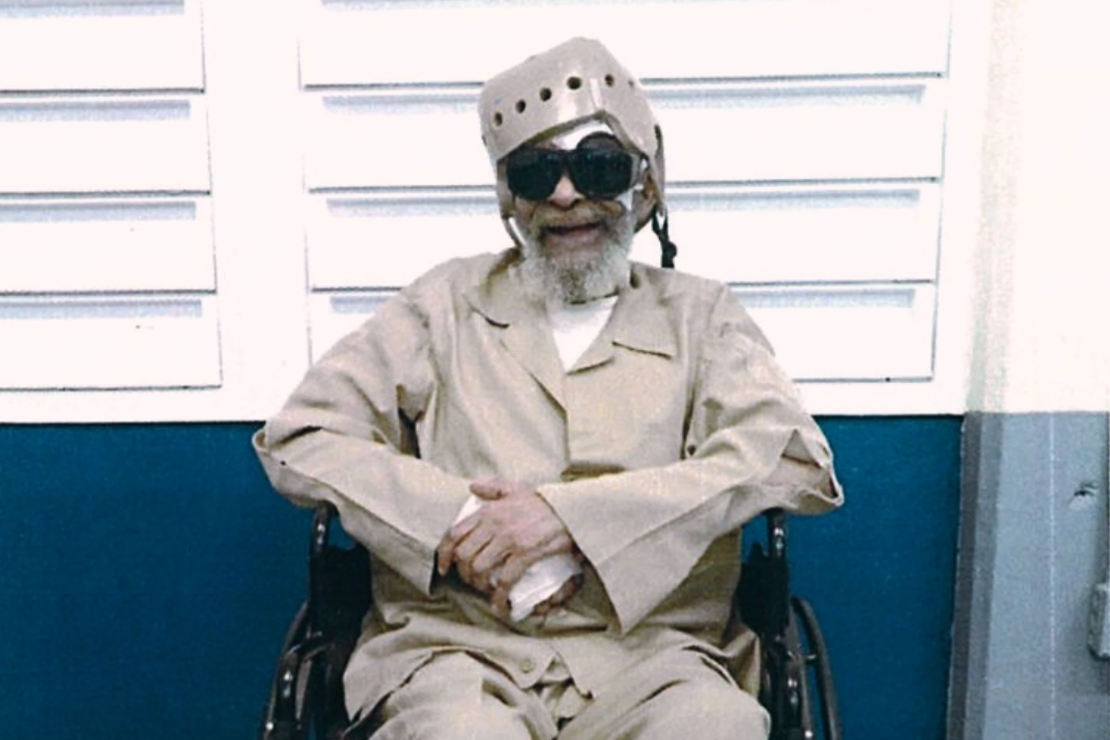
Advocates For Burton, Including The Daughter Of The Man Who Was Murdered, Are Asking For Alabama Gov. Kay Ivey To Commute His Sentence
An Alabama man who never pulled the trigger in a deadly robbery is scheduled to be executed this week, raising renewed scrutiny of the felony murder rule and the state’s use of capital punishment.
Charles “Sonny” Burton, 75, has spent more than three decades on death row after being convicted in connection with a 1991 robbery at an AutoZone store in Talladega that ended with the killing of customer Doug Battle, a 34 year old father.
Burton acknowledges he participated in the robbery and entered the store armed with a gun. But he says he fled outside to wait by a getaway car before the fatal shot was fired.
“I didn’t know a murder was going to happen,” Burton told NBC News in a phone interview from William C. Holman Correctional Facility. “I would have stopped that.”
Court filings confirm Burton did not fire the weapon. Prosecutors acknowledged that Burton had already left the store when his accomplice, Derrick DeBruce, knocked Battle to the ground and shot him in the back.
According to the Associated Press, court testimony shows Battle entered the store at the end of the robbery and exchanged words with DeBruce.
Despite that fact, Burton was convicted of murder and sentenced to death.
How The Felony Murder Rule Led To A Death Sentence
Burton’s death sentence stems from the felony murder doctrine, a controversial legal rule that allows anyone involved in certain crimes such as robbery or burglary to be treated as responsible for a killing that occurs during the offense.
Under the rule, prosecutors do not have to prove that a defendant intended to kill or even knew a killing would occur.
Nazgol Ghandnoosh, director of research at The Sentencing Project, says the doctrine allows the legal system to treat every participant in a crime as if they committed the killing themselves.
“Felony murder allows for everybody involved in the underlying offense to be treated by the legal system as if they committed an intentional murder,” she said.
The rule is widespread across the country. According to the Felony Murder Reporting Project, more than 10,000 felony murder cases have been documented nationwide. Forty eight states and Washington, D.C., maintain some version of the doctrine.
The Man Who Fired The Gun Received A Lighter Sentence
The case has drawn additional criticism because the man who actually killed Battle ultimately received a lesser sentence.
Derrick DeBruce was initially sentenced to death alongside Burton. However, a court later ruled that his attorney provided ineffective representation during the penalty phase of the trial. His death sentence was overturned and replaced with life in prison.
For years, Burton and DeBruce lived on the same death row block. “He got me with my life for something stupid that he did,” Burton said. “But I forgave him.”
DeBruce died in prison in 2020. Burton’s sentence, however, remained unchanged.
Victim’s Daughter And Jurors Ask Governor For Mercy
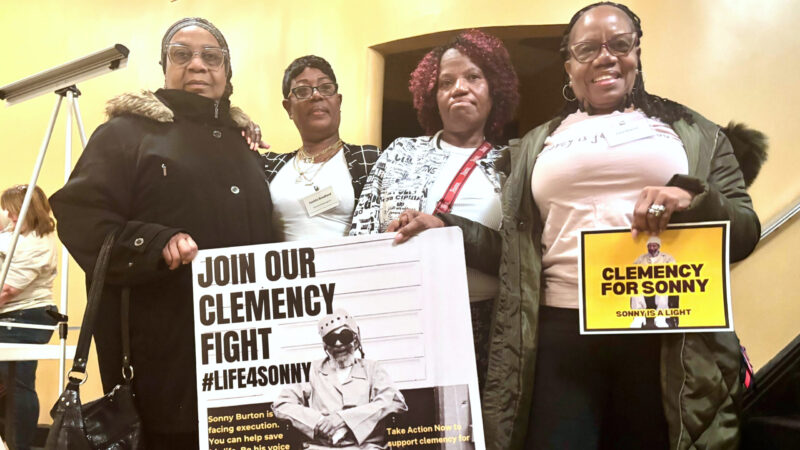
In a rare development, the daughter of the man who was killed has joined advocates asking Alabama Gov. Kay Ivey to spare Burton’s life.
Tori Battle was nine years old when her father was murdered. In a recent opinion piece published in the Montgomery Advertiser, she urged the governor to grant clemency.
“My love for my father does not require another death, especially one that defies reason,” Battle wrote.
“Mr. Burton remains on death row not because moral clarity demands it, but because procedural rules have blocked courts from correcting past mistakes.”
Several jurors who originally voted for Burton’s death sentence have also come forward saying they regret their decision. Six jurors have signed affidavits asking the governor to intervene.
Priscilla Townsend, one of the jurors, told NBC News she believes the punishment no longer fits the crime.
“The death sentence is too harsh for someone that did not pull the trigger,” Townsend said. “I don’t see him as a bad guy anymore.”
Alabama Plans To Use Controversial Nitrogen Gas Method
Unless the U.S. Supreme Court issues a last minute stay or Gov. Ivey grants clemency, Burton will be executed by nitrogen gas.
The method involves forcing inmates to breathe pure nitrogen, depriving the body of oxygen. Alabama became the first state to carry out an execution using nitrogen gas in 2024 when Kenneth Eugene Smith was put to death after surviving a previously botched lethal injection.
Witnesses have reported that nitrogen executions can take between 15 and 40 minutes. Burton would become the ninth person executed using the method.
Clemency Rarely Granted In Death Penalty Cases
Clemency in death penalty cases remains extremely rare. The Death Penalty Information Center estimates fewer than one percent of people sentenced to death since 1972 have had their sentences commuted.
Gov. Kay Ivey has granted clemency only once during her nine years in office. When she signed Burton’s death warrant earlier this year, she said she currently had no plans to intervene.
Still, Burton says he continues to hope the governor will reconsider.
“I’ll never lose hope, even when I’m sitting in the chair with the gas mask strapped on my head,” Burton said.
“I want people to know that I didn’t kill nobody. These are my last words.”