





Popular AI Country Song Walk My Walk Renews Debate After Using Blanco Brown’s Voice
When the AI-generated country track “Walk My Walk” climbed straight to No. 1 on Billboard’s country digital song sales chart, the name on the credits was brand new: Breaking Rust, a white digital avatar invented weeks ago.
The voice, however, belonged to someone who has been here the whole time.
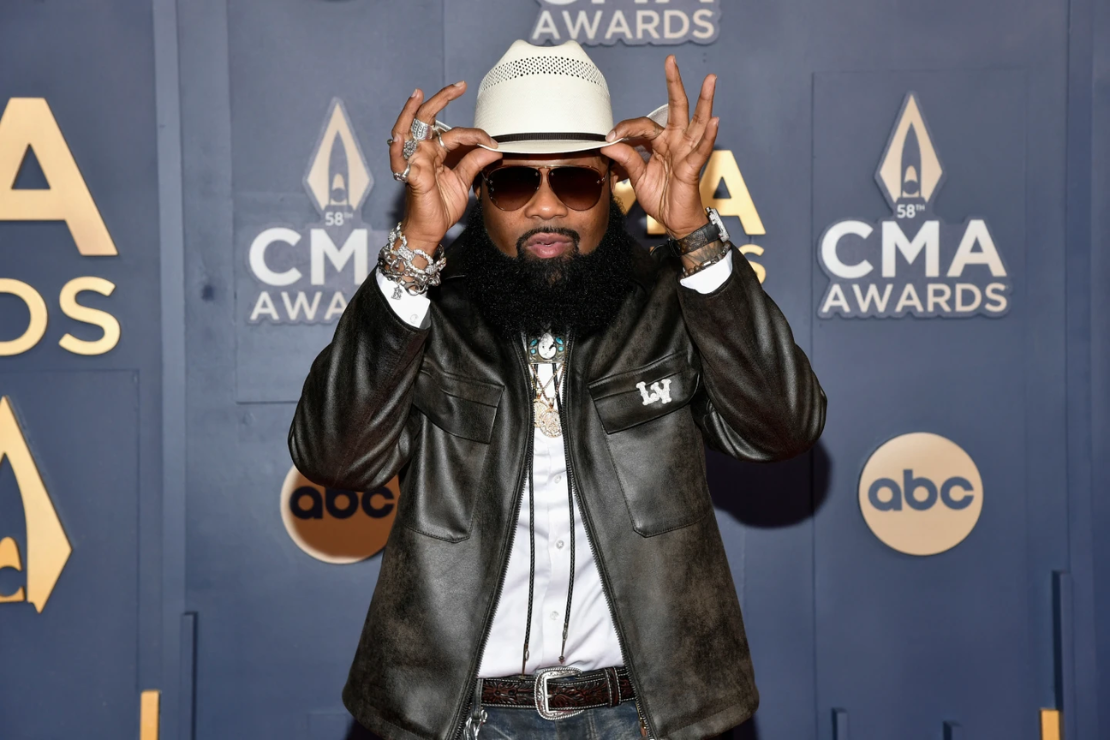
The phrasing, tone and unmistakable hybrid style came from Grammy-nominated country artist Blanco Brown, who learned about the song the same way the rest of the world did. Through notifications.
“Somebody said: ‘Man, somebody done typed your name in the AI and made a white version of you.’ They used the Blanco and not the Brown,” he said.
The song is credited to Aubierre Rivaldo Taylor, the same name now attached to Defbeatsai, a cluster of AI country characters that went viral last year for their explicit lyrics and high volume output.
Tracing the Defbeatsai ecosystem leads to Abraham Abushmais, a producer Brown once jokingly called “Abe Einstein.” Abushmais co-wrote songs on Brown’s 2019 album and is now the developer linked to Echo, an AI music generator app promoted by Defbeats.ai.
Brown says he received no warning and the collaborator he once mentored isn’t reachable.
“Abe’s number changed. We used to talk. I ain’t heard from him in a year or two.”
Once people realized Breaking Rust’s vocals were built on Brown’s sound, the reaction shifted from curiosity to discomfort.
“It is a white AI man with a Black voice,” Brown said. “And he’s singing like a Negro spiritual.”
In Nashville, where Black innovation has often been repackaged for white audiences, the déjà vu was loud.
The sudden rise of Breaking Rust mirrors what has happened with Solomon Ray, a Christian rapper who became another one of the earliest AI-generated breakout figures. His digital persona surged across TikTok and streaming platforms despite the music being entirely machine assembled and the voice borrowed from training data of real artists.
Ray’s popularity showed how quickly AI could build a fan base around characters who never lived a day on earth. Breaking Rust is only the country-genre extension of that phenomenon, proof that the industry now treats AI figures like pop-up artists with no constraints, no bodies, and sometimes no permission from the voices that created their sound.
The fact that “Walk My Walk” shot past real artists while using Brown’s vocal DNA only sharpened the concern.
Brown went into the studio and recorded his own version of “Walk My Walk,” which he released last week. A fully reworked version drops Monday.

His team says this is not just a clapback but an attempt to force lawmakers and the industry to confront the widening gap between creative rights and AI technologies.
“If someone is going to sing like me, it should be me,” he said.
Josh Antonuccio of Ohio University said “Walk My Walk” proves that AI has moved from novelty to commercial disruption.
“AI has democratized the act of music creation itself,” he said. “But there are no guardrails and creators aren’t getting compensated.”
Major labels have sued and then made deals with Suno and Udio, the top AI music generators, trying to shape a future where AI platforms license the rights they rely on.
But none of that helps artists like Brown right now.
For Brown, the legal fight is one thing. The cultural deja vu is another.
Country radio has never given him the same runway he’s earned in awards circuits, yet an AI avatar made in his image topped the charts instantly.
“He created something with my tone and gave it a white face,” Brown said. “Race is an understatement in Nashville.”
Music educators say AI can mimic sound but not soul.
“There’s an energy between an artist and an audience that happens in real time,” said Shelton Berg of the University of Miami. “You can hear it even if you can’t see it. AI is not close to that.”
Brown says he isn’t against AI. He isn’t interested in beef with Abushmais. He understands that inspiration inspires. He also understands who usually gets the credit in Nashville.
“I go through this every day with real people who steal and borrow from what I do,” he said. “Robot or human, they’re not giving me credit anyway.”
His confidence is on the side the machines can’t touch.
“Real artists are always going to prevail,” he said. “Purpose lives where greed can’t.”