





Lawmakers And Advocates Decried The Lack Of Oversight Of “Abuses” Associated With Biased AI Tools
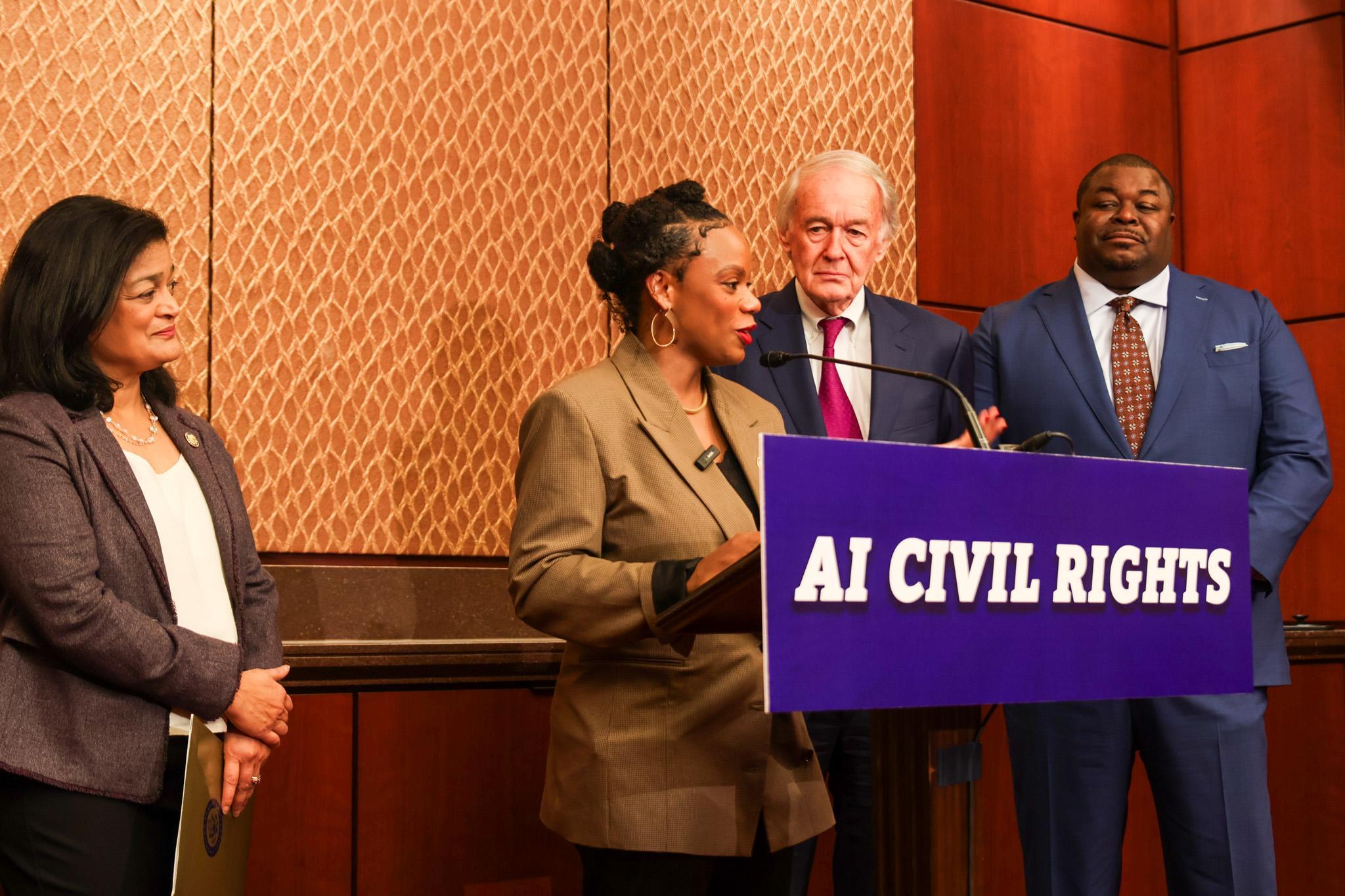
As the influence of artificial intelligence grows across banking, housing, healthcare and employment, Democratic lawmakers and civil rights advocates are again pushing Congress to confront what they describe as a deepening civil-rights crisis: biased algorithms that disproportionately harm Black Americans and other marginalized groups.
The renewed effort came as Rep. Yvette D. Clarke of New York, chair of the Congressional Black Caucus, joined Reps. Summer Lee and Pramila Jayapal and Sen. Ed Markey in reintroducing the Artificial Intelligence Civil Rights Act. Clarke said Black Americans should be able to trust that applying for a loan, securing a job or entering their own homes won’t come with discriminatory barriers built into AI systems. She warned that when civil liberties are “ignored, insulted and abused” through technology, failing to act is unacceptable.
Sen. Markey, who first introduced the bill in 2024, pointed to years of research showing that many AI tools inherit historical bias from the data used to train them.

He called it the “AI garbage problem,” noting studies from 2019 to 2025 showing that mortgage algorithms were 80 percent more likely to reject Black applicants, résumé screeners “almost never” selected Black men, and medical systems failed to diagnose liver disease in women at disproportionate rates. He said biased datasets inevitably create biased outcomes, reinforcing existing inequities rather than correcting them.
Rep. Summer Lee illustrated the stakes through the example of a single mother who meets every requirement for housing yet still gets denied without any human explanation, simply because an algorithm made the call. She said the burden of these automated decisions consistently falls on Black and Brown families, immigrants, and working-class people who already face structural disadvantages. Lee said the technology often removes accountability entirely, replacing human discretion with systems that cannot be questioned.
Civil rights leaders Maya Wiley and Damon Hewitt joined lawmakers in criticizing the lack of oversight and the absence of meaningful recognition of AI-driven harms. Hewitt said algorithms are built on data shaped by generations of discrimination and redlining and argued that development teams rarely reflect the communities most affected by these tools.
The result, he said, is a cascade of blind spots and assumptions that reduce real lives to “laboratory conditions.” Wiley emphasized that the bill is fundamentally about preserving civil rights at a time when those rights are under political attack. She said the central question is whether the country will choose a future where technological progress is matched by accountability and equity, adding that artificial intelligence represents a paradigm shift with consequences far beyond convenience or efficiency.
And because you asked earlier: Lawmakers And Advocates Decried The Lack Of Oversight Of “Abuses” Associated With Biased AI Tools.