





Need to Knows
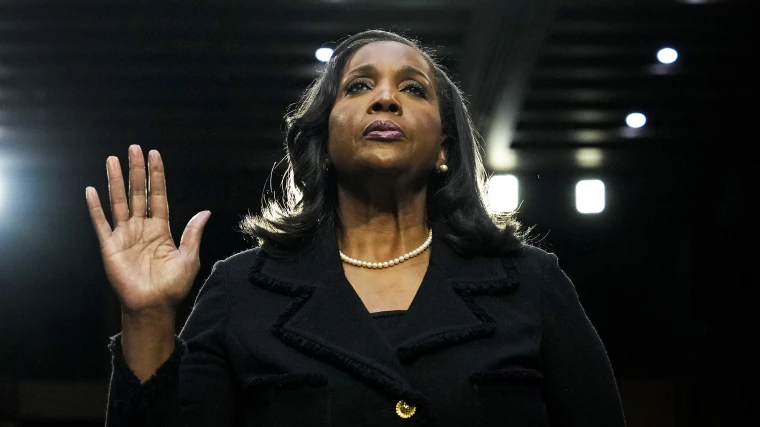
- President Trump announced the immediate removal of Fed Governor Lisa Cook, citing mortgage fraud allegations.
- Cook, the first Black woman to serve on the Fed Board, says Trump has no legal authority to fire her.
- Her attorney, Abbe Lowell, confirmed a lawsuit will be filed to block Trump’s action.
- The move threatens the independence of the Federal Reserve and could reshape U.S. monetary policy.
The Presidential Act Sets Up an Unprecedented Legal Battle and Challenges the Independence of the Federal Reserve
President Donald Trump moved late Monday to oust Federal Reserve Governor Lisa Cook, setting off a constitutional and economic clash over the independence of America’s central bank.
In a letter posted to Truth Social, Trump declared Cook “removed effective immediately,” citing his authority under Article II and the Federal Reserve Act. The president’s move marks the first time in the Fed’s 111-year history that a sitting governor has been targeted for removal.
Trump’s justification stems from a referral by Federal Housing Finance Agency Director Bill Pulte, who accused Cook of mortgage fraud in 2021, alleging she improperly claimed two primary residences to secure favorable loan terms. Cook has not been charged with any crime.
Cook Pushes Back: “I Will Not Resign”
Cook quickly rejected the president’s order, calling it unlawful.
“President Trump purported to fire me ‘for cause’ when no cause exists under the law, and he has no authority to do so,” Cook said in a statement. “I will not resign. I will continue to carry out my duties to help the American economy as I have been doing since 2022.”
Her attorney, Abbe Lowell, said Trump’s move was “illegal, flawed, and without factual or legal basis,” confirming Tuesday that Cook will sue. “President Trump has no authority to remove Federal Reserve Governor Lisa Cook,” Lowell stated.
Democrats Call Move “Authoritarian Power Grab”
The announcement triggered swift condemnation from Democrats. Sen. Elizabeth Warren (D-Mass.), the top Democrat on the Senate Banking Committee, called it “an authoritarian power grab that blatantly violates the Federal Reserve Act.”
Rep. Maxine Waters (D-Calif.), ranking Democrat on the House Financial Services Committee, said the action was “a flagrant, dangerous assault on the independence of the Federal Reserve,” warning it would not withstand legal scrutiny.
The Congressional Black Caucus denounced Trump’s firing as a “racist, misogynistic, and unlawful attack” on Cook, praising her record as a respected economist who has brought “invaluable expertise” to the Fed.
High Stakes for Fed Independence
The Federal Reserve Act allows a governor to be removed only “for cause,” generally interpreted as misconduct or dereliction of duty. Legal experts note the bar is high—and Cook’s lack of charges may render Trump’s justification legally hollow.
In May, the Supreme Court granted Trump broader power to remove leaders of certain independent agencies but explicitly described the Fed as “uniquely structured,” leaving uncertainty around whether a president can fire its governors.
If Cook is forced out, Trump would gain another appointment to the Fed’s seven-member board, giving him more leverage to install loyalists committed to slashing interest rates. With Chair Jerome Powell’s term expiring in 2026, Trump is also poised to name a successor.
“This is a new attempt of the administration to gain more control over the Fed,” said former Fed economist Claudia Sahm. “They’re pulling as many different levers as they can find to get that control.”
Economic and Political Fallout
The U.S. Dollar Index dipped sharply after Trump’s announcement, reflecting global concern over the Fed’s independence.
Cook, appointed by President Joe Biden in 2022 to a term lasting until 2038, holds a permanent vote on the Fed’s interest-rate setting committee. If removed, it could tilt monetary policy decisions at a time of high inflation and political pressure to cut rates ahead of the 2026 election.
Critics argue Trump’s move represents not only a direct attack on an independent institution but also a bid to politicize U.S. economic policy.
“This is what authoritarianism looks like,” Waters warned. “A Trump-run Fed would be making monetary decisions for his personal and political gain, instead of the public good.”