





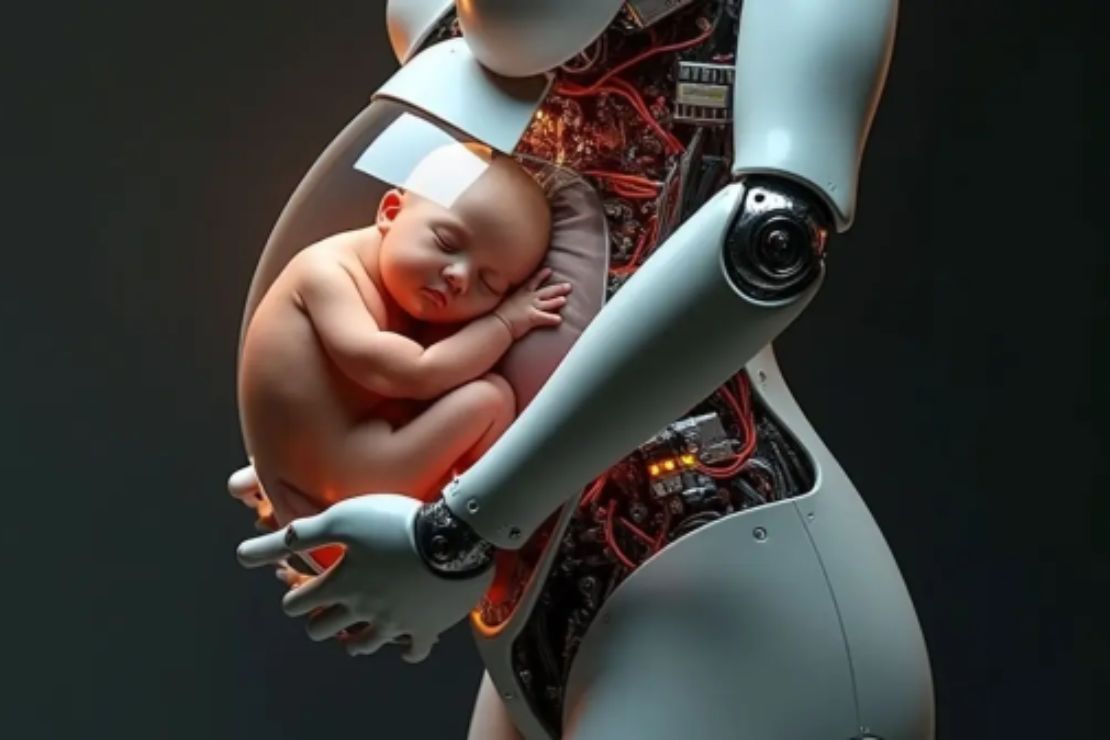
China Unveils the World’s First Pregnancy Humanoid Robot
A team of scientists in Guangzhou, China, is pushing the boundaries of science and ethics with the development of the world’s first pregnancy humanoid robot. The project, led by Dr. Zhang Qifeng of Kaiwa Technology, aims to create a humanoid equipped with an artificial womb that can carry a human fetus to term.
The robot, set to launch as early as 2026, is designed to replicate the natural environment of pregnancy through artificial amniotic fluid, nutrient systems, and life-support technologies. According to Dr. Zhang, the goal is not just technical accuracy, but also creating a way for parents to interact with the “gestating” humanoid as if it were a natural pregnancy.
At a projected cost of under ¥100,000 (about $13,900), the technology is being touted as a potential alternative to human surrogacy, which can be financially and logistically difficult for many families. The affordability factor, paired with China’s rapid advancements in robotics, has made the news both groundbreaking and controversial.
Ethical and legal challenges loom large. Questions about parenthood, emotional bonding, and the very nature of life are being debated at the provincial level in Guangdong, where officials are already exploring policy frameworks for this new frontier. Critics warn of the dangers of commodifying childbirth, while supporters say the technology could provide hope for millions struggling with infertility.
As artificial intelligence and robotics continue to merge with healthcare, China’s pregnancy robot represents more than just a scientific achievement. It embodies the global tension between what science can do and what humanity is ready to accept.