





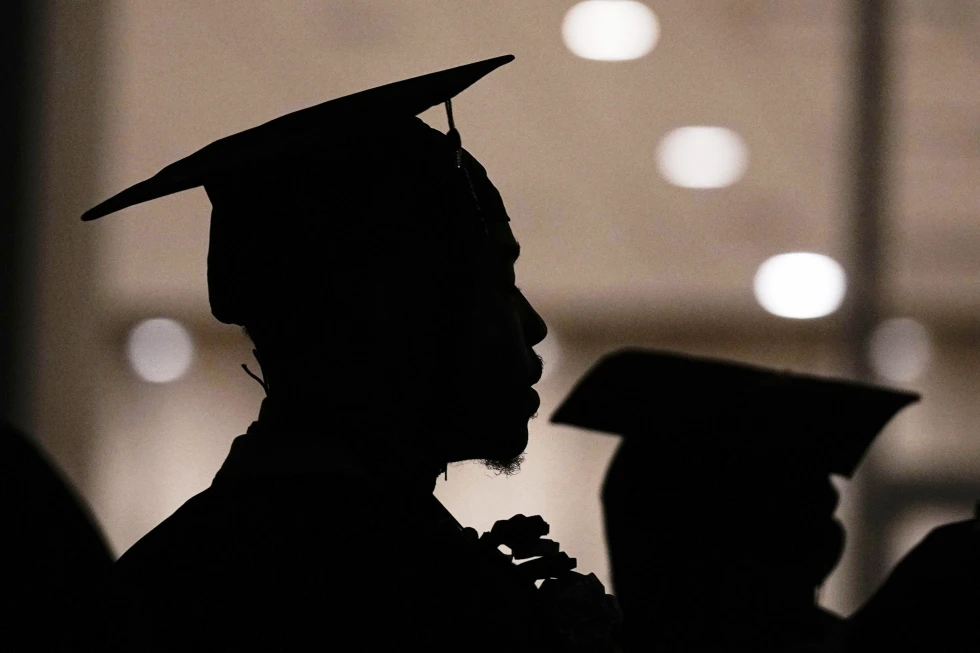
Young College Graduate Unemployment Hits 5.8% in a “No-Hire, No-Fire” Economy, Facing the Highest Unemployment Rate in Over a Decade
Recent college graduates are entering one of the toughest U.S. job markets in more than a decade, with unemployment for degree-holders ages 22 to 27 spiking to 5.8% as of March—well above the national average of 4.2%. The last time unemployment was this high for young graduates—excluding the pandemic—was in 2012.
Economists are sounding the alarm over the widening gap between the job prospects of recent graduates and the broader workforce, warning that this divergence could signal economic trouble ahead.
Entry-Level Freeze: Tariffs, AI, and Stalled Hiring Hurt Grads
At the core of this troubling trend is what experts are calling a “no-hire, no-fire” economy. Companies are avoiding layoffs but also holding off on new hires due to rising economic uncertainty, including tariff increases under the Trump administration and federal interest rate hikes designed to cool inflation. This hiring paralysis is hitting entry-level white-collar roles hardest, especially in fields like tech, law, and finance.
Artificial intelligence may be intensifying the problem. “Young people are bearing the brunt of a lot of economic uncertainty,” said Brad Hersbein, senior economist at the Upjohn Institute. “The people you’re most hesitant to hire during uncertain times are often entry-level.”
Companies like Shopify and Amazon have made public statements suggesting AI will replace certain corporate roles, casting further doubt on the immediate job outlook for young professionals entering the workforce.
Real Stories of Graduate Struggles
Palwasha Zahid, 25, moved from Dallas to the Bay Area to study data analytics—thinking her proximity to Silicon Valley would give her an edge. But six months after completing her degree, she’s still unemployed.
“It stings a little bit,” Zahid said. “I never imagined it would be this difficult just to get a foot in the door.”
Lexie Lindo, 23, a Clark Atlanta University business graduate with a 3.8 GPA and multiple internships, applied to over 100 jobs without getting an interview. She’s since returned for a master’s in supply chain studies and secured a summer internship, hopeful for better luck next year.
“I’m doing everything right,” Lindo said. “So what else are you looking for?”
Is a College Degree Still Worth It?
Despite the current job market challenges, most economists agree that having a college degree still leads to better long-term financial stability and lower overall unemployment. But with 45% of U.S. workers now holding a four-year degree, the diploma no longer guarantees a competitive edge for recent grads.
The slow decline in hiring is especially evident in IT. Employment among 22–27-year-olds in tech has dropped 8% since 2022, even as employment for older college grads has slightly increased.
“Companies expanded like crazy when interest rates were low,” said economist Matthew Martin. “Now that borrowing is more expensive, many are overstaffed and cautious.”
The Road Ahead for Recent Grads
While the Fed’s rate hikes and AI integration are long-term factors, the immediate future for new grads looks uncertain. Job postings for software development roles are down 40% compared to four years ago, according to Indeed.
Zahid, who switched from psychology to data analysis hoping for stability, says she’s still waiting for that payoff. “I will put up my diploma,” she said, “when I actually get a job confirming that it was worth it.”