





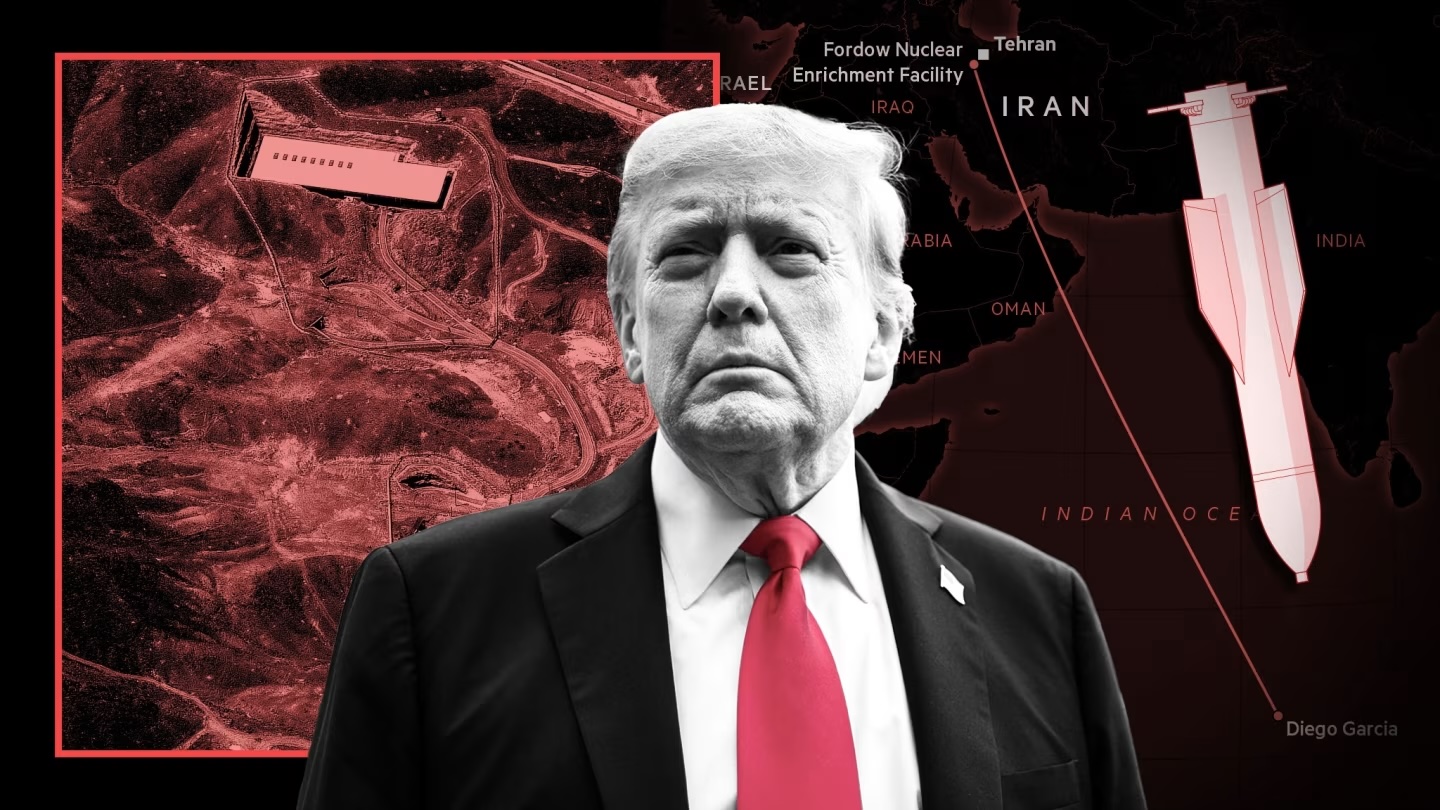
Trump Confirms U.S. Airstrikes on Iran’s Nuclear Facilities
In a dramatic escalation of the ongoing Middle East crisis, President Donald Trump announced Saturday night that the U.S. military launched direct airstrikes on three major Iranian nuclear sites: Fordow, Natanz, and Esfahan.
“We have completed our very successful attack on the three Nuclear sites in Iran,” Trump posted on Truth Social. “A full payload of BOMBS was dropped on the primary site, Fordow. All planes are safely on their way home…NOW IS THE TIME FOR PEACE!”
The attacks represent the first instance of direct U.S. military involvement in the intensifying conflict between Israel and Iran. Trump is expected to address the nation at 10 p.m. ET.
B-2 Bombers Deployed as Tensions Escalate
Hours before the announcement, defense officials confirmed several B-2 stealth bombers took off from Whiteman Air Force Base and are en route to Guam, a clear signal of strategic military positioning in the Pacific. This comes as Iran and Israel enter the ninth consecutive day of open conflict.
Earlier Saturday, Iran launched a missile barrage into Israel, sending millions into bomb shelters across the country. Although no casualties were reported from that attack, Israel’s retaliatory strikes on Iranian military infrastructure have killed at least 400 people and injured over 3,000, according to Iran’s health ministry. The Iranian death toll continues to rise amid daily bombardments.
No Progress on Diplomacy as War Drags On
Attempts at diplomacy appear to have stalled. A Geneva summit featuring Iran’s Foreign Minister Abbas Araghchi and European leaders ended without resolution. Meanwhile, a contentious meeting at the U.N. Security Council devolved into finger-pointing between Iranian and Israeli representatives.
Trump has dismissed the European-led negotiations, stating that any real resolution must involve the United States. Last Thursday, he had given Iran a two-week window to reenter talks, but Saturday’s strikes suggest that window may now be closed.
U.N. Confirms Radiation Risk From Attacks
The International Atomic Energy Agency (IAEA) confirmed that Israeli strikes on Iranian nuclear facilities have led to radiological leaks. “There is no danger to the public for now,” said the agency’s director. “But there is a danger this could still happen.”
Iranian officials warn that continued attacks could lead to a full-scale environmental catastrophe, especially if nuclear material is released into populated areas.
Iran Refuses Talks Amid Continued Israeli Strikes
Foreign Minister Araghchi told NBC News that Iran “cannot trust the United States” and refuses to enter negotiations as long as Israeli attacks persist. Israeli military officials, meanwhile, say they are prepared for “a prolonged campaign.”
Trump has taken a hardline stance, calling for Iran’s “UNCONDITIONAL SURRENDER!” and claiming the U.S. has “complete and total control of the skies over Iran.” In a separate Truth Social post, he appeared to threaten Iranian Supreme Leader Ayatollah Khamenei, stating that “his location has been identified.”
A New Middle East War?
Despite years of promising to avoid further military involvement in the Middle East, Trump’s decision to strike Iran may signal a long-term commitment to a new conflict. His administration has repeatedly insisted that Iran must not be allowed to develop nuclear weapons.
As bombs fall and diplomacy falters, the region teeters on the edge of full-scale war—with the United States now fully in the fight.