




A Grand Jury Found No Evidence Of Murder Or Racial Motive, But Nolan Wells’ Undetermined Death Is Fueling A Larger Conversation About Black Death, American History And Selective Compassion
Civil rights attorney Ben Crump said on Sept. 23 that questions still remain about how Nolan Wells died.
“Today, the State of Mississippi is attempting to close the chapter on Nolan Wells’ death without getting to the truth,” Crump said.
His statement came one day after a Jackson County grand jury declined to indict anyone in the 18-year-old’s death, finding no credible evidence that Wells was murdered, that his friends were involved or that race played a role in what happened.
But while the criminal investigation may have reached a conclusion, the Wells’ family and the societal questions at the center of the case remains unresolved.
The Facts: What We Know And What Remains Unanswered
Wells went to Mississippi’s Horn Island with a group of friends on the Fourth of July and never came home.
Two days later, his body was found, beginning an investigation that would eventually include testimony from 43 witnesses, more than 100 subpoenas, cellphone and GPS records, two autopsies and a grand jury tasked with determining whether there was evidence that a crime had been committed.
Jurors ultimately said the circumstances surrounding Wells’ death were “consistent with drowning,” but both Mississippi’s state medical examiner and an independent pathologist hired by Wells’ family classified his cause and manner of death as undetermined.
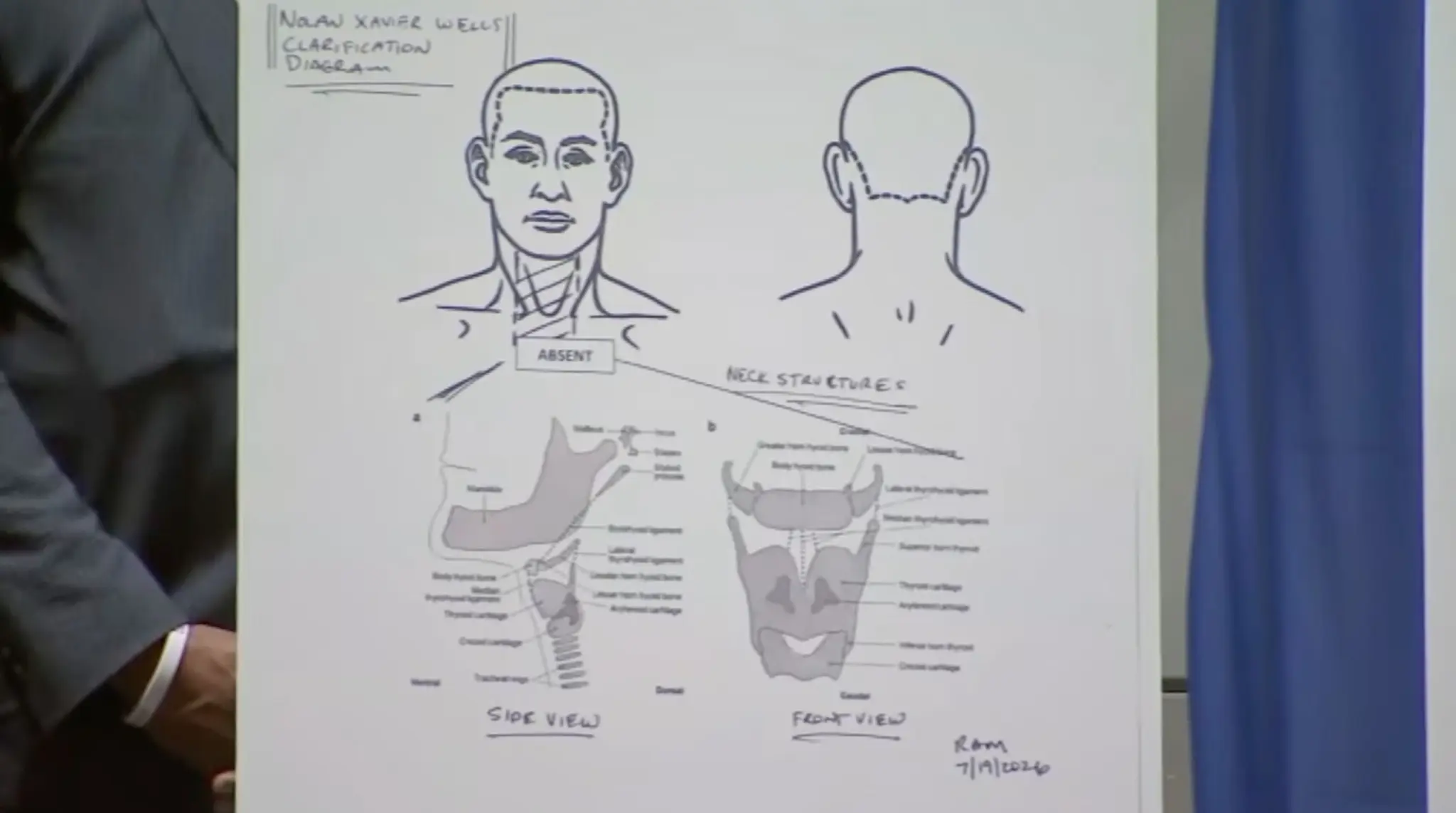
The state autopsy documented bruising and contusions on Wells’ body, including injuries to the back of his head, although the grand jury determined none of those injuries were fatal. Wells’ family also released portions of the autopsy showing no water or debris in his airway or stomach, which attorneys Ben Crump and Liza Park have argued deserves further examination when drowning has been offered as the most likely explanation.
The absence of water does not, on its own, prove that Wells did not drown, and forensic pathologists caution that drowning cannot always be confirmed or excluded through one physical finding. What remains significant is that the medical examiner, after reviewing the body and available evidence, still listed both the cause and manner of death as undetermined rather than drowning.
The Cellphone & Group Chats That Added More Questions
At a news conference, Crump and digital forensic examiner Andrew Garrett said their examination recovered more than 280 pages of Snapchat conversations and other data from Wells’ phone.
Crump and his forensic team publicly discussed portions of the cellphone extraction and read selected Snapchat messages, but the complete underlying report and all 282 pages of conversations have not been released publicly.
Garrett said some Snapchat material had been deleted between Wells’ last known use of the phone and the time his family recovered it, although he could not determine who deleted it or why
Crump also highlighted conversations among people in Wells’ social circle after he disappeared, including one exchange about “real sketchy looking guys” in nearby boats and reports that at least one may have been a felon. Another participant referenced a sheriff’s warning about being alone with the men while intoxicated, while Crump said other messages showed Wells’ friends discussing concerns that people on Horn Island “can be racist.”
District Attorney Angel Myers McIlrath pushed back, saying Crump’s team had already told her office they had no evidence that a crime had been committed and challenging him to “stop playing games” and turn over anything new. She also said the grand jury had reviewed the 282-page Snapchat report and other cellphone evidence before declining to indict anyone.
Several of Wells’ “friends” have publicly maintained they had nothing to do with his death, while attorneys for some have denied deleting anything from his phone.
Attorney Edward Paltzik, who represents several of them, said they plan to sue Crump for defamation, arguing that his public statements have unfairly implicated them.
Why the History of Mississippi Keeps Entering The Conversation
Part of what continues to hang over the Wells investigation is that it is unfolding in Mississippi, a state where Black deaths and official investigations carry a long history of racial tension and distrust.
MS NOW columnist Stephanie V. McKee-Anderson, a Mississippi native, pointed to that while writing about Wells this week, arguing that Black families in the state have generations of reasons to pay close attention when an official explanation does not appear to answer every question.
That concern has also extended to Mississippi Chief Medical Examiner Dr. Staci Turner, who performed Wells’ state autopsy and previously handled the death investigation of 21-year-old Delta State University student Demartravion “Trey” Reed, who was found hanging from a tree on campus in September 2025.
Turner’s office ruled Reed’s death a suicide, a finding supported by other evidence reviewed in that investigation, although his family also sought an independent autopsy.
Turner’s involvement in both cases has nevertheless drawn renewed attention because Mississippi Today has previously reported errors or disputed conclusions in other state death investigations involving Black residents, including the deaths of Damien Cameron and Danelle Young.
What Happened To America’s Racial Reckoning?
The reaction to Nolan Wells is unfolding in a country that looks very different from the one that declared itself ready for a racial reckoning after George Floyd was murdered in 2020. Support for Black Lives Matter fell from 67% in June 2020 to 52% by 2025, while 72% of Americans said the increased attention given to racial inequality after Floyd’s death did not ultimately produce changes that improved Black people’s lives.
That shift has extended beyond public opinion and into the federal government.
Since President Donald Trump returned to office, his administration has dismantled federal DEI programs and redirected civil-rights enforcement toward what it describes as race-neutral treatment and discrimination against people based on race, including programs designed specifically for Black students. At the same time, investigations involving racial harassment of Black children have stalled.
ProPublica found that more than 1,000 racial-harassment investigations opened under previous administrations remained unresolved, most involving Black students, while the Education Department opened only 14 investigations after receiving more than 500 new racial-harassment complaints during Trump’s first year back in office. The Washington Post later reported that the Office for Civil Rights completed only three settlements involving racial harassment during the first 18 months of Trump’s second term, compared with 25 in 2024.
And concerns over the federal response are not limited to schools.
Recently, Rep. Ayanna Pressley and 59 other members of Congress called on the Department of Justice and FBI to launch comprehensive federal investigations into a series of cases involving Black people found hanging across the country. The lawmakers cited at least 10 reported hangings of Black people in 2026 and argued that the country’s history of lynching warranted greater federal scrutiny, including independent autopsies, reviews of local and state investigations and reports back to Congress.
Outside of the political scope, across social media, some have compared the scrutiny directed at Wells’ mother with the remarkable amount of public compassion extended to Lindsay Clancy, the Massachusetts mother who admitted killing her three children but argued at trial that postpartum psychosis made her not criminally responsible.
That same frustration has followed Nancy Grace, who initially appeared supportive of Wells’ family and raised valid questions about his death, including why Horn Island had reportedly gone years without a drowning, before shifting her stance after the grand jury findings to a much more definitive defense of the people who were with Wells. Grace has said that change came after reviewing the evidence, while critics online have accused her of suddenly abandoning the skepticism that made her early coverage resonate with Wells’ supporters.
Also Read: Karmelo Anthony And Austin Metcalf Were Cast As Opposites. Their Pasts Tell A Different Story
With all this being said, Nolan Wells’ case is not an isolated incident. It is unfolding within a much larger debate over how seriously local, state and federal institutions investigate cases involving Black Americans and how society responds to them.
Until Nolan’s family knows what happened to him, they should not be expected to simply move on.
If America can find compassion, nuance and patience for a white mother who admitted killing her own children, then surely it can offer that same compassion to a Black mother asking how hers died, especially in a country — and a state like Mississippi — with generations of racism and a historical context that has given Black families legitimate reasons to distrust institutions when answers remain incomplete.
Until then, good night and good luck.


