




Democrats And Activist Groups Plan To Push Back If Trump Interferes In Midterm Elections
Democratic organizations, voting-rights advocates and legal experts are building an unusually broad election-protection operation ahead of the November midterms, preparing for the possibility of federal intervention at polling places, disputes over ballots and last-minute changes to voting rules.
State Democratic parties announced Monday a new effort called the New Battlefield Project, which aims to recruit 10,000 volunteers to monitor polling locations if armed federal officers appear. Activist organizations are also preparing potential mass demonstrations, while legal scholars have circulated guidance for judges who could be asked to authorize federal searches or seizures of election materials.
The preparations come amid continuing clashes between President Donald Trump and voting-rights advocates over how the 2026 midterms should be conducted.
“We have never prepared for an election sabotage event like we have now,” Ezra Levin, co-founder of the progressive group Indivisible, said.
Election Groups Prepare for Uncharted Territory
Trump has pushed for changes including new proof-of-citizenship requirements for voter registration and restrictions on mail voting. Courts have blocked several administration efforts to alter election procedures ahead of this year’s vote, while additional litigation remains unresolved.
The president has also urged Republicans to redraw congressional maps to create more favorable House districts as the GOP tries to retain control of Congress.

Democrats point to Trump’s refusal to accept his 2020 election defeat and his efforts following that race as reasons to prepare for possible conflicts this year. Trump has said he should have taken more aggressive action after the 2020 election, including potentially seizing voting machines.
Rick Hasen, a UCLA law professor and director of the university’s Safeguarding Democracy Project, said circumstances once considered unlikely now have to be contemplated by election officials.
“All these things take what was off the wall and put it on the wall,” Hasen said.
Still, Hasen cautioned against unnecessarily frightening voters, calling it difficult to balance concern with avoiding alarmism.
The White House has rejected Democrats’ warnings.
“The only ‘fears’ Americans have about our elections are being fueled by extreme liberal Democrats who refuse to support commonsense legislation that ensures Americans, and Americans only, decide our elections,” White House spokeswoman Lauren Blis said.
Republicans are conducting their own large-scale election operation. Republican National Committee spokeswoman Ally Triolo said the party has assembled what it calls the largest election-integrity program in its history to monitor voting and ensure legal ballots are counted.
ICE at Polling Places Becomes Major Concern
A particularly sensitive issue involves whether immigration officers could appear near polling locations.
Democrats and civil rights organizations have raised concerns that U.S. Immigration and Customs Enforcement officers could discourage some voters from approaching polling sites, particularly in immigrant communities.
Administration officials have repeatedly said ICE will not be routinely deployed to voting locations. However, immigration officers have appeared at some polling places over the past year while pursuing or investigating specific individuals, and Homeland Security Secretary Markwayne Mullin has acknowledged similar situations could occur again.
Civil rights organizations and the city of Denver recently filed a federal lawsuit seeking to formally prevent ICE agents from operating at polling places. The lawsuit cites a Civil War-era federal law restricting armed federal officers from election sites.
“This administration is basically using the rhetoric that undocumented citizens are voting and that they’re going to have DHS and ICE at the polls to try and intimidate and suppress the Latino vote,” said Juan Proaño, CEO of the League of United Latin American Citizens.
The National Bar Association, the nation’s oldest and largest network of predominantly Black attorneys and judges, has also launched an initiative aimed at helping voters understand last-minute election rule changes and providing assistance to people who experience difficulty casting ballots.
The involvement of civil rights and Black legal organizations adds another layer to election-protection efforts as voting access remains a major concern for Black communities that have historically faced barriers at the ballot box.
Thousands of Volunteers Could Be Stationed Near Polls
Under the New Battlefield Project, volunteers would be positioned near polling locations to document potential confrontations or interference.
“If they’re saying they’re going to put armed people outside polling places, we should put friendly people outside polling locations to film them,” said Jane Kleeb, chair of the Association of State Democratic Parties and Nebraska Democratic Party. “There’s a whole new battlefield we have now.”
Advocacy groups are also rehearsing possible election-day scenarios involving ICE agents, National Guard troops, ballot disputes or federal intervention. The Pentagon has said it does not plan to deploy military personnel to polling sites.
Indivisible has conducted exercises involving 17 potential scenarios, Levin said. Despite the contingency planning, he said organizations remain focused first on getting voters to the polls.
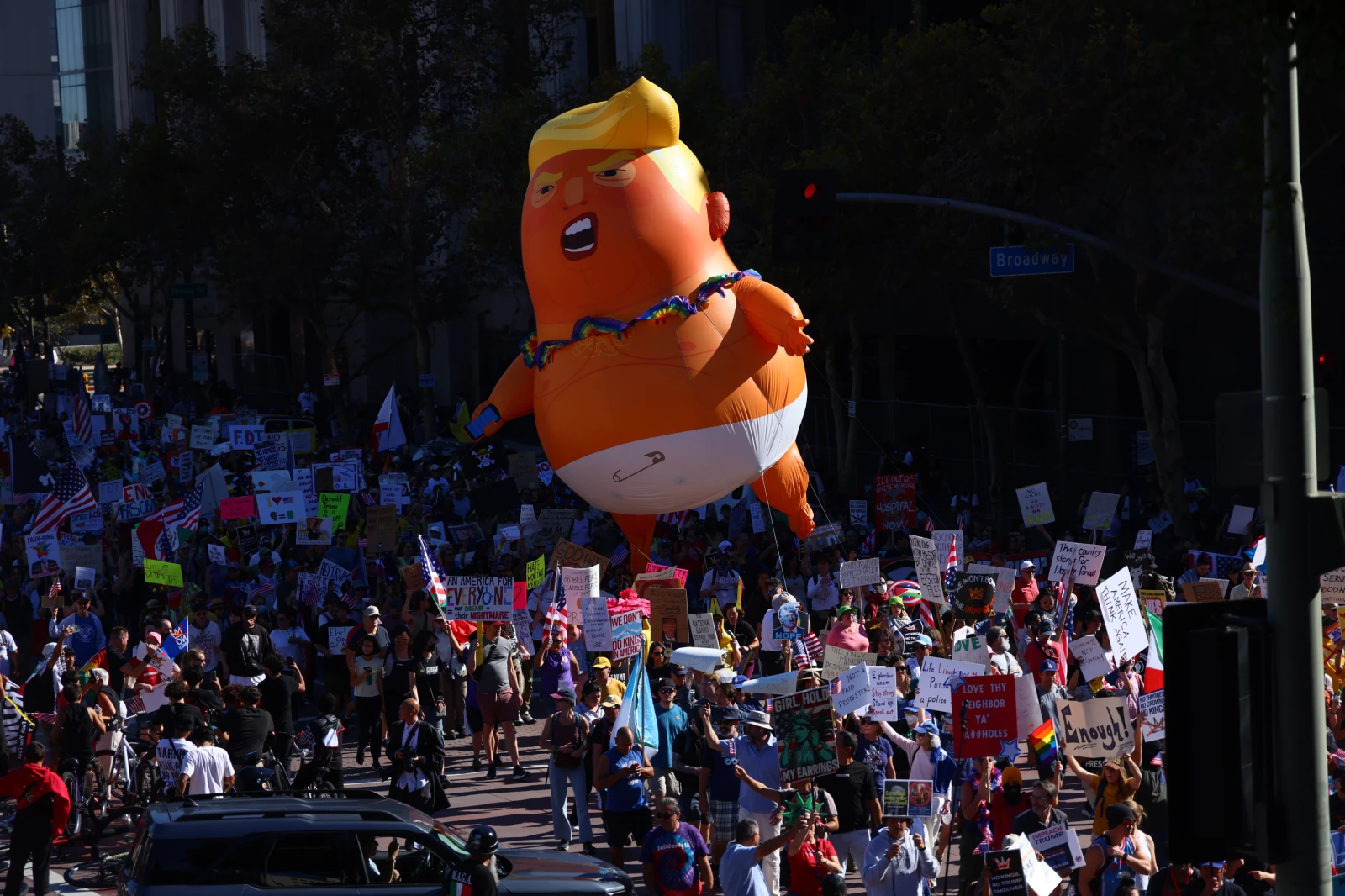
The No Kings coalition, which has organized anti-Trump demonstrations during the president’s second term, is also launching an early-voting campaign expected to culminate in nationwide rallies Oct. 17.
For voting-rights organizations, the preparations reflect a midterm election unfolding under circumstances they say would have been difficult to imagine in previous election cycles.
With control of Congress at stake, both parties are assembling expansive teams of attorneys, poll watchers and volunteers — while civil rights organizations prepare for the possibility that Election Day could involve battles extending far beyond the ballot box.


