




A new national poll finds that 77% of Black women are motivated to vote in the 2026 midterm elections, driven more by urgency and dissatisfaction than the hope seen during the Obama era. The survey highlights concerns over national leadership, voting rights, and economic pressures, reflecting a strong determination to participate despite widespread dissatisfaction.
- The Highland Project survey polled 700 Black women between August 30 and September 10, finding 77% motivated to vote in the midterms.
- Unlike the Obama campaigns, current motivation stems from protecting the community amid dissatisfaction with the country's direction.
- 92% of respondents expressed dissatisfaction with national leadership and the country's direction.
- 87% said changes to voting-rights protections increased their motivation to vote, following a Supreme Court decision narrowing Section 2 of the Voting Rights Act.
- The survey identified a 'Fulfillment Gap' where Black women feel institutions and leaders are not meeting their needs in areas like education, crime reduction, and health care.
A New National Poll Finds 77% of Black Women Are Motivated to Vote, but the Energy Is Being Driven More by Urgency Than the Hope That Defined the Obama Era
Black women are heading toward the 2026 midterm elections with a level of enthusiasm one prominent pollster says he has not seen since Barack Obama was on the ballot — but the reason behind that energy looks very different this time.
A new national survey from The Highland Project, conducted in partnership with brilliant corners Research & Strategies, found that 77% of Black women voters are motivated to participate in the Nov. 3 election.
The survey, titled “The Fulfillment Gap,” polled 700 African American women between Aug. 30 and Sept. 10. It found widespread dissatisfaction with the direction of the country alongside a strong determination to vote.
“You see an enthusiasm and potential to mobilization this election that I hadn’t seen, quite frankly, since going back to the Obama era,” Cornell Belcher, president of brilliant corners Research & Strategies and a former Obama campaign pollster, said.
This Time, The Motivation Is Different
During Obama’s historic presidential campaigns in 2008 and 2012, Black voter participation surged as voters rallied around the possibility of electing and then reelecting the nation’s first Black president.
Belcher said the political energy he sees today may be comparable, but its foundation has changed.
“In 2008 [and] 2012, they were being mobilized around hope and optimism,” Belcher said. “Today, the chief driver of their mobilization is the idea that we got to protect the community.”
Also Read: Barack Obama Joins James Talarico And Gina Hinojosa For Tacos In Austin
According to the poll, 61% of respondents consider this year’s midterms more important than previous elections. When asked why, Black women frequently cited dissatisfaction with national leadership, the economy and cost of living, a desire for change and the need for checks and balances in government.
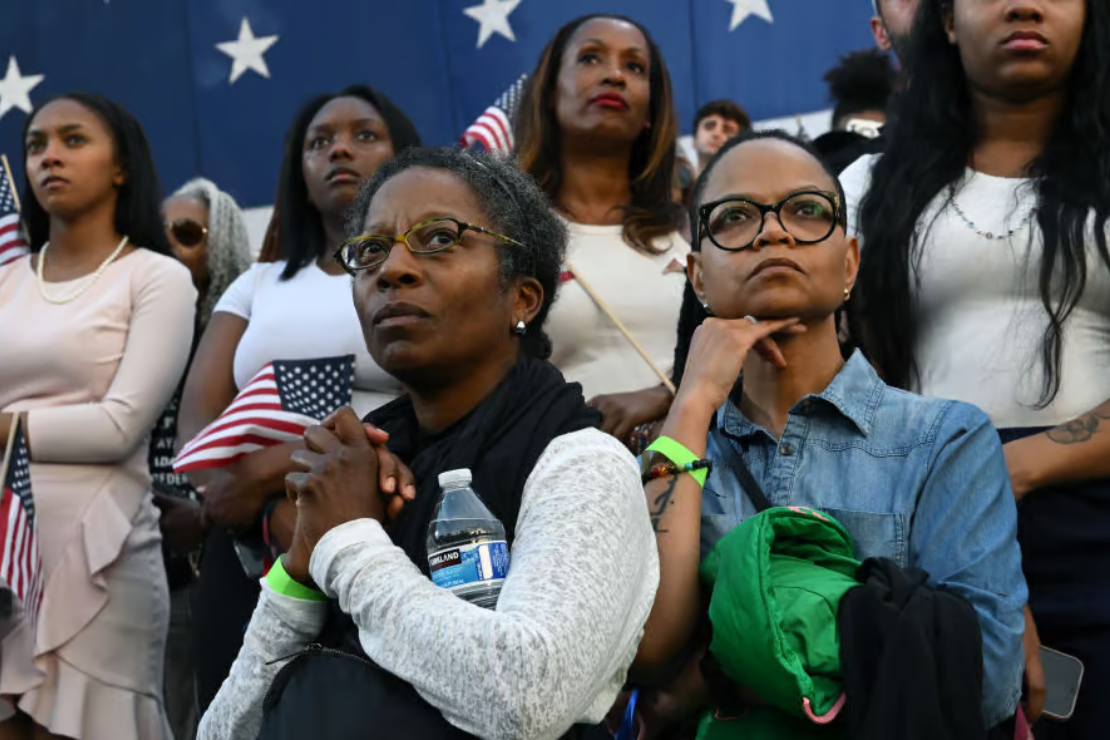
Overall, 92% said they were dissatisfied with the direction of the country.
Those findings continue a trend identified in earlier Highland Project polling. A June survey focused on Black women in the South found 89% believed the country was headed in the wrong direction while 75% remained highly motivated to participate in the midterms.
Voting Rights Add To The Urgency
Voting rights have also emerged as a major concern.
The poll found 87% of Black women said changes to voting-rights protections made them more motivated to participate in the election.
Those concerns have intensified following the Supreme Court’s April decision in Louisiana v. Callais, which substantially narrowed how Section 2 of the Voting Rights Act can be used in racial vote-dilution cases involving congressional maps.
The ruling has become part of a larger debate over Black political representation and congressional redistricting heading into November.
Also Read:
Economic pressures are another major factor. Twenty-one percent of respondents said they had been affected by federal layoffs, while Black women have faced significant employment losses amid broader reductions in the federal workforce and other sectors.
Gabrielle Wyatt, founder and CEO of The Highland Project, said the findings show Black women are looking beyond individual candidates or political parties.
“They’re not satisfied with leadership. They’re not satisfied with the direction of the country, and they’re naming with extreme precision that it’s not only what’s at stake; it’s already about what has been lost,” Wyatt said.
Black Women Say Leadership Is Falling Short
The Highland Project describes that disconnect as the “Fulfillment Gap” — the distance between what Black women identify as important in their lives and how well they believe institutions and leaders are delivering.
The survey found an average 5.7-point gap across areas including K-12 education, crime reduction, voting rights and health care.
“African American women see that they’re making investments in this country, but the leaders and institutions of this country aren’t holding their end of the bargain,” Belcher said.
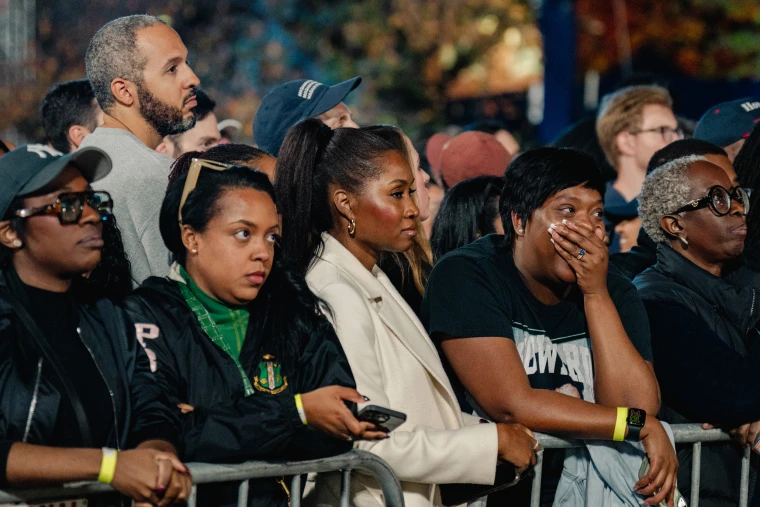
The survey also asked Black women what makes a joyful life. Ninety-four percent identified having time to focus on mental health, followed by having enough money at 92%, loving relationships at 91%, healthy eating at 89%, rewarding employment at 87% and time for hobbies at 81%.
For Wyatt, those findings are as important as the political numbers because they show what Black women ultimately want government and institutions to help make possible.
“We’ve got to move past band-aid solutions,” she said.
The numbers suggest Black women are approaching November prepared to participate. But unlike the historic Obama elections, when possibility helped drive voters to the polls, this election appears to be shaped by a different sentiment: protecting what voters believe they and their communities stand to lose.


